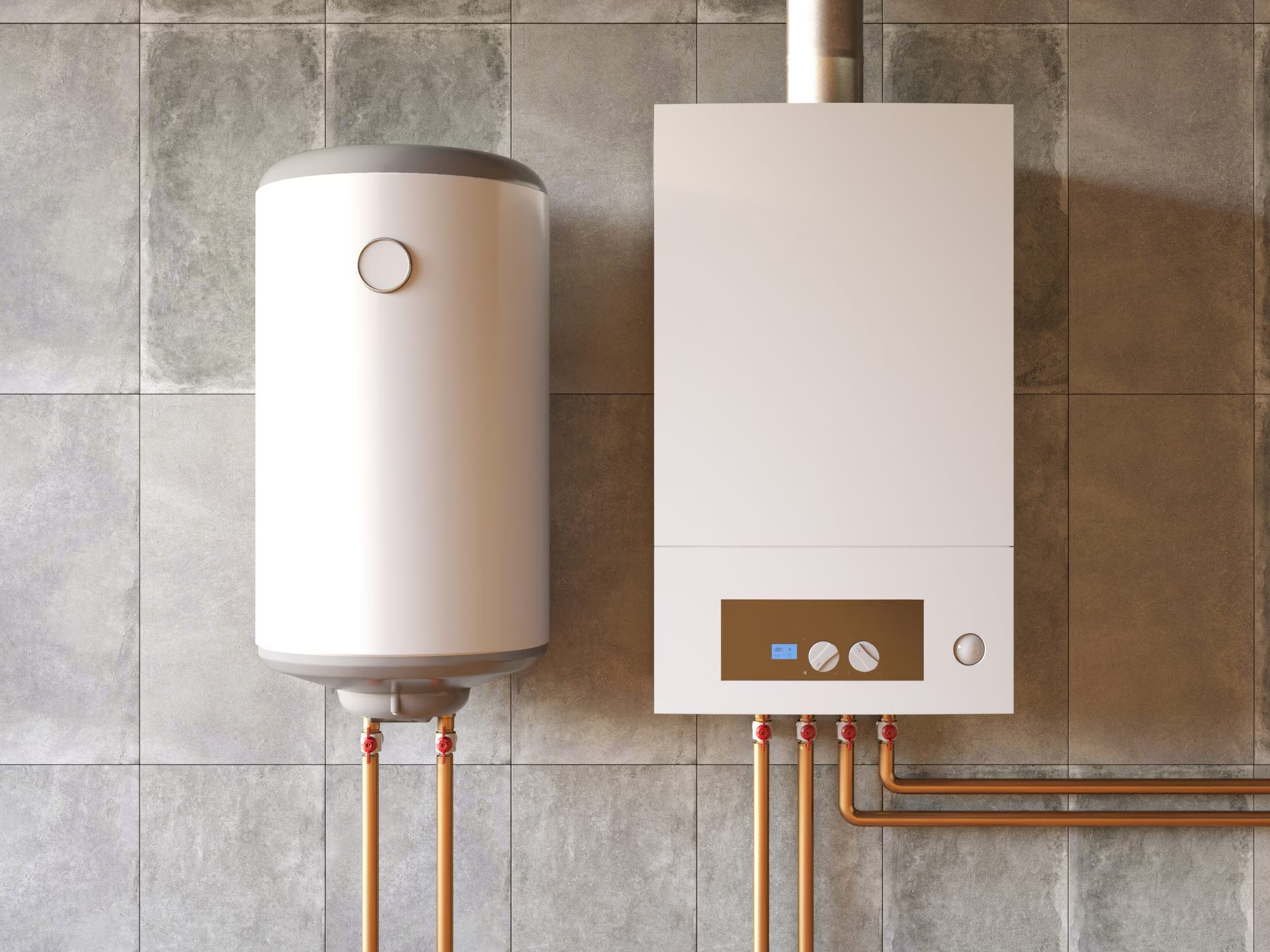
To compare consumption and costs of boiler and water heater, the respective functions must be considered: the water heater, powered by gas or electricity, only produces domestic hot water, while the boiler can also provide space heating. Let’s see the differences and advantages of the two solutions to understand which one to choose.
Is the water heater or boiler better? Living comfort also depends on the constant availability of domestic hot water (DHW), an essential service in the daily management of any home. To guarantee its production, however, it is necessary to identify the more adequate system to the characteristics of the property and specific usage needs. Although both devices can be used for the production of domestic hot water, they have substantial differences in terms of functions, technology, operating principle and performance. Understand the characteristics and advantages of these two solutions it is essential to identify the most suitable solution for your living context, optimize the energy consumption and contain management costs.
Differences between water heater and boiler: domestic water and heating
The main one difference between water heater and boiler it concerns their function. The water heater is equipment intended exclusively for the production of domestic hot waterused for normal household activities, such as washing, taking a shower or washing dishes. The boiler, on the other hand, is a heat generator designed for space heating which, in the combined models, also provides for the production of DHW. To better understand this distinction, it is good to know the characteristics of the two main hydraulic circuits present in domestic systems: that of domestic hot water, in fact, and that oftechnical water intended for heating.
The domestic hot water circuit is a open systempowered by cold water from the public water supply or from a private supply. The water is conveyed to equipment dedicated to the production of DHW, heated until the desired temperature is reached and distributed to the various withdrawal points of the home, such as taps, showers and sinks. After use, the water comes downloaded through the wastewater collection network.
The technical water circuit intended for heating, however, is generally a closed system in which the heat transfer fluid is heated by a heat generator, such as a boiler or a heat pump, and distributed through a network of pipes to the emission terminals present in the home. These include radiators, fan coils and underfloor heating panels.
During the operation of the system, the water gives up part of thermal energy to the environments through the terminals, and then return to generatorwhere it is heated again and introduced into the circuit. Under ordinary conditions, the heat transfer fluid remains within the system and is not consumed, but continuously recirculates through the pipes.
What is a water heater and how gas and electric ones work
The water heatermore properly defined as a water heater, is a designed piece of equipment exclusively for the production of domestic hot waterwithout carrying out any room heating function. Based on the technology used, the construction type and the installation requirements, it can be placed in different rooms of the home, such as the bathroom and kitchen, or inside a special technical room. Water heaters can be powered by gas or a electricity. The models a gas they exploit the heat produced by combustionwhile those electrical traditional heaters the water through one resistence. There are also electric heat pump water heaters, which use thermal energy taken from the environment.
Regardless of the energy source used, water heaters are mainly distinguished into two categoriesdefined according to the operating principle and the methods of production and availability of hot water:
- Instantaneous water heater: produces domestic hot water directly at the time of withdrawal, activating the heating process generally following the opening of a tap or another user. The necessary time to obtain hot water at the required temperature depends not only on the characteristics and performance of the appliance, but also on the distance between the generator and the user, the length of the pipes and the configuration of the distribution network.
- Storage water heater: heats domestic water and stores it inside a insulated tankdesigned to limit heat loss and maintain the contents at the temperature set using a special regulation system. Hot water is made available at the time of withdrawal, allowing you to have one reserve already heated. The time needed for the restoration the availability of hot water, progressively consumed, depends on the capacity of the tank, the power of the heating system and the temperature of the incoming water.
What is a boiler and how it heats rooms
Unlike the water heater, the water heater it’s a heat generator designed essentially to meet the needs of space heating and, in the preset configurations, to also provide for the production of domestic hot water (DHW). This double function allows you to avoid the installation of separate devices and optimize the overall management of the system. In combi boilers, domestic hot water production can take place in mode instantthrough a heat exchanger that comes into operation at the time of sampling, or through a storage tankwhich allows you to conserve a reserve of already heated water. To achieve adequate performance and ensure efficient operation, it is essential that the boiler is correctly sized in relation to the heating needs of the building, the power required for the production of DHW and the methods of use of hot water by the occupants.
Which one to choose: comparing consumption and costs
There choice between boiler and water heater must be carried out on the basis of the characteristics of the property and the specific needs for the production of domestic hot water and heating. This is an assessment that requires a preliminary analysis of various factors, including the energy needs of the home, the type of building, the configuration of existing systems and the energy efficiency objectives that are intended to be achieved, both in terms of reducing consumption and limiting polluting emissions. Installing one water heater it is particularly suitable for apartments located in condominium complexes equipped with a heating system central heatingwhich therefore does not provide for the production of domestic hot water, or in homes where the heating of the rooms is entrusted to an independent system or there is a high requirement of hot water. There water heaterhowever, can constitute a rational solution for single-family homes or when you need to have a single generator capable of satisfying both room heating and domestic hot water needs.
Regarding consumption and costs, there is no single answersince economic convenience depends on multiple variables, including the DHW requirement, the usage habits of the occupants, the technology used, the energy performance of the appliance and the price of energy. To identify the most efficient solution it is therefore necessary to carefully evaluate the consumption profile of the home and compare both the initial purchase and installation costs and the operation and maintenance costs of the different types of generators.
As for water heaters, i electric models traditional ones are generally characterized by a low purchase and installation cost, compared to potentially higher operating costs. Their operation is based, in fact, on the direct conversion of electrical energy into thermal energy through a resistor, with significant electricity absorption during the water heating phase. The water heaters gason the other hand, generally require a greater initial investment, also due to the need to prepare the connections and combustion fume evacuation systems, but can ensure lower operating costs, depending on the price of the fuel, the efficiency of the appliance and the use profile. Among the available technologies, the heat pump water heater it represents a particularly interesting solution from the point of view of energy efficiency, as it uses the thermal energy taken from the air to heat the water contained in the storage tank, reducing electricity consumption compared to traditional resistance models. However, a generally higher initial cost and specific installation requirements must be considered.
About the gas boilersthe latest generation condensing models allow for improved energy performance compared to traditional appliances. Although they generally require a greater initial investment, these devices recover part of the heat contained in the combustion fumes, contributing to reduce gas consumption. The benefits in terms of operational efficiency are particularly significant when combined with systems designed to operate with relatively low delivery temperatures, such as radiant systems.
