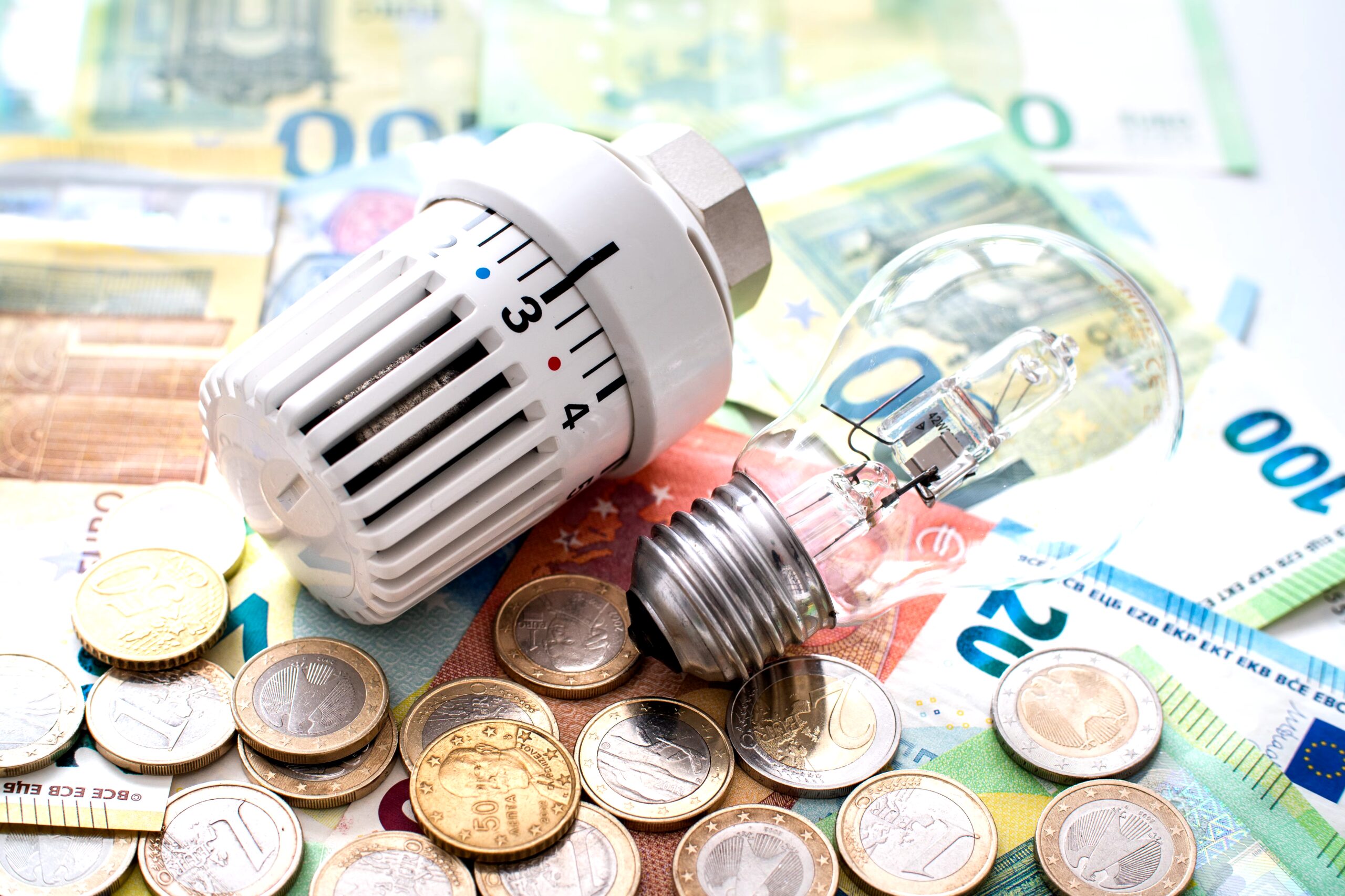
Italy remains heavily dependent on natural gas and oil imports: in 2025 energy dependence on foreign countries reached 75.2%. The 2022 crisis has accelerated the diversification of supplies, strengthening the role of countries such as Algeria and the United States. However, changing suppliers is not enough: to increase energy security it is necessary to reduce the use of fossil fuels and invest in the development of renewable sources.
Despite the progressive expansion of renewable sources, the Italian energy system continues to depend to a significant extent from fossil fuelsespecially from natural gas and from petroliumlargely coming from abroad. This is a structural dependency that constitutes a element of vulnerability for the country, as it exposes the national economy to fluctuations in the prices of energy raw materials and international geopolitical tensions. In this context, the diversification of supplier countries and routes of supply can help strengthen the energy security in the short term, reducing the risks linked to the concentration of supplies, but to overcome the structural reliance on fossil resources, an acceleration of the energy transition is necessary.
How much Italy depends on energy imported from abroad
The Italian energy system continues to be characterized by significant dependence on fossil fuelsespecially from natural gas and from petroliumwhich maintain a central role in satisfying national energy demand. According to the Report on the national energy situation 2025, published by Ministry of the Environment and Energy Security (MASE) in 2026, the ratio between net imports and gross energy availability went from 73.5% of 2024 al 75.2% by 2025. This indicator, which measures the degree of energy dependence of a country from foreign supplies, highlights a structural vulnerability and confirms the persistent Italy’s exposure to the dynamics of energy markets international.
This dependence emerges with particular clarity in the case of natural gas, for which in 2025 national production only covered the 5% of internal needswhile the remaining share, equal to approximately 95%was satisfied through the imports. A marked use of fossil fuels characterizes above all transport sectorwhere in 2025 final energy consumption recorded an increase compared to the previous year. The growth is mainly attributable to the greater use of petroleum products, in particular petrol and diesel, whose consumption increased by 3.1% and of 2.0%.
Where important gas and oil come from Italy
There energy crisis of 2022following the Russian invasion of Ukraine, highlighted the vulnerability of the Italian energy system to dependence on imports fossil fuelsshowing how geopolitical tensions can quickly impact the security of supplies and the economic stability of the country. The progressive reduction of Russian gas supplies has resulted in a reorganization of the national energy strategyoriented towards the diversification of supplier countries and the strengthening of commercial relations with new partners, including Algeria, Qatar And United States.
In this process of reconfiguration of energy supplies, theAlgeria has taken on an increasingly important strategic role. In 2025, through the Transmed gas pipeline, which connects North Africa to Italy via Tunisia, it provided 20.1 billion cubic meters of natural gascorresponding to approximately the 36% of overall Italian imports of this resource. At the same time, liquefied natural gas (LNG) has acquired a growing weight in the national energy mix, broadening the possibility of geographical diversification of suppliers. According to Italy for Climate, in 2025 Italian LNG imports increased by 42%coming to satisfy the 33% of the gas requirement, with the United States among the main exporters towards Italy.
The economic and environmental consequences: higher energy costs
There dependence on fossil fuels not only constitutes a critical issue in terms of energy security, but also involves significant ones economic and environmental consequences. The fluctuations in oil and gas prices on international markets have repercussions on the whole economic systemdirectly impacting energy costs for families and businesses, on industrial production processes and the transport sector. A significant example is represented by the trend of electricity prices wholesale. Between January and April 2026, Italy ranked among the European countries with the average prices higherrecording a value of €127.5/MWh
This trend can also be traced back to the structure of the national electricity generation systemstill heavily dependent on natural gas, the cost of which on international markets can significantly influence the price of electricity. In this context, in fact, in 2025 the production from traditional thermoelectric power plants has increased by 5.2% compared to the previous year, mainly due to a greater use of natural gas. The latter contributed for the 44.57% to overall electricity generation, recording an increase of 7% on an annual basis. In addition to the economic implications, the dependence on fossil fuels has a significant impact environmental impactespecially in terms of greenhouse gas emissions. According to ISPRA data (Higher Institute for Environmental Protection and Research) in 2024 the81% of national emissions of climate-altering gases was attributable to the energy sector, therefore largely due to the use of fossil fuels.
How to reduce energy dependence with renewables and efficiency
Reducing dependence on fossil fuels requires strong acceleration of the energy transitionto be implemented through the development of sources renewable energy (RES), the strengthening and modernization of network infrastructures, the diffusion of storage systems and the improvement of energy efficiency in the residential, industrial and transport sectors. In 2025 there were signs of growth, in particular in the photovoltaic sector, whose electricity production increased by 25% on an annual basis, thanks also to the installation of 6.5 GW of new capacity.
However, the pace of development of RES it still remains in Italy below the country’s potential and the growth trajectories necessary to achieve them decarbonization objectives of the national energy system. In this framework, strengthening energy security cannot be based exclusively on the diversification of supplier countries or the strengthening of infrastructure for gas imports. It is rather necessary intervene on the structural causes of energy dependencereducing the need for fossil fuels and enhancing the potential of renewable resources on the national territory. The energy transition therefore represents not only a fundamental tool for decarbonisation, but also a strategic opportunity to increase the country’s energy autonomy, limit exposure to international market fluctuations and make the national system more sustainable and resilient to geopolitical crises.
