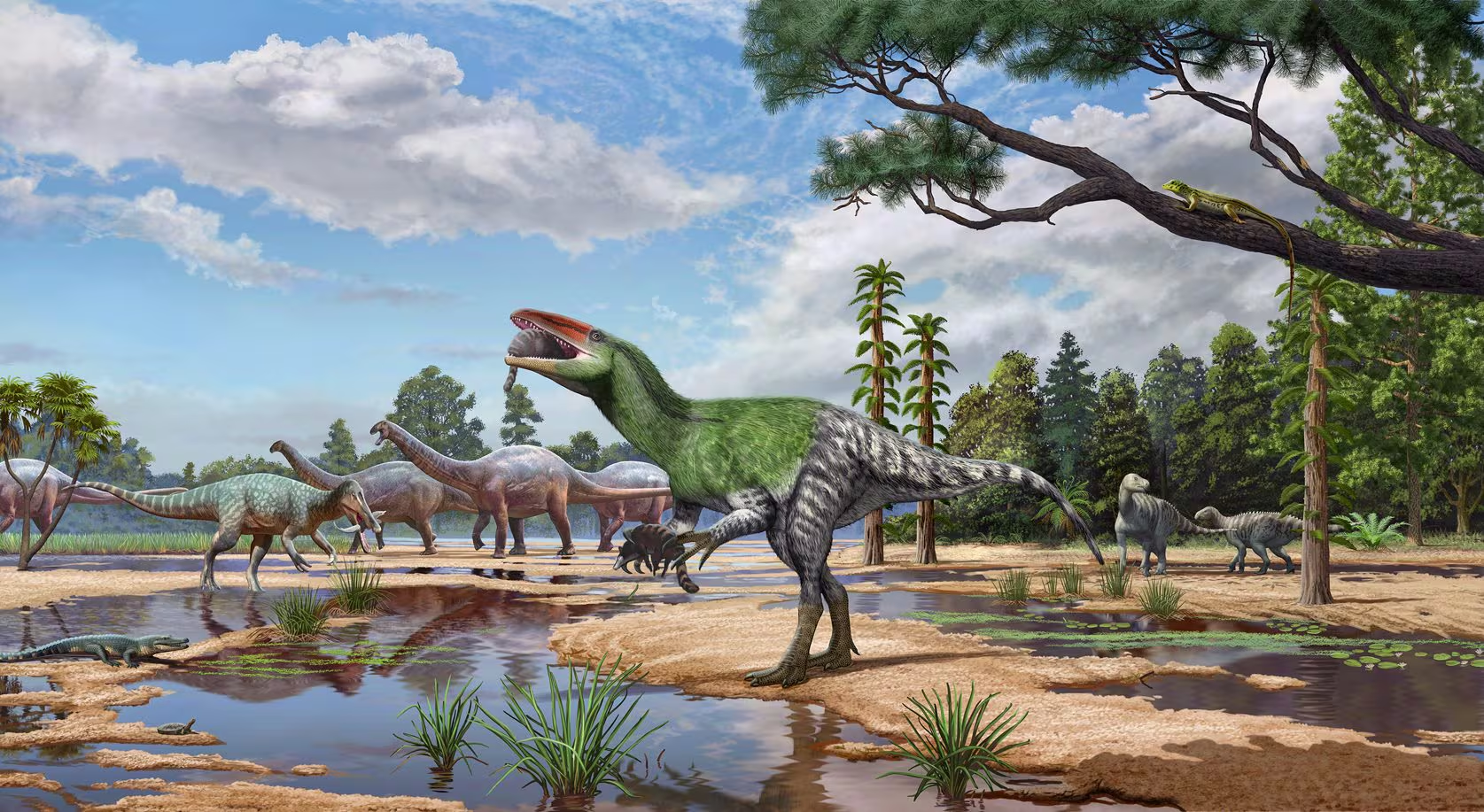
A fossil preserved since 1924 at the Natural History Museum in London has made it possible to identify Invictibellatrix amberina, the first megaraptoran known in Europe. Lived around 125-120 million years ago, it greatly expands knowledge on the distribution of large theropods in the Lower Cretaceous.
A fossil preserved for over a century in the collections of Natural History Museum, London allowed us to identify one new species of theropod dinosaurtheInvictibellatrix amberinaa small predator that lived during the Lower Cretaceous (between 145 and 100 million years ago). The description is at the center of a study published in the journal Royal Society Open Science, signed by an international group of researchers led by Cassius Morrison of theUniversity College London.
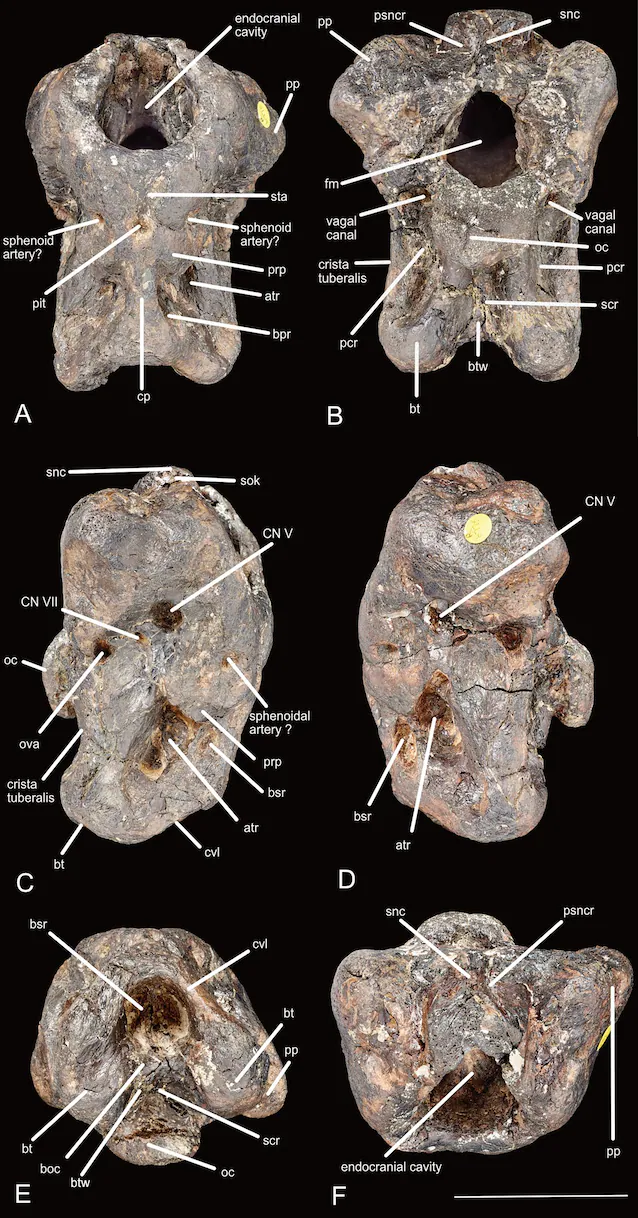
The find consists of a portion of the skull recovered at Sudmoor Pointon the southwestern coast ofIsle of Wightand purchased by the museum in May 1924 by the Rev. R.W. Hooley. It came from Formation of Wessexa Barremian geological succession, formed in the Lower Cretaceous between 125 and 120 million years agowhose deposits are known for the presence of remains of dinosaursOften fragmentary.
To study the fossil, the authors used tomographic scans and three-dimensional reconstructionsexamining both the structure of the skull and the endocraniumthat is, the internal space that housed the brain.
Someone anatomical featuresincluding the shape of the occipital condyletheopening of the foramen magnum (the opening that allows the passage of medulla) and the presence of a sagittal crest on the back of the skullallowed us to attribute the animal to Megaraptoraa clade of theropod dinosaurs that it was not believed to be present in Europe until today.
One of the characteristics of this clade are the long curved clawswhich made these animals gods formidable predators. Phylogenetic analyzes place it among the oldest members of the group, in one distinct position compared to other theropods already described in the Wessex Formation.
Invictibellatrix amberina therefore represents the first megaraptoran identified in Europe. The authors estimate that it was a relatively large animal containedprobably less than four meters in length, and with an estimated weight between 200 and 300 kilos.
The discovery also expands our knowledge of the diversity of Early Cretaceous European theropods, previously documented in the region by groups such as tyrannosauroids And maniraptoriforms.
The discovery also has consequences for the reconstruction of the geographical distribution of Megaraptora. Analysis suggests the group was widespread on a very large scale already in the Lower Cretaceous.
According to the most plausible scenario suggested by the authors, the ancestors of Invictibellatrix they came from Asian populations and reached Europe about 130 million years ago.
From here, other megaraptorans would later reach theAfrica and the other southern regions of Gondwanathe southern supercontinent that included Africa, South America, Australia, and Antarctica.
There disappearance in the Upper Cretaceous of the Dalla group Laurasiathe northern supercontinent that brought together North America, Europe and Asia, would instead be due to regional extinctionswhile the megaraptorids continued to diversify in the territories of Gondwana.
