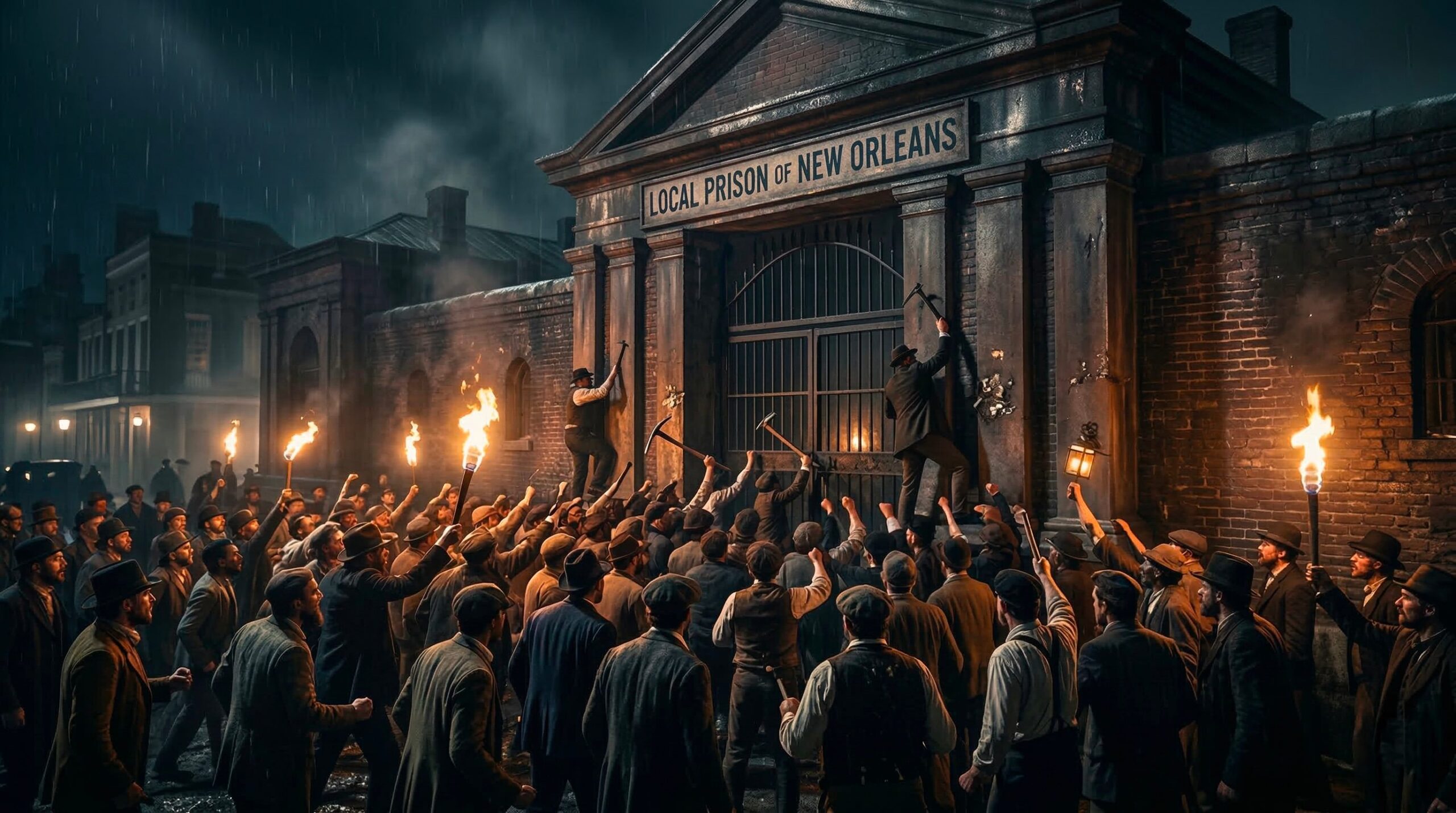
With “New Orleans lynching” reference is made to a specific historical circumstance: thekilling of eleven people of Italian origin by a multitude of US citizens March 14, 1891 in New Orleans, a city located in the southern United States, on the Mississippi River delta. It was a act of collective violence against defenseless individuals after a controversial judicial process. The victims of Sicilian origins, still detained despite the acquittal and lack of conviction, were reached near the local prison and killed. The episode caused great dismay. It was the point of convergence between latents social frictionswidespread forms of xenophobia and the “racialization” of Italian immigrants, perceived as unreliable and unassimilable.
The construction of the “different”
Until the 1870s, the image of Italy in the United States was very nuanced and mostly linked to aelite of intellectuals or exiles, who enjoyed a generally positive opinion. This consideration underwent an abrupt involution with the intensification of migratory flows from Italy (a recently unified and still rather backward country).
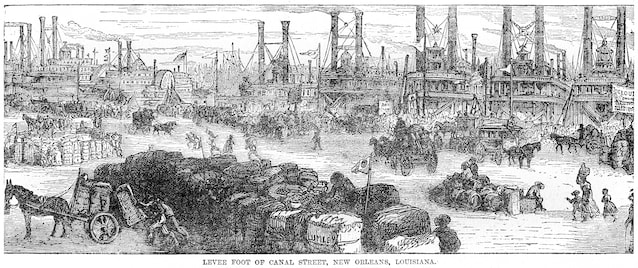
From the 1880 hundreds of thousands of Italians entered the USA. They mostly came from the South, especially Sicily, and were often former agricultural labourers. To create networks of solid relationships they concentrated in restricted urban areas calledLittle Italies” (“Little Italies”). In addition to culture, language and religion, they shared one element above all: they were destitute, or at least not wealthy, and they sought to improve and stabilize their economic position.
They found much more, however: distrust. The difficulties of Italians in interacting with American society (predominantly white, Anglo-Saxon and Protestant) and the degradation of the urban neighborhoods in which they lived were interpreted not as a consequence of their socio-economic conditions, but as a sort of typical Italian trait.
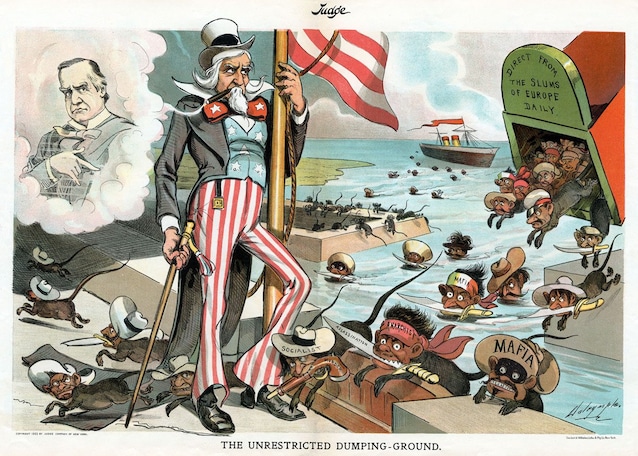
For Italians, poverty became a stigma. Not only that: they were accused, with their very presenceto steal jobs from US citizens or to encourage wage compression. Faced with the general disorientation caused by impetuous capitalist industrialization, the Italians in short, they became an easy target. A scapegoat useful for explaining, and explaining, the changes in the United States production system and the growth in demand for unskilled workers to the detriment of specialized ones.
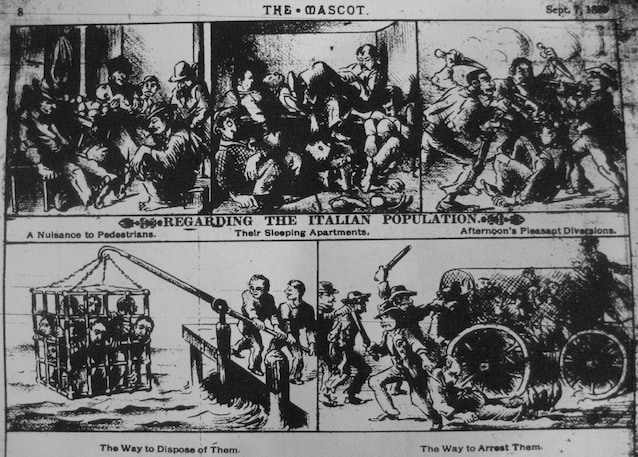
Thus, the figure of the Italian in the United States took on negative and disturbing characteristics. The Italians were often represented, with the help of the most aggressive newspapers, as dirty, undisciplined and violence-prone individuals. In a word, dangerous.
From general suspicion to the massacre of 1891
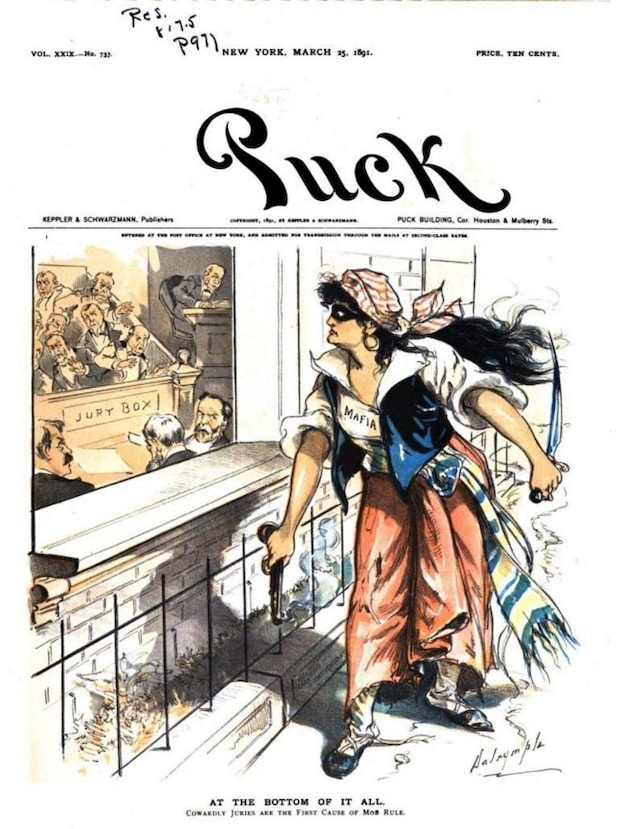
Soon they began to feed themselves real stereotypes. The Italians were described as unscrupulous users of daggers ready to sow panic in the metropolises or associated, more or less en bloc, with organized crime (Mafia society). Furthermore, especially in the southern United States, not infrequently they were compared to the African-American population. In this sense they were also “racialized”, that is, considered as another distinct and inferior “race” compared to whites of Anglo-Saxon or Northern European origin.
Hostility towards Italians – in civil society, in the press, in the political sphere – is the context that remains possible for the massacre in New Orleans (where at the time around 30,000 people of Italian origin lived, out of over 240,000 inhabitants).
The central crux of the story went back to October 1890when the city’s police superintendent, David Hennessy, died following a gunshot ambush. According to some witnesses, on his deathbed, Hennessy suggested that those responsible were to be found among the Dagoes. Dagoes it was, precisely, the derogatory term used to indicate immigrants coming from the Mediterranean area.
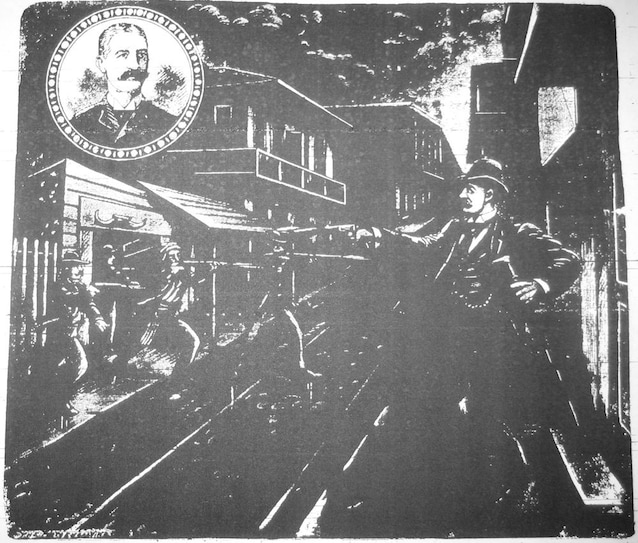
The Italian lead was therefore considered entirely plausible. Indiscriminate searches and police stops, in the wake of public outragehad involved dozens of people. In the end nine Italiansof the nineteen formally arrested, they had been accused of being implicated in the Hennessy murder. Of these, some were already known to the authorities and had criminal records. Most, among other things, had acquired US citizenship.
The process it took place between February and March 1891 and ended with a verdict that took by surprise those who took the responsibility of the Italians for granted. Six defendants were acquitted and a final verdict was not reached for the other three due to insufficient evidence in the prosecution case (pending further developments).
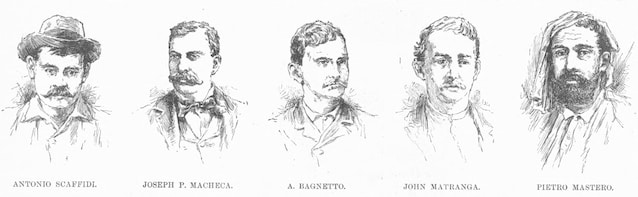
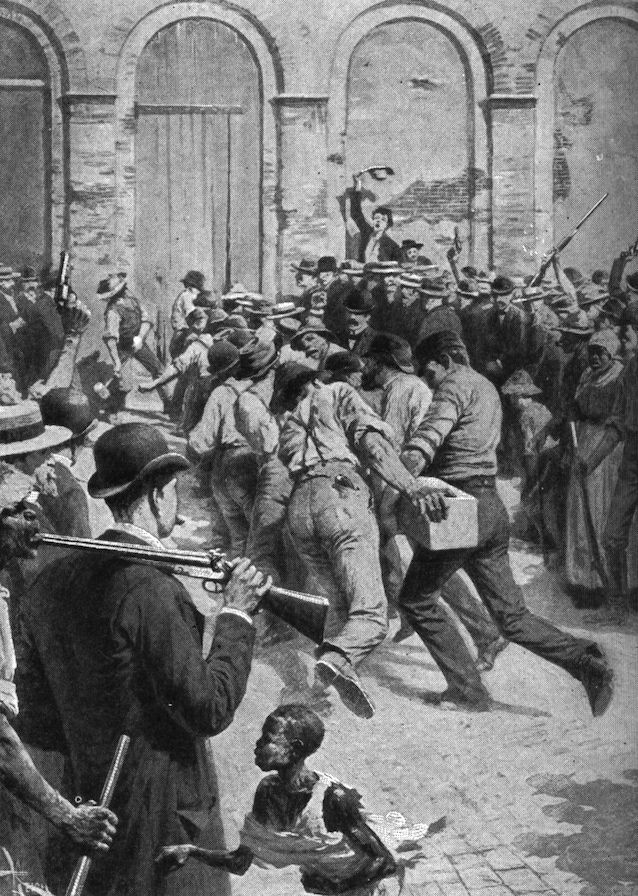
When the news spread, the reaction was radical. Appeals were launched, a protest committee was formed, there was talk of possible corruption of the jury. So on March 14, 1891, around 3,000 citizens, according to conservative estimates, gathered near Canal Street and broke into the prison where the 19 arrested Italians (including those acquitted) were still being held. The guards on site failed to stop them and the prisoners in the Hennessy case were searched, discovered, surrounded and beaten. Nine were then shot inside the building, two hanged outside.
It was about a ferocious, summary and illegal execution perpetrated by private (and armed) citizens against individuals who, regardless of the investigations and the outcome of the trial, were judged – collectively – guilty.
The aftermath after the 1891 massacre
The New Orleans massacre was immediately placed in one precise interpretative framework. The immediate words of condemnation did not hide the presence (and persistence) of a strong anti-Italian prejudice.
As he pointed out historian Stefano Luconithe weekly Leslie’s Weekly he wrote that “no rational, intelligent and honest American would regret the deaths of the eleven Sicilians” since “regardless of whether they were members of the Mafia or not, they belonged to the worst breed of criminals”. On the other hand according to Luconi:
More than three-quarters of the articles that the main New Orleans newspaper, the “Times Picayune”, had dedicated to the local Italian-American community in the three years preceding the lynching had focused on the supposed involvement of its members in the underworld.
The New Orleans massacre then triggered a brief diplomatic crisis between Italy and the United States. In Rome the case caused quite a stir. The newspaper The Tribune he observed: “The fact is so enormous that it would be difficult to believe it if the dispatches were not, unfortunately, too official”. The US government found itself responsible for the incident also because three of the Italians killed had not requested or obtained US citizenship (they had not been naturalised) and therefore, based on previous agreements between the two countries, they should have been protected. So one question internal became (also) international.
The federal government came under pressure, including through the involvement of newspapers such as the New York Timesdeclaring, however, that they could not intervene autonomously due to the prerogatives of the State of Louisiana, which, in turn, triggered a debate on the relationship between federal power and state power. In 1892 President Benjamin Harrison, without recognizing the government’s responsibility, met the Italian complaints and granted a compensation to the families of the victims.
In the end the guilty they were not punished (nor completely identified) and the distrust towards the Italians did not ease suddenly (indeed, it continued for a long time). Parties, movements or associations hostile to immigration gained great centrality. Yet what happened in 1891 had a certain impact: it contributed to reopening the discussions on the acts of summary justice (a practice that often affected African Americans) and the United States, more than before, was forced to deal with your own contradictions.
Over time the episode has been the subject of studies and research. In 2019, the Democratic administration of New Orleans issued a proclamation of official apology aimed at the local Italian-American community.
MAIN SOURCES
P. Salvetti, Rope and soap. Stories of lynching of Italians in the United States, Rome, Donzelli, 2003.
S. Luconi, M. Pretelli, Immigration in the United States, Il Mulino, Bologna 2008.
S. Luconi, The representation of Italians in the American imagination, in «Diacronie. Studies in Contemporary History», n. 5, 01/29/2011
A. Testi, The century of the United States, Il Mulino, Bologna 2014.
M. Dalena, New Orleans, 1891: the lynching of Italians, in «Storica National Geographic», 14 March 2021. C. Seguin, S. Nardin, The Lynching of Italians and the Rise of Antilynching Politics in the United States, in «Social Science History», vol. 46, no. 1, 2022, pp. 65-9.
