
Not all smokers consume the same amount of cigarettes. Some stop at a few a day, others smoke many more. Some of this difference may be written in DNA. In a study published yesterday on Nature CommunicationsDr. Rajagopale and colleagues performed genetic analysis of 37,897 smokers Mexico City Prospective Study and they identified a rare variant of the CHRNB3 gene associated with a fewer cigarettes smoked daily. The same results, with different mutations but in the same gene, were also observed in data from the United Kingdom and Japan. The variants identified alter the subunit β3 of the nicotinic receptor, a component involved in the brain response to nicotine: when these variants are present, they are associated with a measurable reduction in average daily consumption.
A difference in the gene that could reduce cigarettes
The idea behind the study is simple: if some people, due to their DNA, spontaneously smoke less, understanding which genetic variants distinguish them can help identify new therapeutic targets. The gene at the center of the research is called CHRNB3, which encodes, that is, contains the information for the “construction” of the β3 subunit of a receptor present in the brain, the nicotinic acetylcholine receptor. In simple words: it is one of the “molecular locks” to which nicotine binds when it enters the body. In specific brain areas, this link activates brain circuits linked to reward and addiction.
The changed genes cause the subunit to lose activity
In genetics, some gene variants are defined as “loss-of-function”, i.e. mutations that reduce or eliminate the normal activity of the protein.
When this happens in the CHRNB3 gene, the observed consequence is a reduction in the amount of cigarettes smoked each day. However, one distinction is important: these variants do not appear to significantly influence the likelihood of starting to smoke. They act mainly onper quantity consumednot about initiating the behavior. This detail suggests that the β3 subunit may be more involved in regulating the dose of nicotine taken than in the initial mechanism of addiction.
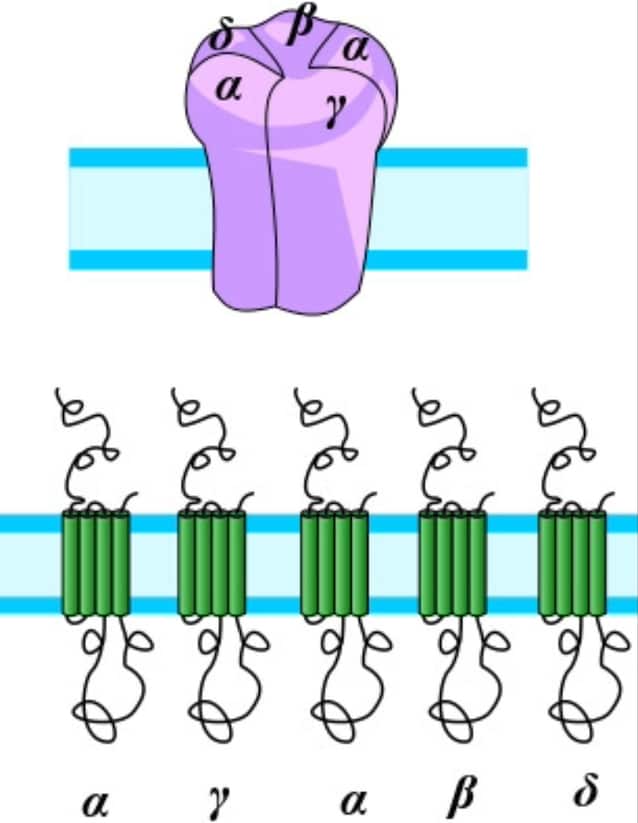
Credit: Ach_rezeptor_nicotinisch.png: The original uploader was Opossum58 at German Wikipedia.(Original text: Peter Wolber)derivative work: Vezixig, CC BY–SA 3.0, via Wikimedia Commons
How the study was conducted
The researchers conducted an analysis of the exome — that is, the part of the DNA that contains the instructions for making proteins — on 37,897 smokers currently participating in the Mexico City Prospective Study. The goal was to check for genetic variants rarethat is, present in less than 1% of the population, were associated with the number of cigarettes smoked each day. The strongest result concerns a variant called p.Glu284Gly in the CHRNB3 gene. This is a “missense” variant: it means that compared to the common version of the protein, this variation changes a single amino acid.
This p.Glu284Gly variant, more frequent among people with indigenous Mexican ancestry, is present in 0.9% of participants analyzedis associated with a significant reduction in the number of cigarettes smoked per day. The effect is surprisingly measurable: non-carriers (i.e. those in whom the variant was not present) smoked an average of 5.6 cigarettes per day; heterozygotes (those with only one copy of the variant) approximately 4.6 cigarettes per day (−21%); homozygotes (carriers of two copies) approximately 1.25 cigarettes a day (−78%). The estimated statistical effect indicates that these results are highly unlikely if they were just the result of chance.
Not only data from Mexico, but also from Europe and Japan
To verify that the result was not an isolated case in Mexico, the researchers looked for similar signals in other populations. In the UK, analyzing over 133,000 individuals from the UK Biobankthey found that other rare variants harmful (in the sense that they cause the protein to lose function, not necessarily harmful to health) in the same gene, considered as a whole, are associated with a reduction in the number of cigarettes smoked.
Even in Japan, in Biobank Japan (almost 75,000 individuals analyzed for this specific phenotype, of the approximately 180,000 present in the database), a different variant was identified, but with a very similar effect: a mutation that alters the normal “cutting” of the RNA (a variant called “splice donor”). In practice, variants that reduce or alter the function of the β3 protein appear to be associated, in different populations, with a lower daily consumption of cigarettes.
Comparison with other genes already implicated
The CHRNB3 gene is not the only one that has been linked to smoking behavior. They had already emerged in the past variants in other regions of DNA, for example in CHRNA5, which is part of the same nicotine receptor complex, or in CYP2A6, which instead intervenes in degradation of nicotine in the body.
The p.Glu284Gly variant identified in CHRNB3 produces an effect of similar size to those observed for some of these mutations already studied: the reduction in daily consumption is comparable in intensityeven if the biological mechanism involved is not necessarily the same.
Towards a possible pharmacological target
The observations made are purely genetic, but have interesting implications: if a partial loss of function is associated with lower consumption, pharmacologically modulating that same pathway could produce a similar effect. It does not mean that a drug capable of doing so already exists, nor that the effect can automatically be translated into therapy. But indicates a concrete biological direction: intervening on the receptors that include the β3 subunit could act on the intensity of consumption, i.e. on the quantity of nicotine taken, rather than on the onset of smoking behaviour.
However, the researchers themselves underline some limitations: the main variant is specific to some populations, such as those with indigenous Mexican ancestry. Furthermore, no direct functional studies have been conducted on the altered protein and the analysis is based only on the number of cigarettes smokednot on clinical diagnoses of addiction.
