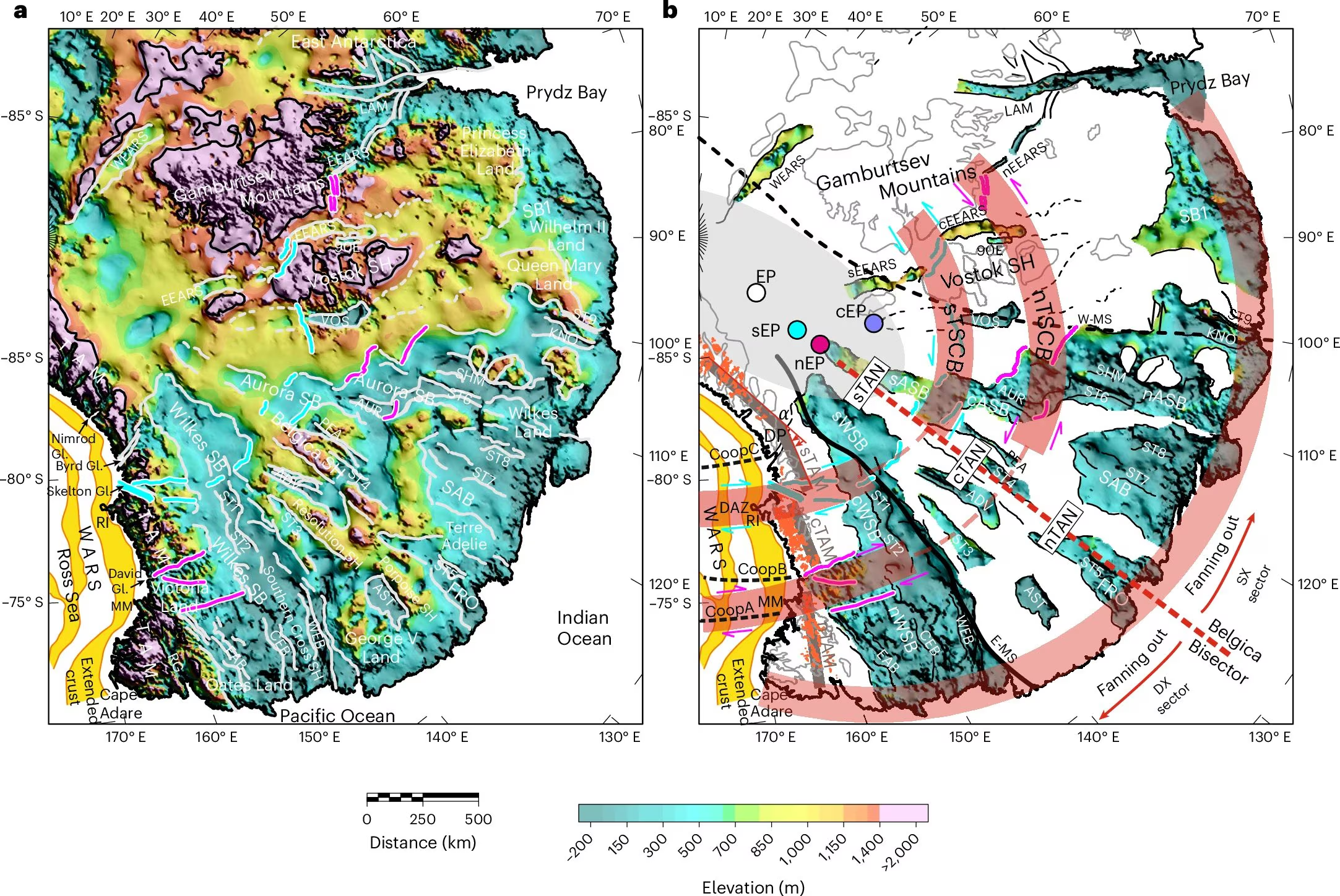
Under the ice capEast Antarctica one was discovered vast, previously unknown, fan-shaped structure of the earth’s crustwhich was given the name of East Antarctic Fan-Shaped Basin Province. The structure, identified thanks to satellite data and survey campaigns carried out over many years, is made up of a series of triangular basins that open radially starting from a fulcrum near the South Pole. The most surprising aspect of the discovery is that it is not a superficial structure, but is reflected deep in the lithosphere. It would have originated there rotation of tectonic platesbut the details of when and how it formed are still under investigation. The work, published in the magazine Nature Geoscienceis the result of an international collaboration coordinated by the University of Genoa, created with the support of the National Antarctic Research Programme.
The fan-shaped structure buried under the ice of Antarctica
The presence of the structure under the ice of East Antarctica has been already hypothesized a decade agobut only now has it been possible to verify its existence. To do this, the increasingly detailed data obtained in recent years relating to the topography of the area were used. The structure consists of numerous buried basins of triangular shape which open radially starting from a fulcrum near the South Pole. Among these there are some of the main depressions in the area, such as the Wikes and Aurora basins and the one occupied by Lake Vostok, the largest subglacial lake in Antarctica.
Thanks to seismic, magnetic and gravitational data, and crustal and lithospheric models, researchers have discovered that it is not just a superficial landscape, but its conformation continues deeper into the lithosphere. This means that its origin is tectonicattributable to a deformation of the crust which led to a rotational extension, like that of an opening fan. At the base there could be the movements that affected the supercontinent Gondwana which about 200 million years ago was located near the South Pole. It could be the largest structure of this type ever identified in the earth’s crust, perhaps the result of a process that took place in several phases.
What is the use of knowing topography: the importance of study
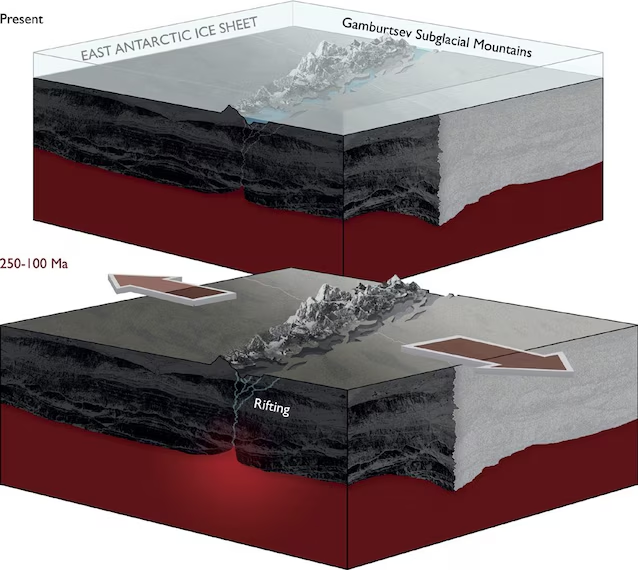
Knowing what the Antarctic continent is like beneath the ice cap that covers it is essential first and foremost for understand its geological evolution over time. This means being able to reconstruct the movements of tectonic plates and the origin of elements of the buried landscape. The dynamics that led to the formation of the fan structure could for example be linked to uplift of the Gamburtsev Mountainsenormous mountains up to 3400 m high, formed 600 million years ago and completely hidden under the ice of Antarctica. Furthermore, the morphology and composition of the bedrock influence the behavior of the ice sheet above. For example, they influence the speed with which ice slides towards the sea and predispose some areas of the ice sheet to be more affected by current climate change.