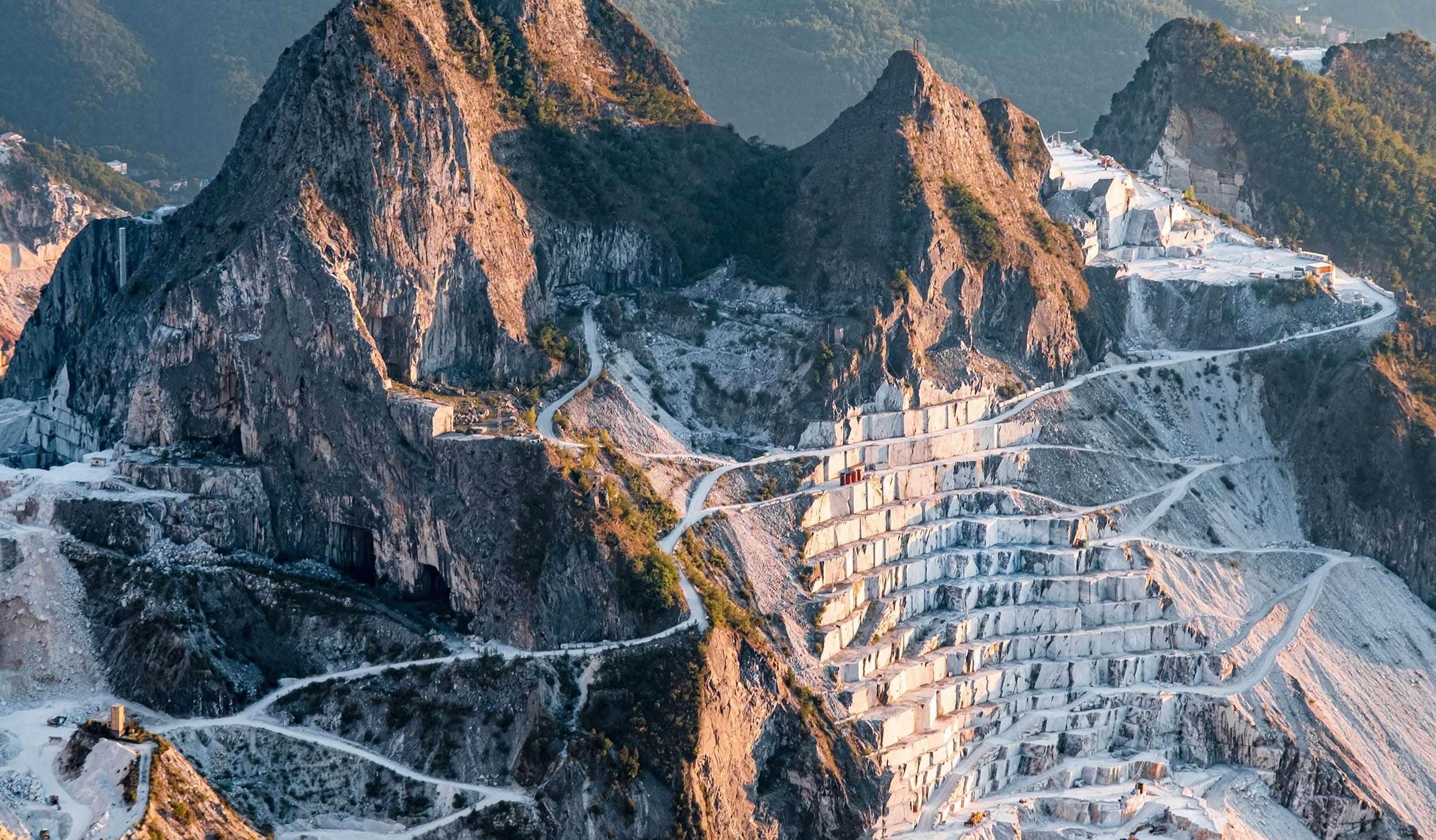
The Apuan Alps they represent a deep and magnificent scar on the skin of Italy, where the white color of the marble mixes with shadowy gorges and sharp peaks. Here, between the smoke of the quarries and the millennial silence of the rock, nature has worked for geological eras like a patient alchemist, combining chemical elements under extreme pressures and temperatures. In this monumental setting, a team of researchers managed to uncover a microscopic and revolutionary entity: the Delchiaroite. We are not faced with a simple academic discovery, but with a real one “miracle” of molecular geometry. While the whole world knows these peaks as the cradle of Michelangelo’s marble, Delchiaroite reminds us that in the dark depths of Mount Arsiccio the earth’s crust has written a different story, made up of atoms that have fit together in ways we didn’t think possible. In this stone labyrinth, where the history of the planet is literally stratified underfoot, the discovery of this new mineral demonstrates that our encyclopedia of nature is not a closed book, but a work still full of blank pages to fill.
The discovery in the marble quarries of Carrara
The discovery is the result of meticulous teamwork involving researchers from the Department of Earth Sciences of the University of Pisa, the University of Florence and the Institute of Geosciences and Georesources of the CNR. The name chosen for this new protagonist of geology, Delchiaroite (Dch)is a tribute to Lorenzo Del Chiaroa passionate lover of mineralogy and historic collaborator of the University of Pisa, who for decades combed the landfills of local mines, helping to reveal their incredible richness.
The professor Cristian Biagioniprofessor of Mineralogy at the University of Pisa and one of the main authors of the study, comments on the importance of the discovery:
Delchiaroite represents a challenge to our knowledge of systematic mineralogy. Finding a mineral that simultaneously contains copper, iodine and an organic group such as methanethiolate in such an ancient geological context is an event of exceptional rarity.
The natural laboratory of Monte Arsiccio
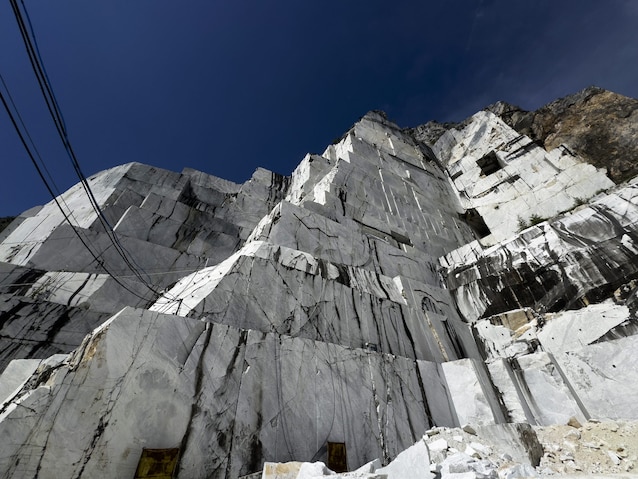
The mineral was identified precisely at the site of Mount Arsiccio (Stazzema). This area is an old acquaintance for mineralogists: the Apuan Alps are a sort of “open-air laboratory” due to their complex tectonic history. About 20-30 million years ago, during the Apennine orogeny, the rocks were subjected to immense pressures that allowed chemical elements to recombine in rare ways. As the researcher explains Federico Zorziunderlining the peculiarity of the site:
Monte Arsiccio confirms itself as a mineralogical location of global importance. The unique chemical-physical conditions of this deposit have allowed the conservation of species that elsewhere would have been destroyed or would never have formed.
The chemical formula: what’s special about it
If we tried to observe it closely, we would find ourselves in front of one absolute rarity: Delchiaroite in fact manifests itself in the form of tiny crystals of a vibrant yellow colour, the length of which does not even reach a tenth of a millimetre. Chemically we are faced with first copper iodide methanethiolate never found in nature. Its simplified formula is: Cu3I(CH3S)2
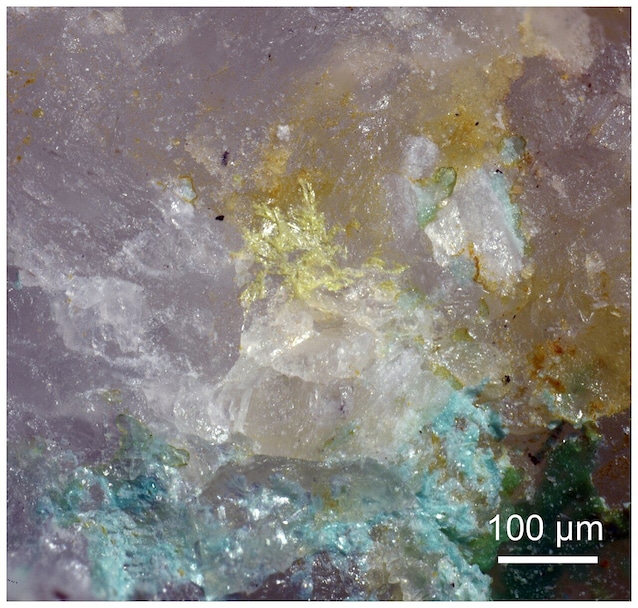
The peculiarity that has left researchers amazed is the contemporary presence of iodine and an “organic” component (methanethiolate), an extremely unusual combination for a natural mineral. The discovery, its name and the associated symbol have been officially approved by the Commission on New Minerals, Nomenclature and Classification (CNMNC-IMA), sanctioning the uniqueness of this mineralogical species. Full professor of Mineralogy at the University of Florence Luca Bindione of the world’s leading experts in the sector, describes the emotion of the structural discovery:
When we analyzed the X-ray diffraction data, we were amazed. The structure of delchiaroite is based on atomic complexes never before observed in nature; it’s like having found a new type of architecture in a neighborhood we thought we knew by heart.
Why this discovery is so important
Faced with such an infinitesimal yellow fragment, a question arises spontaneously: why does science celebrate an almost invisible “pebble” with such emphasis? The answer lies in the hidden potential of its chemical architecture. Delchiaroite is not just a mineralogical curiosity: its own hybrid structurewhich merges the inorganic world with organic groups, could direct the development of new ones industrial catalysts or synthetic materials with new electrical properties. Furthermore, this discovery further elevates the prestige of the Apuan Alps, consecrating them as one of the most extraordinary sanctuaries of the “mineral biodiversity” globally, a place where Earth has experimented with unique chemical solutions in the world.
