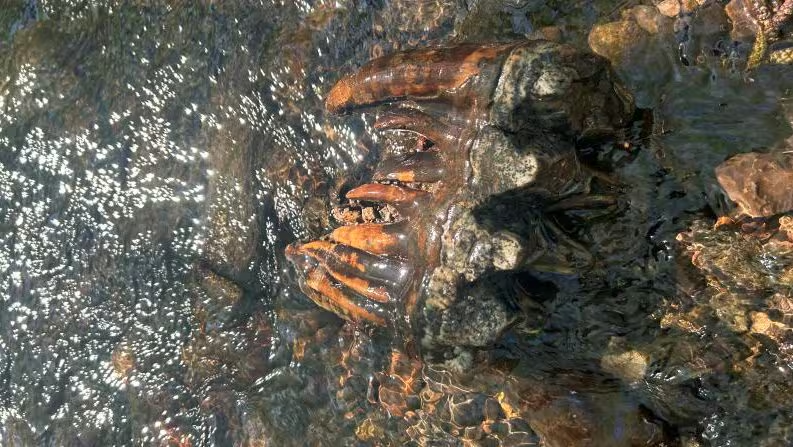
A molar of Pacific mastodon (Mammoth pacificus), dating back to around 10,000 years agowas discovered within a nature preserve managed by the Midpeninsula Regional Open Space District, in San Mateo County, California. The fossil belonged to a adult specimen and was found in preserved conditions exceptional. Mammoth pacificus it was a kind of mastodon spread along the west coast of the present United States. She was related to Mammoth americanumwidespread in the rest of North America, from which it differed in some ways characteristics of the skeleton.
The discovery occurred during an inspection conducted by the geomorphologist Brigid Lynchengaged in the evaluation of a watercourse as part of a project to improve the habitat of the California red-legged frog (Rana draytonii). In the stream bed, Lynch spotted what initially appeared to be a simple shaped rock unusual. The subsequent examination, however, allowed it to be identified as a mastodon molar. The find measures approximately 23 centimetres and preserves in its entirety the crown and the rootincluding root canals. According to Midpen, this level of conservation offers the opportunity to study with particularity detail an animal that lived in the area at the end of the Pleistocene.
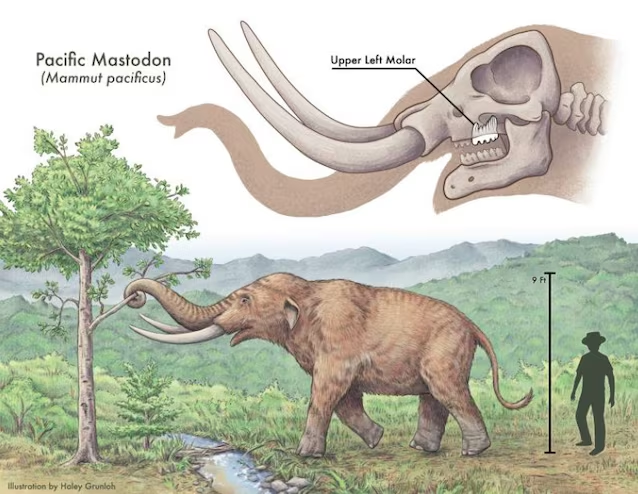
The fossil was donated to Doerr School of Sustainability at Stanford Universitywhere it will undergo further analysis. The studies will also include the datingwhich will allow you to determine more precisely the age of the find. The discovery represents a rare testimony of the presence of the Pacific mastodon in the Californian landscape approximately 10,000 years ago. In fact, the find is not only an element of paleontological interest: its exceptional integrity will be able to provide new information on the animal and theenvironment in which he lived, while future analyzes will help to define more precisely the chronological context of the discovery.
