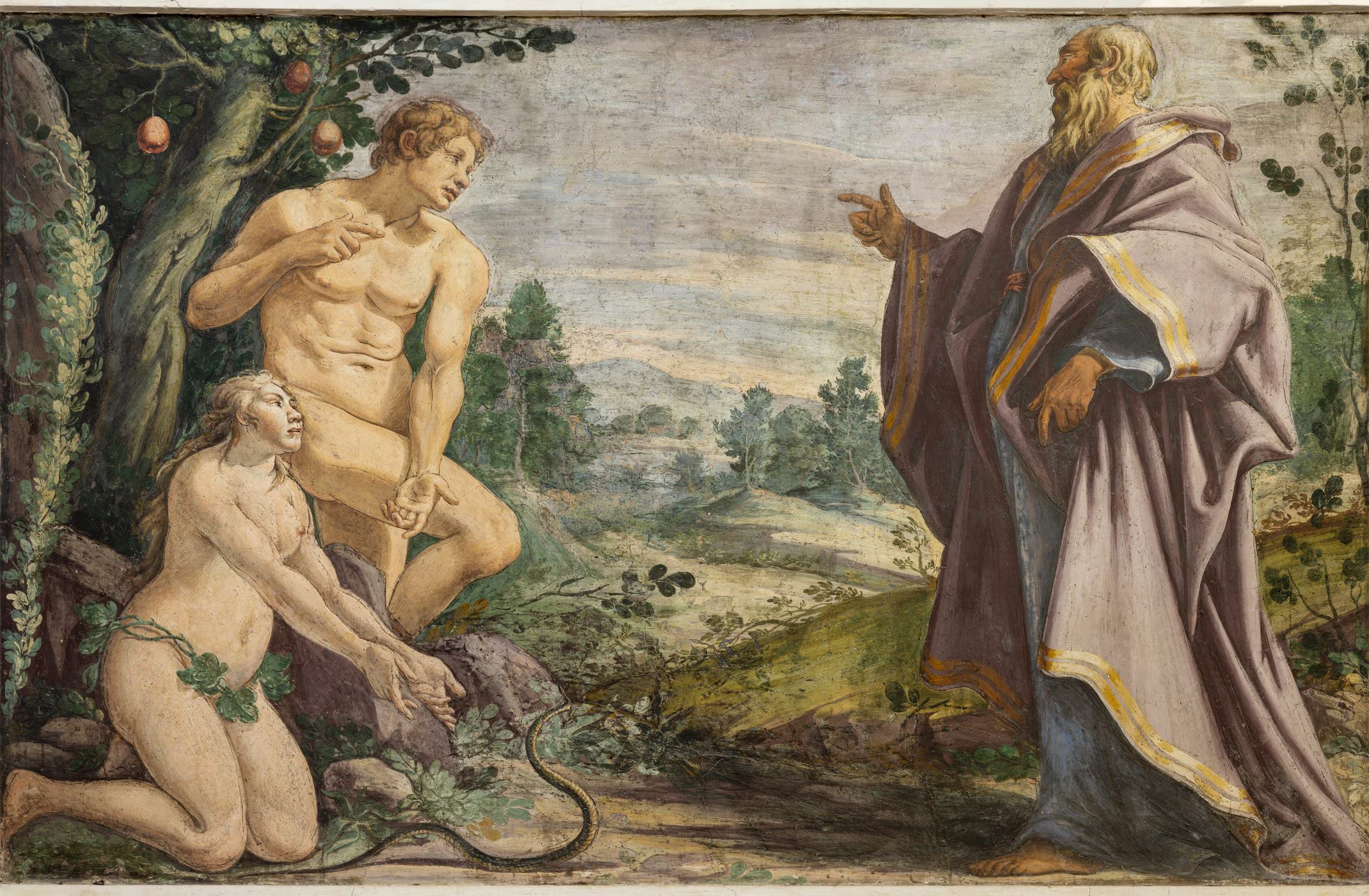
The fruit of the Garden of Eden, eaten by Adam and Eveit wasn’t an apple. Or rather, the book of Genesis, which tells the story, does not specify what fruit it was and just talks about «tree of knowledge of good and evil». The idea that the fruit was an apple arose in the Middle Ages, probably because the word is Latin malum indicates both evil and the apple. Previously other interpretations prevailed and it was generally believed that the fruit was a fig. Even the most general interpretation of the episode is debated and there is no agreement among scholars on what it meant to eat the fruit of the tree of the knowledge of good and evil.
The story of the book of Genesis
The book of Genesis tells us that, after Creation, Adam and Eve lived happily in the Garden of Edenin which all the people were present fruit treesincluding the tree of knowledge of good and evil.
So God made every tree grow out of the ground that was desirable to the eye and good for food, and also the tree of life in the midst of the garden and the tree of the knowledge of good and evil. (Genesis 2.9)
Adam and Eve were free to eat whatever they wantedwith the exception of the fruits of the tree of the knowledge of good and evil. On this point, God was categorical:
And God also imposed this command on man: «You can eat your fill of every tree in the garden. But as for the tree of the knowledge of good and evil, you must not eat from it, for in the day you eat from it you must certainly die.” (Genesis 2, 17)
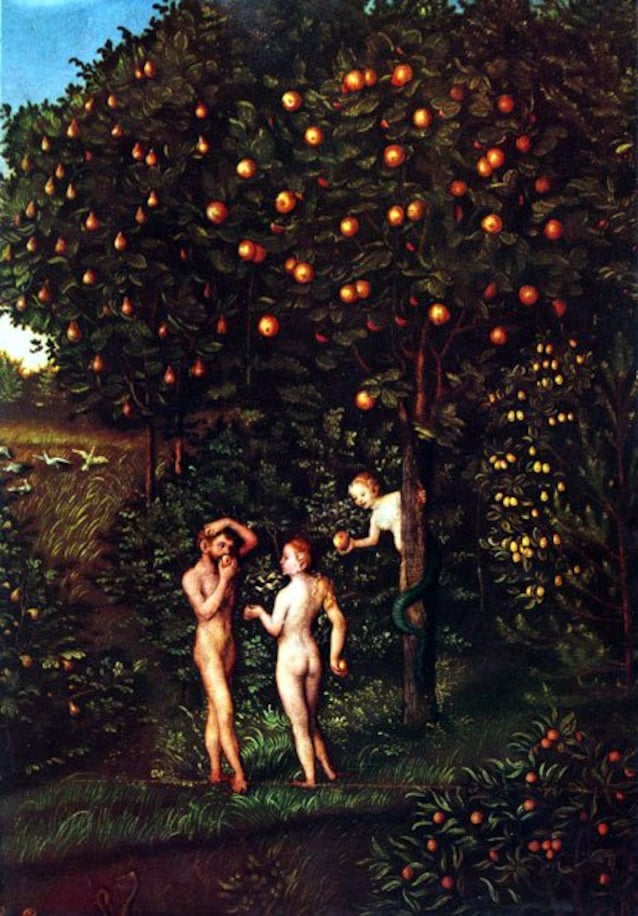
Tempted by the serpentHowever, Adam and Eve disobeyed God and ate the fruit of the tree:
The serpent said to the woman: «You will not die at all! Indeed, God knows that when you eat of it, your eyes will be opened and you will become like God, knowing good and evil.” Then the woman saw that the tree was good for food, pleasing to the eyes and desirable for gaining wisdom; she took some of its fruit and ate it, and she also gave some to her husband who was with her, and he also ate it. Then the eyes of both of them were opened and they realized that they were naked; they plaited fig leaves and made them into belts. (Genesis, 3, 4-7).
As soon as they ate the fruit, Adam and Eve did they realized they were naked and they covered themselves with a fig leaf. For punishment, God there kicked out of Eden and forced them to live a mortal life. In fact, the act of eating the fruits constituted the original sinwhich has forever stained human beings.
The story of Adam and Eve, born in the Jewish context, was accepted by Christianity and also by Islam. It is in fact narrated, synthetically, also in Koran:
And We said: «O Adam, inhabit Paradise, you and your wife. Satisfy yourself wherever you like, but do not approach this tree, for in that case you would be among the wicked.
Then Iblis caused them to stumble and be driven away from the place where they were. And We said: “Go away, you enemies of one another. You will have a home on earth and will enjoy it for an appointed time.
Iblìs is none other than the devil and has the role that the serpent has in the Bible.
What is the Tree of Knowledge of Good and Evil
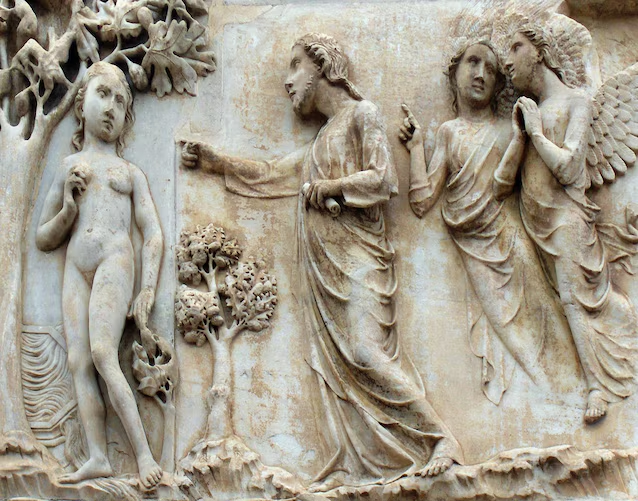
The story of the book of Genesis it is clearly allegoricalbut there are different interpretations of its meaning. The most widespread is that the tree represents knowledge as a wholenot just the knowledge of good and evil. The gesture of eating the fruits, therefore, would mean that men have appropriated a divine prerogative, that of being able to know, trying to reach the omniscience reserved for God.
According to another interpretation, the act of eating the fruits of the tree of the knowledge of good and evil indicates that man has arrogated the right to establish what is right and what is wrong (good and evil) autonomously, without taking God’s judgment into account. Even in this case, man would have assumed a prerogative reserved for God.
Because we think the fruit was an apple
The book of Genesis does not specify what fruit was eaten by Adam and Eve and, over the centuries, there have been proposals different interpretations. Establishing what the fruit was was necessary both to be able to formulate a hypothesis of interpretation and to be able to artistically represent the story.
A first interpretation, widespread in Judaism, was that the fruit was a fig: since Adam and Eve covered themselves with the fig leaf, it was “automatic” to assume that the tree was precisely that.
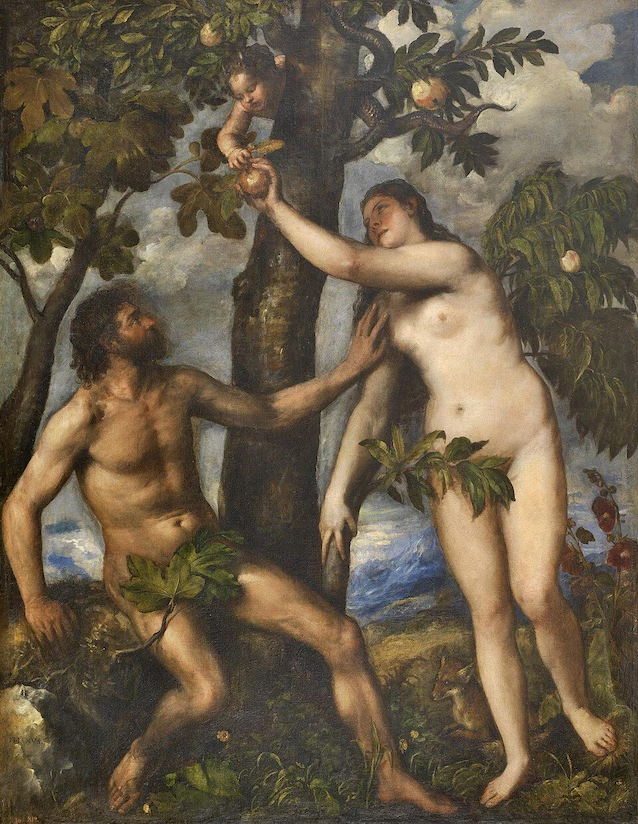
However, since the Middle Ages the idea that the fruit was an apple has established itself. Probably due to the fact that in Latin – the language in which the Bible was read in Western Europe – the word malum it means both “evil” and “apple”.
The apple, after all, in the ancient world was a fruit full of symbolic meanings. In the Near East it was a symbol of prosperity and beauty; in Greek mythology it had the same value, but it could also transform into bone of contentionas in the case of judgment of Paris who, according to a well-known myth, had to choose who was most beautiful among the goddesses Athena, Hera and Aphrodite by awarding the chosen one an apple.
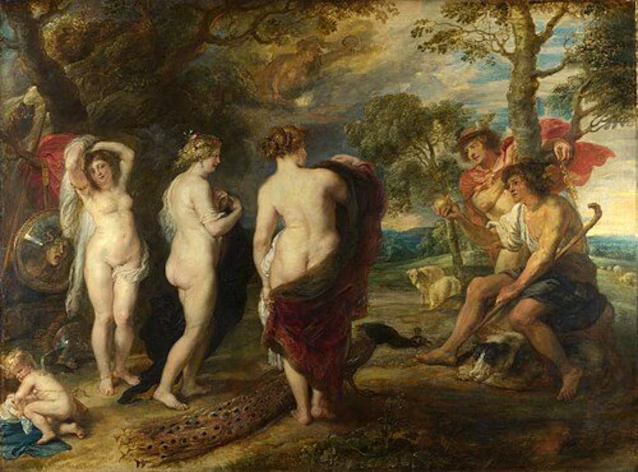
The symbolic meanings favored the association of the fruit of the tree of knowledge of good and evil with the apple, motivated, however, above all by the double meaning of the word malum.
