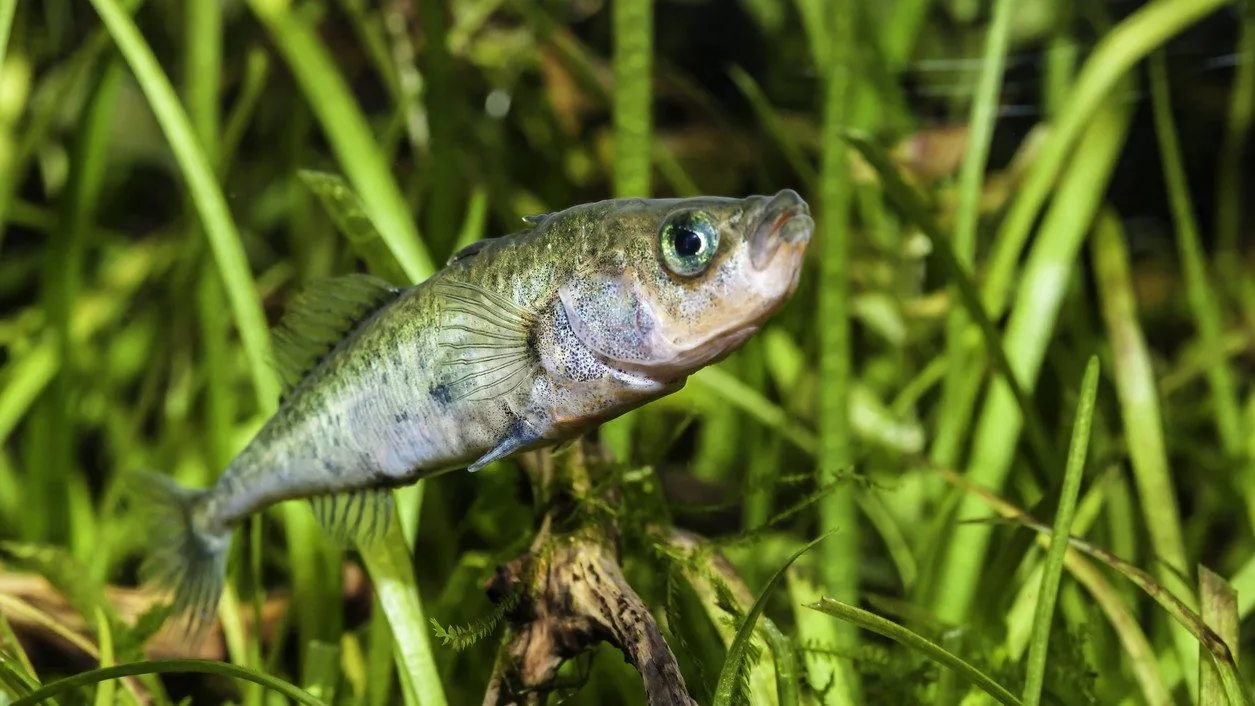
On March 11, 2011, a magnitude 9.0-9.1 earthquake caused a tsunami in the Tōhoku region of Japan. Because of this, in the locality of Ōtsuchi, the flooding and subsidence of the land formed new ponds fed by springs. In 2012 researchers found some there hybrid sticklebacks: fish with genetic material of both Gasterosteus aculeatuswhich lives in freshwater in this area, is of Gasterosteus nipponicusa marine species that can migrate between the sea and inland waters.
Practically, the tsunami created an environment where two different fish species met, creating a new one, as reported in the study published on Nature ecology & evolution. Following the population of these sticklebacks for nine yearsthe researchers observed that the genetic variants of the marine species decreased in a large part of the genome, i.e. the genetic heritage. Survival in ponds and the tendency to move towards the sea may help explain the phenomenon, but the simulations also suggest genetic incompatibilities yet to be identified.
Nine years of samples to follow the intersections after the tsunami in Japan
From 2012 to 2020, a group of researchers collected 2,698 sticklebacks in the ponds created after the tsunami. By analyzing their DNA, the researchers estimated the genetic contribution of the two species. They then identified 667 diagnostic points, i.e. stretches of DNA in which the examined species had different genetic forms, called alleles.
In 2012, 38% of individuals sampled were hybrids. Among them also appeared descendants of other crosses, including those between a hybrid and Gasterosteus aculeatus, which probably descended from the first hybrids formed in 2011. In 2020, however, the population was genetically almost entirely Gasterosteus aculeatus. At the tenth generation, in 629 of the 667 diagnostic points the frequency of the alleles of Gasterosteus nipponicus it was now equal to zero in the fish analyzed. Some regions, however, still preserved variants of the marine species of Gasterosteus nipponicus.
According to the authors, the waves brought marine fish from the ocean, while the retreat of the water brought freshwater fish from upstream reaches. This is a reconstruction, not a directly observed movement. The two species separated about 680 thousand years ago and have strong reproductive barriers, although not absolute isolation. In pre-tsunami samples, no hybrids were identified at Ōtsuchi, although limited genetic exchanges in the past cannot be ruled out. Hybridization is therefore attributed, with caution, to changes caused by the tsunami.
Chance alone does not explain the decrease
A variant, however, can become rarer by pure chance, because not all fish have the same number of descendants. This phenomenon is called genetic driftand to understand if this was enough to explain the disappearance of marine variants in hybrid sticklebacks, the researchers estimated the number of fish, 22,485 individuals, then simulated on the computer how the variants would have changed in ten generations if none had been favored or disfavoured. For each of the 667 diagnostic points, the team simulated the transition from the second to the tenth generation 10,000 times. Various scenarios have been hypothesized, with populations of different sizes, and the observed decrease in marine alleles was in the vast majority of cases faster than expected. Genetic drift, therefore, alone does not explain the overall picture for allele variation.
In the freshwater ponds, mainly resident fish survived
A first hypothesis could concern the survival rate of the two species in the new habitat. To measure a possible difference, the group of scientists placed fish of the two species in a delimited structure inside a pond created after the tsunami. In a trial with 60 individuals per species, 53 were ultimately recovered alive Gasterosteus aculeatus and only 2 of Gasterosteus nipponicus. In another test, conducted with 120 backcrossesi.e. fish obtained by crossing a first generation hybrid with a freshwater stickleback, there were 33 survivors after about six months.
By comparing the DNA of the backcrosses placed in the pond with that of the survivors, the researchers identified some regions of the genome in which the alleles of Gasterosteus nipponicus were associated with shorter survival. Elsewhere, however, marine alleles had become more frequent among survivors, suggesting they may give them an advantage.
The tendency to migrate can drive some species away
A second hypothesis instead concerns the fact that the marine species can move towards the sea, while Gasterosteus aculeatus, in this area, it remains in fresh water. The ponds are connected, through small underground passages, with a stretch of brackish water: a way out to the sea. The study authors did not observe adult fish moving from the sea into the ponds, so exit alone may have reduced marine alleles in the local population. To investigate this behavior they installed a system of eight communicating chambers in a watercourse, with a trap downstream. After about two months, among 100 fish of each species, the trap had caught a greater share of Gasterosteus nipponicus. In another trial with 200 backcrosses, the tendency to reach the trap was intermediate between those of the two species.
By comparing variants from backcrosses that had moved downstream with those that remained, the researchers identified two regions of the genome associated with this migration. One of these regions corresponds in part to one of those related to freshwater survival.
Some barriers act early, other causes remain to be verified: the results of the study
Comparing the genetic variants year by year, the researchers noticed that those in regions associated with barriers between the two species declined faster than variants in other regions. The barriers include different survival, habitat choice and, according to a previous study, the difficulty of male hybrids to reproduce and sexual isolation, i.e. the obstacle to mating between species. Many marine variants in the regions linked to these reefs had already disappeared in the samples of the first generationsonly later did the decrease extend to most of the other points examined.
The simulations show that neither drift alone nor a few regions with a strong effect together reproduce the initial crossbreeding and subsequent loss of marine alleles. However, when the simulation used a model with many incompatibilities distributed in the genome, i.e. combinations of variants of the two species that penalize hybrids in subsequent generations, it produced a trend compatible with the data. However, this does not prove that those specific incompatibilities are present in Ōtsuchi fish.
The group found it traces of recent crossings also in two other habitats affected by the tsunami, in Kuji and Iwaizumi. There too, some genetic regions of the marine species were less represented, but compared to Ōtsuchi, one had a greater part of its genetic heritage remaining. The authors would like to analyze the entire genome to verify the observed models and understand which mechanisms have caused the marine variants to decrease so rapidly, but the measured result is already clear: the meeting between two species after a major environmental change has not led, in these habitats, to the stable fusion of their populations.
