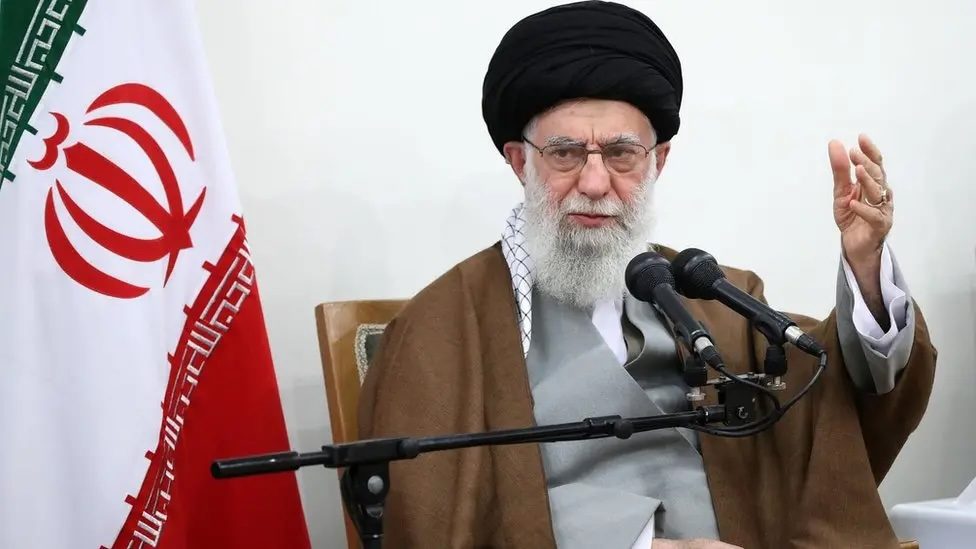
Ali Khameneiborn in 1939 and killed on February 28, 2026 during the US-Israeli attacks on Iran, was the supreme leader of Iran from 1989 to death. Close to Ayatollah Khomeini, he took part in the protests against the Shah’s regime since the 1960s and at the end of the following decade he was active in Islamic revolution that established the republic. He was elected president of Iran in 1981 and supreme leader in 1989. He was always deployed on conservative positions and in foreign policy he followed a anti-Western line. Like his predecessor Khomeini, he clashed with the United States and Israel. The Americans and Israelis killed him in an air raid.
Khamenei’s youth and tensions in Iran
Ali Hosseini Khamenei was born in MashhadIran’s second largest city by population after Tehran, the April 19, 1939 in a family of Azeri origin. As a young man he accomplished religious studies and attended the lessons of the ayatollahs (literally “signs of god”, i.e. the major exponents of the Shiite clergy), including Ruhollah Khomeini. He stood out for his unconventional attitude, being a smoker and loving wearing jeans.
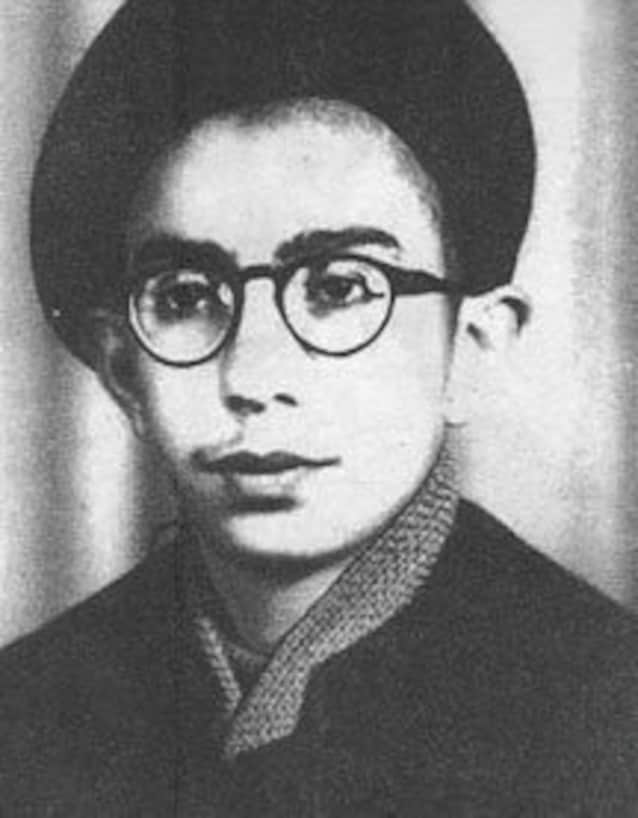
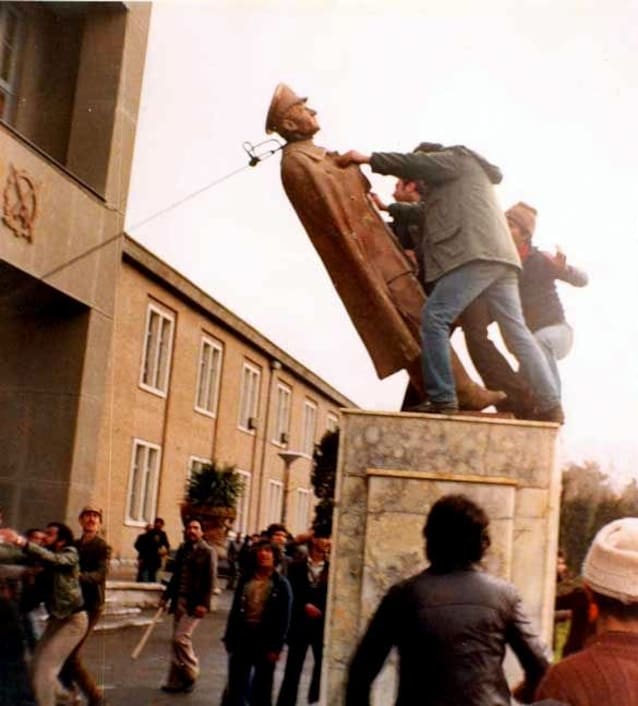
He was interested in politics from a young age and took part in Islamic uprisings that shook Iran in 1963. It should be remembered that until 1979 the Shah was in power in the country, a ruler close to the West who stood out for his secular approach, but also for his absolutism, corruption and harsh repression of the opposition. Iran was prey to strong political and social tensions. After 1963 the Shah unleashed a harsh repression. Thousands of opponents were imprisoned, tortured and killed. Khomeini, who had become a point of reference for his opponents, went into exile. Khamenei remained in Iranwas imprisoned, but was released after a short time. In 1964 he got married and in the following years he worked as teacher in religious schools of Mashhad.
The Islamic revolution
Tensions reached a peak in the late 1970s. Since January 1978, Iranian cities have developed heatedly street protestsorganized not only by religious exponents, but also by secular left-wing movements. In January 1979 the Shah was forced to flee and relinquish power. It was established Islamic republica theocracy led by Khomeini, who returned from exile after the Shah’s escape. Khamenei played an important role in the revolution and was closely linked to Khomeini. The Ayatollah entrusted him with an important task, naming him guide to Friday prayers of Tehran. In 1981 he suffered a bomb attackbut, although wounded, managed to save himself.
Khamenei president of Iran
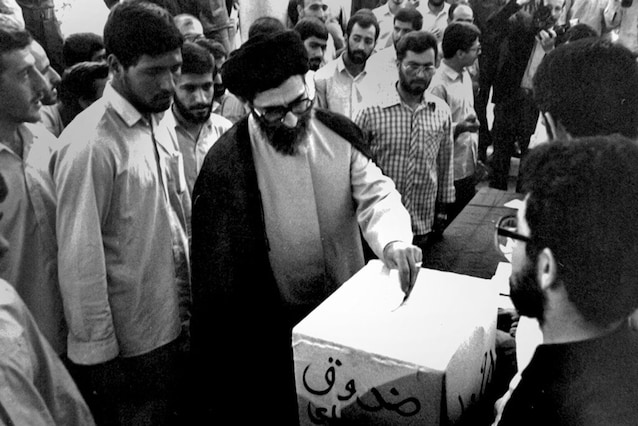
In 1981 Khamenei ran for president of Iran. It should be remembered that in the Islamic Republic of Iran a kind of diarchy between two institutional figures: the president, elected by the people by universal suffrage, and the supreme guide, a religious representative elected by the Assembly of Experts.
Khamenei was elected president with a very high percentage of votesabove 95%, and collaborated closely with Khomeini, who held the position of supreme leader. He was re-elected in 1985 for a second term.
As president, he led the country in war against Iraqwhich lasted until 1988, and took a personal interest in military matters.
The election to the position of supreme leader
In 1989, when Khomeini died, Ali Khamenei was elected in his place as supreme leader of Iran. He then left the presidency. His election was contested by some of the Shiite clergybecause Khamenei was not among the highest ranking exponents (he did not, moreover, hold the title of ayatollah), to the point that, at first, the position was assigned to him only temporarily. However, Khamenei was the leader who, on a political level, could better guarantee continuity with Khomeini. Therefore he was appointed ayatollah and confirmed in the role of supreme leader. He held the position until his death.
Khamenei’s political choices
Khamenei took conservative positions. In his years as leader he strengthened the role of the supreme leader and resolutely supported not only the application of Islamic law, but also theobservance of religious preceptssuch as the use of the veil for women, which is required by law in Iran. He has taken very conservative and retrograde positions on issues such as homosexual rights and women’s emancipation. In economic policy, he supported a nationalist lineaimed at avoiding dependence on foreign countries.
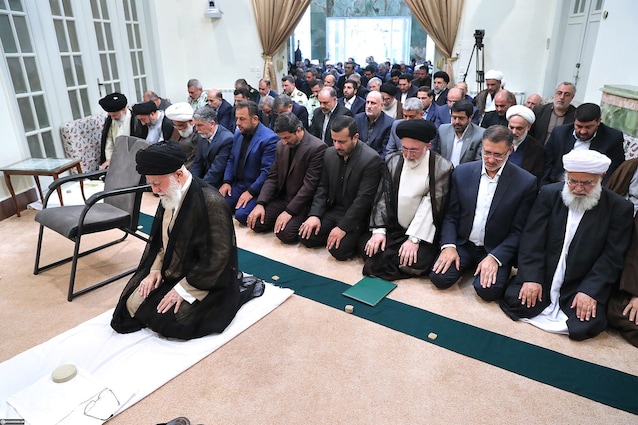
Khamenei led the country with an iron fist. Over the years, numerous have developed in Iran protests against the regime theocratic and against the supreme leader himself. Khamenei did not hesitate to order repress them harshly.
The role of Khamenei in relation to the Iranian nuclear program is under discussion (the subject, as we know, of strong international tensions, as well as being the declared reason for the interventions of the Israeli and US militaries, including the attack of 28 February 2026). In 2005 Khamenei issued a fatwa (non-binding legal opinion) banning the production of nuclear weapons. However, according to the most widespread interpretation, the fatwa does not apply to Islamic countries.
In foreign policy, Khamenei supported the anti-Western line of his predecessor Khomeini. Tension with the United States – also due to American support for Israel and the targeting of Iranian natural resources, which is the third country in the world for oil reserves and second for natural gas reserves – has grown enormously. Periods of relative détente alternated with periods of rising tensions, until the 12-day war of June 2025 and the attacks of 28 February 2026, during which Khamenei was killed.
