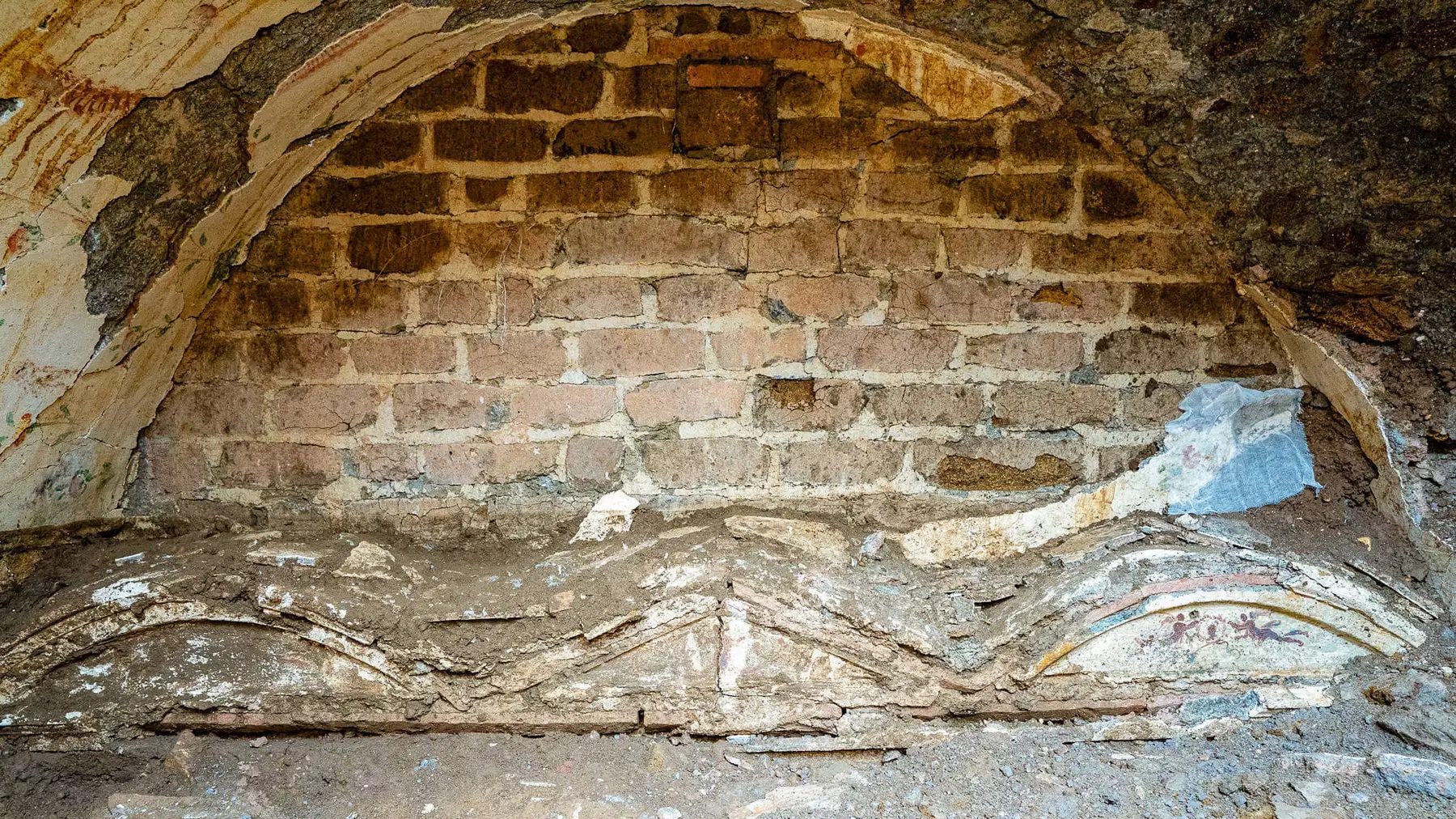
An unpublished portion of the Ostiense Necropolis emerged in Rome during the construction of a university student residence in via Ostiense. The discovery, curated by the Special Superintendency of Rome, has revealed a funerary complex of considerable size which expands knowledge on one of the most important burial spaces of the ancient city, with finds ranging from the late Republican age to 4th century AD.
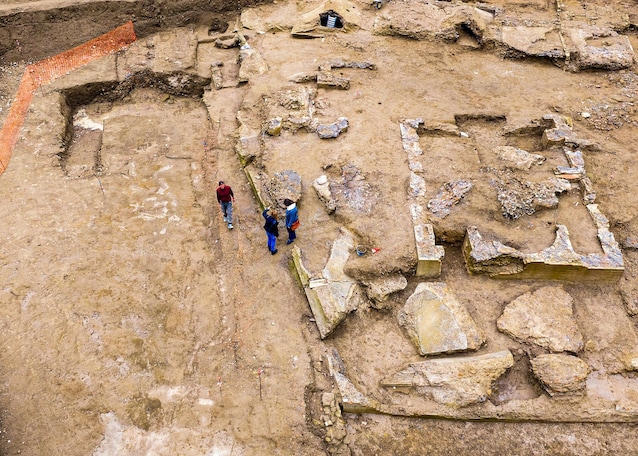
At about a meter deep, the remains of several vaulted funerary buildings and decorated spaces. The first nuclei to emerge include at least six main structuresprobably connected to each other and organized around one common spaceas well as several smaller environments. Within these environments they re-emerged frescoed plasterdecorated with plant motifs and stuccoas well as niches and aedicules decorated with symbols typical of the Roman funerary rite, such as figures of Oranti And Winged victories. Some floors have decorations a mosaican element that underlines the significant artistic and cultural quality of the complex.
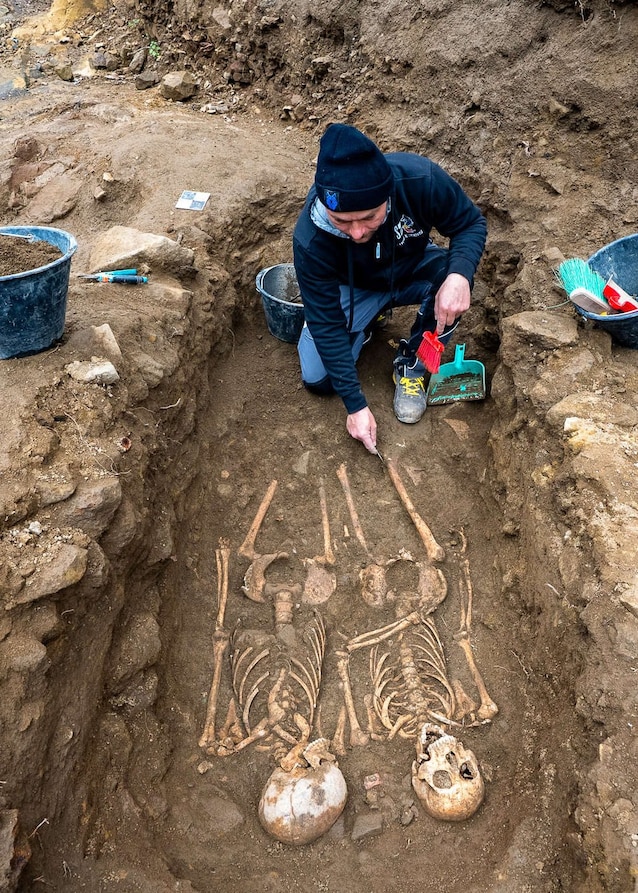
In addition to the wall structures, since it is a necropolis context, the excavation brought to light numerous human remains (about fifty individuals, of which 13 people from the same family buried together). Particularly relevant is the fact that the buried individuals are especially male and in good health. One of them had a nail resting at chest height. This unusual element is interpreted as a sign of ancient ritual practicespresumably times a chase away evil or prevent the return of the deceased to the afterlife.
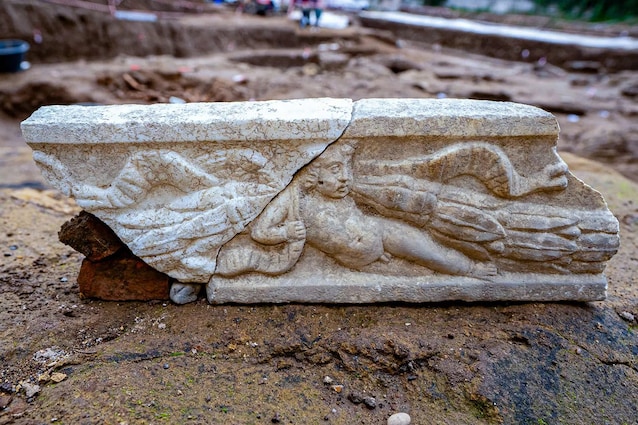
Not only these discoveries they expand knowledge about the necropolis that flanked the ancient Via Ostiense, whose precise location was known thanks to findings dating back more than a century ago, but they add new details on how the tombs of the imperial era were organized and decorated. According to the scientific director of the excavation, the archaeologist Diletta Menghinellothe buildings discovered so far are only part of a wider and more complex funerary systemthe overall extent of which could emerge progressively as the work continues. From this perspective, the area could yield further furnishing elements, inscriptions, mosaics and decorated floors.
The special superintendent of Rome, Daniela Porrounderlined that the discovery «confirms the extraordinary complexity of the archaeological heritage of the city» and represents «a fundamental opportunity for scientific study». The Superintendence is committed to guaranteeing the protection of the complex and promoting its valorisation. The Ministry of Culture, through a declaration of minister Alessandro Giulifinally reiterated the desire to combine historical protection with the urban development project: the work on the student residence will continue, but «without impeding the project and with the hope of making the findings accessible to the public».
