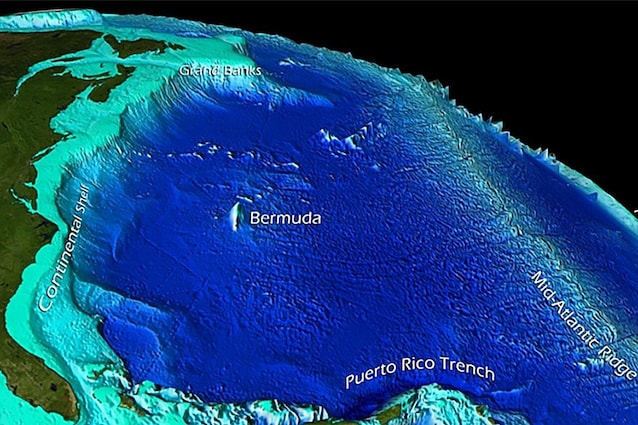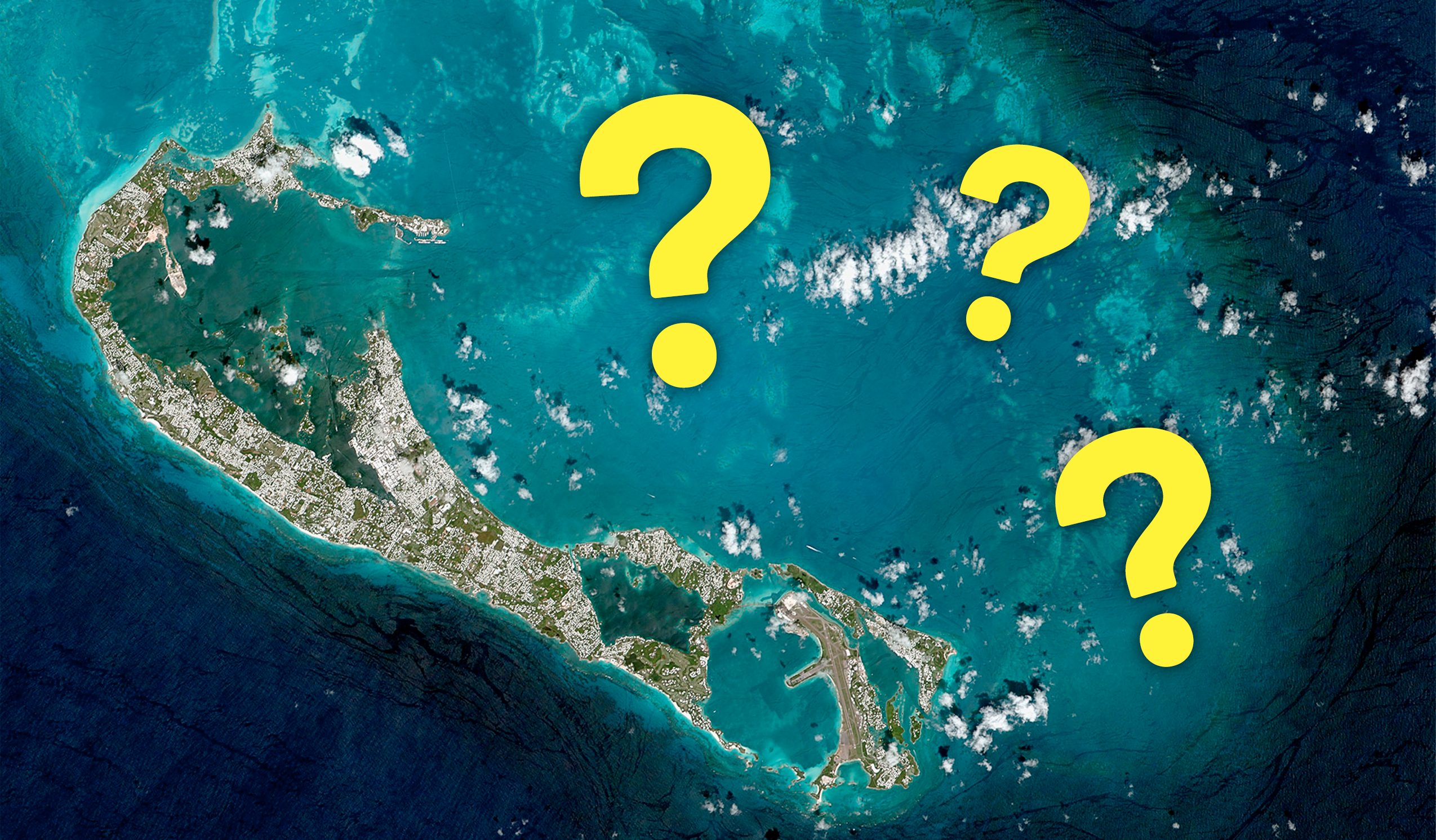
Under the Bermudathe North Atlantic archipelago off the US coast, the Earth’s mantle hides a anomalous rock structure: not very dense and over 20 km thick, it acts as a “buffer” keeping the islands raised and making them emerge from the sea. It is this structure that explains so that Bermuda didn’t sink when the mantle magma stopped fueling their volcanic activity. A geological enigma that remained unsolved for a long time in an area already famous for the legend of the Bermuda Triangle. The solution was found by American researchers, whose study was published in the scientific journal Geophysical Research Letters.
The geological mystery of Bermuda
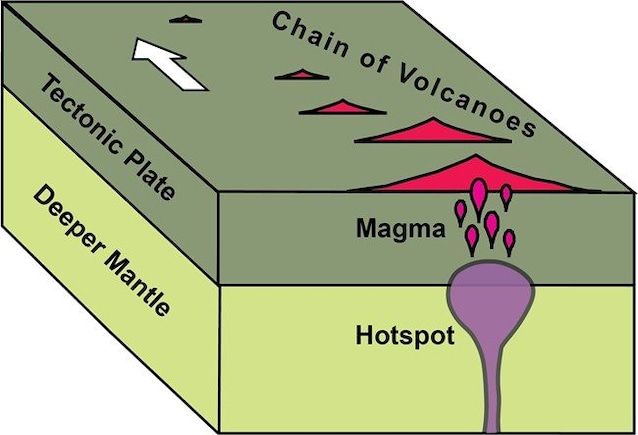
The islands that are born within one lithospheric plateand not at its margins, originate when in the mantle underlying the oceanic crust there is a column of rising hot material, called “plume”. Going back up, this material causes a swelling in the crust and fuels a volcano on the ocean floor that can gradually emerge from the ocean surface to form an island. Over time the lithospheric plate moves above the plume, carrying away the volcanic island which, no longer fed by magma, is destined to collapse together with the backdrop. In the meantime, always in correspondence with the plume, a new volcanic island arises, and then another when it moves, until an entire archipelago is formed like that of Hawaii.
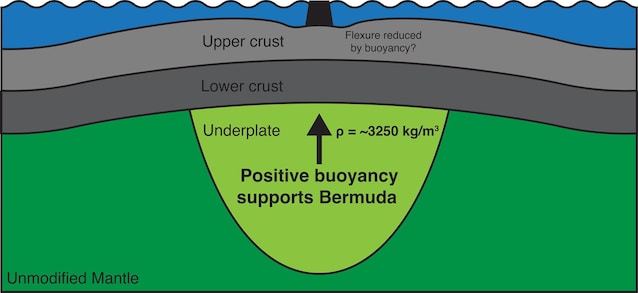
Bermuda are an exception to this common mechanism: although volcanic activity ended 31 million years ago, these islands still emerge from the surface of the sea. The researchers have thus clarified what keeps them raised: one rocky mass, 21 km thick, which extends under the oceanic crust, inside the lithospheric mantle, corresponding to the archipelago. Its presence allowed the seabed to maintain a bulge even after the magma’s rise had stopped; this layer, particularly light, acts as a sort of “cushion” that pushes the crust upwards.
How the rock structure beneath Bermuda was discovered
Researchers have identified this atypical structure analyzing the data collected by a seismic station, installed on the archipelago, and relating to the hundreds of high magnitude earthquakes that occurred even at great distances. The seismic waves generated by these events, whose speed varies based on the materials passed through, have made it possible to reconstruct the internal structure of the Earth. In this way the presence of one emerged anomalous rock massunusually thick, less dense and lighter than the surrounding rocks. According to the researchers, this is magma that was unable to reach the ocean floor and which solidified beneath the surface separating the crust and mantle, forming a low-density mass capable of exerting a push upwards on the overlying crust and prevent Bermuda from sinking. This exceptional discovery demonstrates how ancient and stable submerged structures can keep oceanic islands emerging even after the cessation of volcanic activity; and although Bermuda represents the first documented example of this type, there could be other similar cases on the planet.