
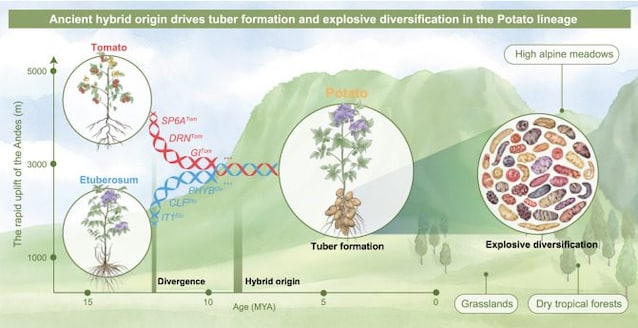
Have you ever wondered where the potatoes? You will think that it is not a question to miss sleep, yet the mysterious origin of these tubers has fascinated (and it is appropriate to say it, held awake) many researchers. The answer comes from the study of dr. Zhiyang Zhang and his team of the Chinese Academy of Agricultural Sciences in Shenzhen, published on Cell July 31st. There is no doubt: The potato descends from tomato! The research decreed that the ancestor of modern potatoes (called Petata) is a born hybrid 9 million years ago from the intersection of the ancestors of the tomatoes (Tomato) and a group of plants called Etuberosum. This affair Between the two plants it led to the development of a fundamental feature, the tubera sort of warehouse of nutrients and water which allowed the petital to survive and proliferate to create its own line of descendants: modern potatoes.
Why did you ask ourselves where the potatoes come from?
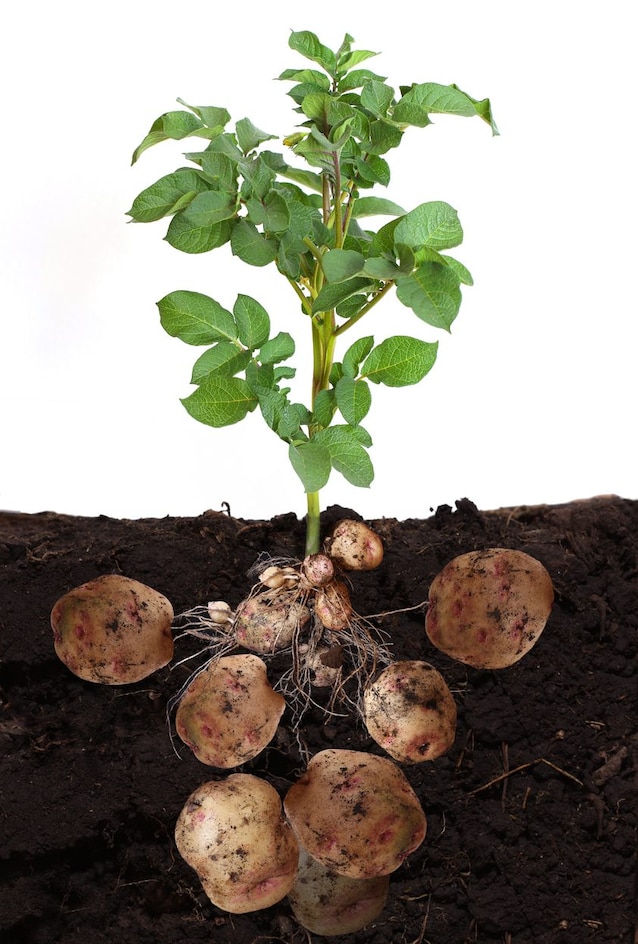
Everything started from an observation: the potato plant (Solanum tuberosum) physically resembles a group of Latin America plants, in particular in Chile, known by the name of Etuberosum. Both are plants geofitethat is, they grow underground bodies necessary to do sprout a new plantthus allowing him to reproduce without the need for seeds: fools for potatoes, rhizomes for the Etuberosum. However, the latter do not produce tubers.
According to phylogenetic analysis, which reconstruct the relationships between plants and compare their genealogical trees, the potatoes would seem more learn with tomatoes, despite the physical similarity with theEtuberosum. This inconsistency suspected researchers. In reality, we could imagine that they were all three relatives from the fact that they belong to the same family, the Solanaceaebut nobody would have expected that even they descended from each other.
As they understood that the potato descends from tomato
Analyzing the genome of 450 cultivated potatoes e 56 wild species, the researchers found that all share the same genetic structure a mosaiccomposed of a stable and balanced mixture of genes fromEtuberosum and from tomatosuggesting precisely that these two plants are the parents of Petata. About the 60% of the genetic heritage of the potato comes fromEtuberosumand about the 40% derives from tomato.
Here is the Engine: because there is more DNA thanEtuberosumbut are the phylogenetic analyzes say that potatoes and tomatoes are closest relatives? It is a question of looking not only at the quantity of genetic heritage, but also togenome architectureto the order and sequence in which the various genes and how many and which are functional are placed: in this, potatoes and tomatoes are much more similar than potatoes and Etuberosum. It is a matter of quality And how DNA is used, not just quantity.
How the tuber has formed
The next question is: how was the tuber born, a completely new organ that the co -polite plants do not have? Thanks to the interaction and combination of specific genes they have formed New genetic interactions which have allowed the formation of tubers. The fundamental genes that led to the formation of the tuber As a swelling of the stolons, they come from both co -surrender plants.
The gene arrives from the tomatoes Sp6a, a sort of switch indicating to the plant When starting to produce the tuber. FromEtuberosum instead comes the gene IT1 which coordinates the growth of the stolons from which the tubers will form. The interesting thing is that I took individually they are not enough: Without one of the two, the tuber would not have formed, the new petal species would not have been born and ultimately we would not have the potatoes we know today.
The “Killer Application” of the potatoes: tuber and perfect timing
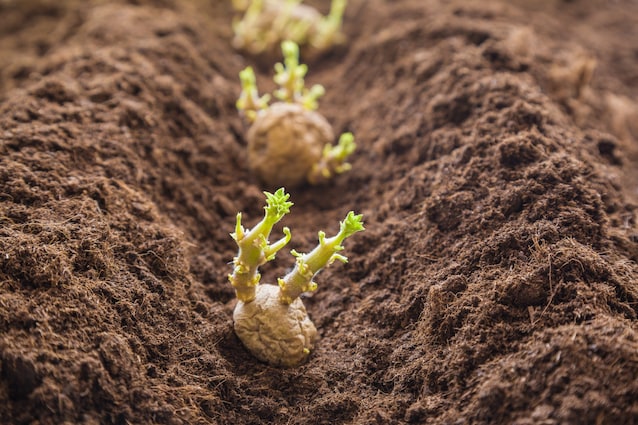
Like many hybrids between very different species and distant from each other, the peta was unlitwith little probability of survival. But the tuber, with its possibility of store nutrients and water and the ability to do sprout new plants through asexual reproduction (ie without seeds), allowed him to survive and proliferate. In fact, if you forget the potatoes in the pantry, after some time, you will see born sprout.
Petata’s fortune is also linked to another fundamental geological event: The formation of the Ande mountain range. This led to the appearance of new environments, new ecological niches that the potato was able to colonize with little competition. The formation of the Andes and the specialization of the potato to survive in a “hostile” environment, has also allowed a physical separation between petae and its origin of origin, thus preventing a new hybridization backwards (backcrossing) With one of them and instead favoring the specialization of a new genetic line, with the hundreds of descendants that we know today.
The advantages of hybridization between two different species with each other
The research also identified a common ancestor between the tomatoes and theEtuberosumfrom which the two species would have differentiated about 14 million years ago. After 5 million years, which have now become completely different species, however, they managed to reinociate themselves and create the petty hybrid, through an interspecific hybridization.
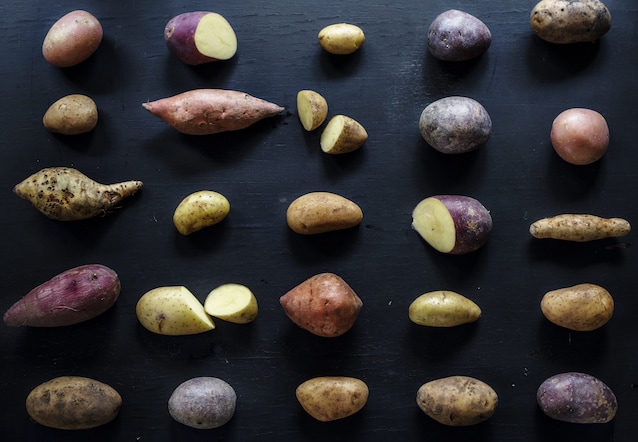
This crossing process between Very different species and distant from each otherreiterate the authors of the study, can sometimes act as evolutionary catalysttriggering what is called evolutionary radiation, namely the rapid expansion and diversification of a new speciesas in the case of potatoes. The hybridization and the formation of the tuber has acted as a sort of turbo that allowed the petota, the ancestor of modern potatoes, to expand and differentiate himself in his own species.
