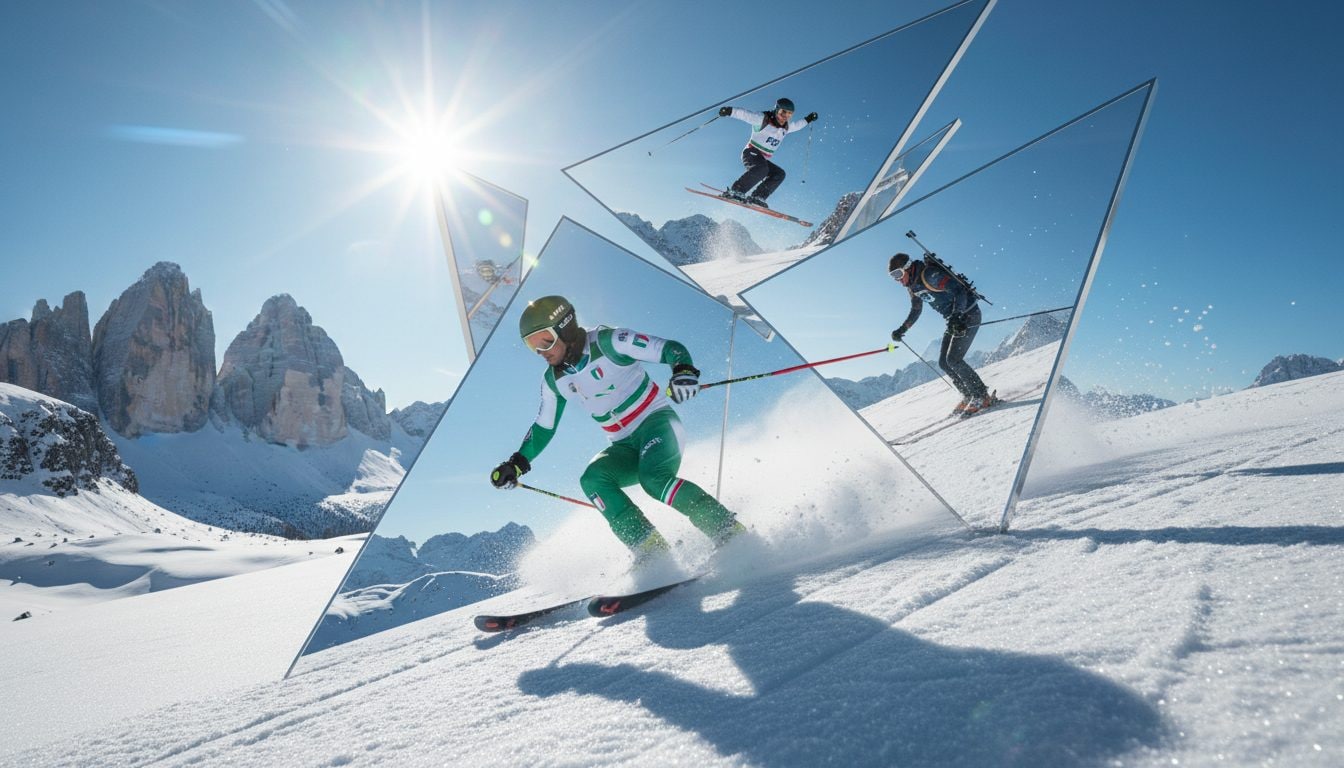
When it comes to Winter Olympicsthe first piece of sports equipment that comes to mind is almost always a pair of skisand the first discipline we think of is lo alpine skiing. In reality, the disciplines we are witnessing at the Milan-Cortina Olympics are many more, seven, each with its own specialties, with rules, specific skills and dozens of medals up for grabs. The Italian snows shone under the sign of Italy already during the first weekend of competitions with the extraordinary medals of the veterans Sofia Goggia (bronze in the women’s downhill) e Dominik Paris (bronze in the men’s downhill), the consecration of the talent of Giovanni Franzoni (silver in the men’s downhill) and the exciting show of strength of the team Biathlon (silver in the mixed relay for Giacomel, Hofer, Wierer and Vittozzi).
From alpine skiing to freestyle, from cross-country skiing to biathlon, up to the Olympic debut of ski mountaineering, here is a complete guide to understand what you will really see at the Winter Olympics.
What are the Olympic skiing disciplines?
Alpine skiing: pure speed and technique
Alpine skiing is definitely the discipline most famous of the Winter Games, that of Tomba and Compagnoni, of Goggia – fresh from bronze in the downhill – and Brignone. At Milano Cortina 2026 the races will be held on two iconic tracks: the men’s on the legendary track Stelvio di Bormioone of the most technical and demanding slopes in the world, while the women’s ones will be staged onOlympia delle Tofane of Cortina d’Ampezzo, which hosted the Games already in 1956. The specialties in which we will see the athletes engaged are five:
- Free descentthe fastest, where you will exceed 140 km/h.
- Super-Gequally fast race but with more technical corners.
- Giant Slalommade of closer doors that require great technique.
- Special slalomthe most technical discipline of all, with continuous changes of direction between the poles.
- Combined in teamsa novelty at the Games: it combines a downhill and a slalom heat, contested by two different athletes from the same team. The person with the lowest sum of times in the two heats wins.
Cross-country skiing: endurance, pace and strategy
Cross-country skiing (or Nordic skiing) is divided into two techniques: classic and free. In the classic technique the skier “slides” along the tracks, tracks engraved in the snow, while in the free technique (also called “skated”) he advances without following any tracks. The Olympic competitions will take place in Val di Fiemmeone of the world’s cross-country temples, and for the first time men and women will compete over the same distances. There are 12 gold medals up for grabs, to be awarded in these disciplines:
- Sprintindividual with classical technique, in teams with free technique
- Relay 4 x 7.5 km
- Skiathlon 10 + 10 km: half the race with classic technique, the other half with free technique
- 10km individual free technique, in which you compete alone against the clock
- 50km mass start with classical technique
It is a discipline often compared to cycling, where tactics, resistance and effort management matter as much as skiing technique.
Biathlon: when skiing meets precision
Biathlon is perhaps the most particular winter sport: combines cross-country skiing with target shooting with carbine. After an intense effort on skis, the athlete must stop for a test at the range, standing or on the ground, and hit 5 targets placed 50 meters from the shooting line. The diameter of the target is very small: 4.5 cm for ground shooting, 11.5 cm for standing shooting. Every mistake pays dearly: a missed target can mean time penalties or extra laps of a small 150 meter long oval. This is why biathlon is often decided not by the fastest, but by the most polished.
The competitions will take place at Anterselvain the province of Bolzano, one of the most famous international centers of this discipline, and will award 11 gold medals including sprint, individual, pursuit, mass start and relay races (men, individual and mixed).
Ski jumping: flying, really
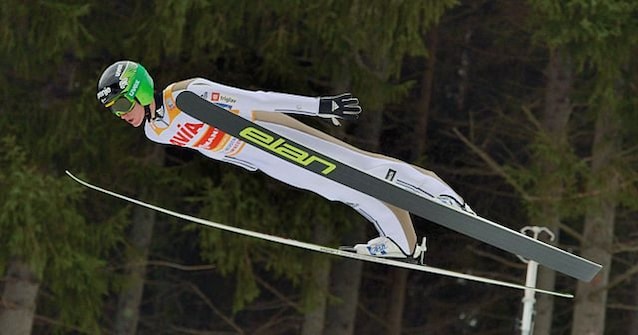
In ski jumping, the athlete slides down a ramp, called the launch track, from which he then takes off in flightwith the aim of landing as far away from the diving board as possible. There are two trampolines, of different lengths and heights, and for the first time women will compete at an individual level on the large trampoline. The final score depends on the distance achieved with the jump, the flying style and the wind conditions.
The races will be held in Predazzoin Val di Fiemme, and include individual races on the small and large trampoline, a men’s team race (the new Super Team) and a mixed team race.
Nordic combined: two sports, one medal
Nordic combined is the only discipline scheduled only for menand combines ski jumping and cross-country skiing in one race. First you jump, then you face a cross-country test: whoever jumped best starts in front.
The locations are the same as for jumping and cross-country, between Predazzo And Teseroin Val di Fiemme.
Freestyle skiing: the show on the snow
Acrobatic skiing, or freestyle, encompasses a series of relatively young disciplines at Olympic level (it debuted as a demonstration sport in Calgary in 1988), but it is what will award more medals among the ski disciplines at the next Games: there will be 15 events offering a gold medal, all to be played at Livigno Snow Parkin Valtellina. These are the specialties that we will see at the Games:
- Moguls (or humps): you go down a slope full of humps, with two obligatory jumps. For the first time at Olympic level there will also be competitions in parallel, with two athletes competing at the same time Dual Moguls.
- Aerials: Athletes use a ramp to launch themselves into the air, perform rotations and tricks before landing down the slope.
- Slope style: a route full of jumps, rails and structures where creativity and fluidity count.
- Halfpipe: a large “U” of snow in which athletes jump from one wall to another performing acrobatics in flight.
- Big Air: a single, gigantic jump in which the most complex maneuver possible is attempted.
- Skicross: here the athletes compete 4 at a time along a course full of jumps, bumps and parabolic curves, with several preliminary heats until reaching the final.
It is the sport that comes closest to the language of urban sports and that best describes the new Olympic generation.
Ski mountaineering: the mountains in their pure state
For the first time in Olympic history, ski mountaineering (or “Skimo”, from Ski Mountaineering) a discipline born long before the groomed slopes but which has been growing a lot in recent years in terms of notoriety and practitioners.
For this great debut, which will be held in Bormioonly the Sprint specialty is planned, a race lasting just over 3 minutes in which the athletes will have to climb a slope and follow a technical descent. It is the sport that more than any other tells the story of the direct relationship between man and the mountains, which in the future we could see revived even with longer distances.
Milano Cortina 2026 will not only be a major sporting event, but a true encyclopedia on skis. From the extreme speed of alpine skiing to the precision of biathlon, from the spectacular nature of freestyle to the effort of cross-country skiing, each discipline will tell a different way of experiencing the snow and the mountains.
