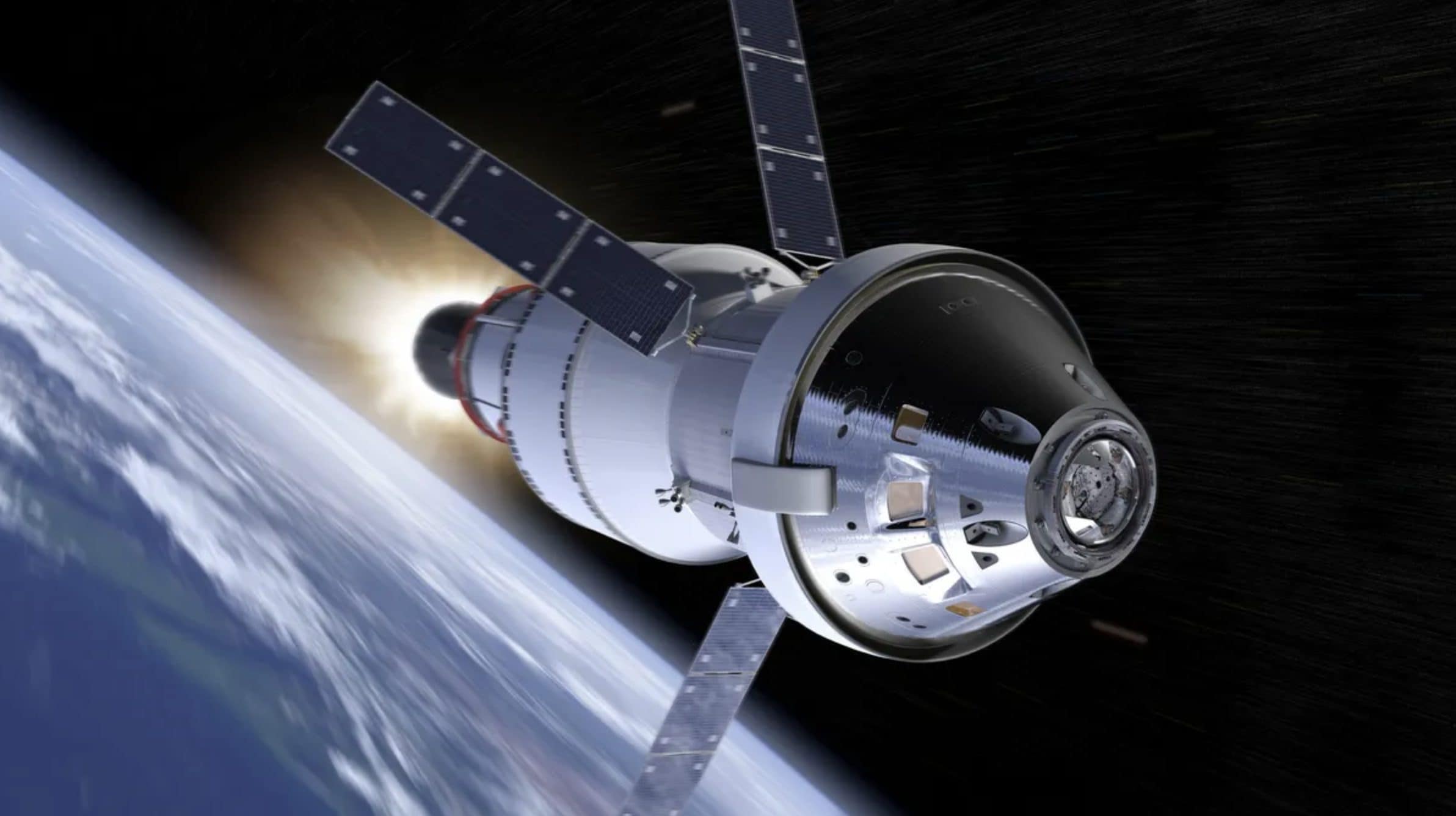
If you can’t wait to see the next humans on the Moon, you’ll have to wait a little longer. NASA administrator Jared Isaacman in fact one announced reorganization of the Artemis program: In a press conference held on February 27, Isaacman stated that returning a crew to the Moon will no longer occur with the mission Artemis IIIscheduled for 2027, but with the next mission, Artemis IVnot before 2028 (although a further postponement to Artemis V cannot be ruled out).
Artemis III will become a preparatory mission, which will see a docking test in low Earth orbit between the Orion capsule and the moon landing system (yet to be designated). In the meantime, the American space agency is carrying out the mission as scheduled Artemis IIwhich is scheduled to launch in April 2026. Currently the SLS rocket is located in the assembly building, where the repairs necessary to resolve the technical problems that emerged at the end of February are taking place.
Why with Artemis III there will no longer be a moon landing and what changes
According to Isaacman’s statements at the press conference, the reasons that led to this choice are twofold.
First, there are questions of astronaut safety and the success of the missions due to the fact that there is too large a “jump” between the first human orbital mission (i.e. Artemis II) and the first moon landing mission. There are currently too many maneuvers and systems that could not be sufficiently tested in the case of a moon landing with Artemis III. In particular, The moon landing module is still missing. The candidates at the moment are Moonship by SpaceX (a modified version of the Starship spacecraft) e Blue Moon by Blue Origin.
In fact, it will not be the Orion capsule that physically lands on the Moon. Once they arrive in lunar orbit, the astronauts will dock with the descent module (called Human Landing System or LHS) and this will take them to the lunar surface. Given the uncertainty, however, NASA preferred to introduce, before the return of humans to the Moon, a mission demonstrating that the spacecraft can perform this maneuver safely in space.
There is also another reason, however, why NASA chose to postpone the moon landing. In fact, there are many technical difficulties that the space agency is encountering with the Artemis program (and which are driving up the costs of the program). The launch of the Artemis II mission, for example, more than three years after the end of Artemis Iwas postponed first to March due to problems loading propellants into the SLS rocket, then to April due to problems with the rocket’s upper stage cooling system. According to Isaacman, a large part of the reason for these numerous technical difficulties lies in the too long times between one mission and anotherwhich force engineers to continually upgrade systems and components.
A return to NASA’s “Apollo method”.
To avoid this last problem, Isaacman has expressed his intention to change the philosophy of the program, bringing it closer to that of Apollo programin which the missions were spaced out very frequently, thus allowing for “series” development which was simpler to manage from both a technical and economic point of view.
Artemis had been thought of as a “slower” programbecause today there is no longer the urgency of the space race in the context of the Cold War, but also because NASA’s current budget is much lower than during the Apollo era. However, this slowness is showing counterproductivebecause it makes it more difficult to keep systems ready until the next mission and forces numerous interventions.
This is why the NASA administration is aiming for a formula more similar to that of the Apollo program for Artemis: more missions and closer together in time (one mission per year, ideally even less). At the moment we still don’t know in detail how the Artemis program will be reorganized, but the transformation of Artemis III into a test mission certainly goes in this direction, following the schedule that NASA gave to the last missions before the moon landing on July 20, 1969:
- Artemis II is the analogue of Apollo 8when in December 1968 the first humans flew into orbit around the Moon;
- Artemis III will be the analogue of Apollo 9an Earth orbit mission to test docking between the flight module and the lunar descent module;
- Artemis IV will be the analogue of Apollo 11the moon landing mission. Alternatively, following the Apollo pattern to the letter, Artemis IV could be like Apollo 10that is, a “dress rehearsal” of the moon landing with descent to low altitude above the lunar surface.
