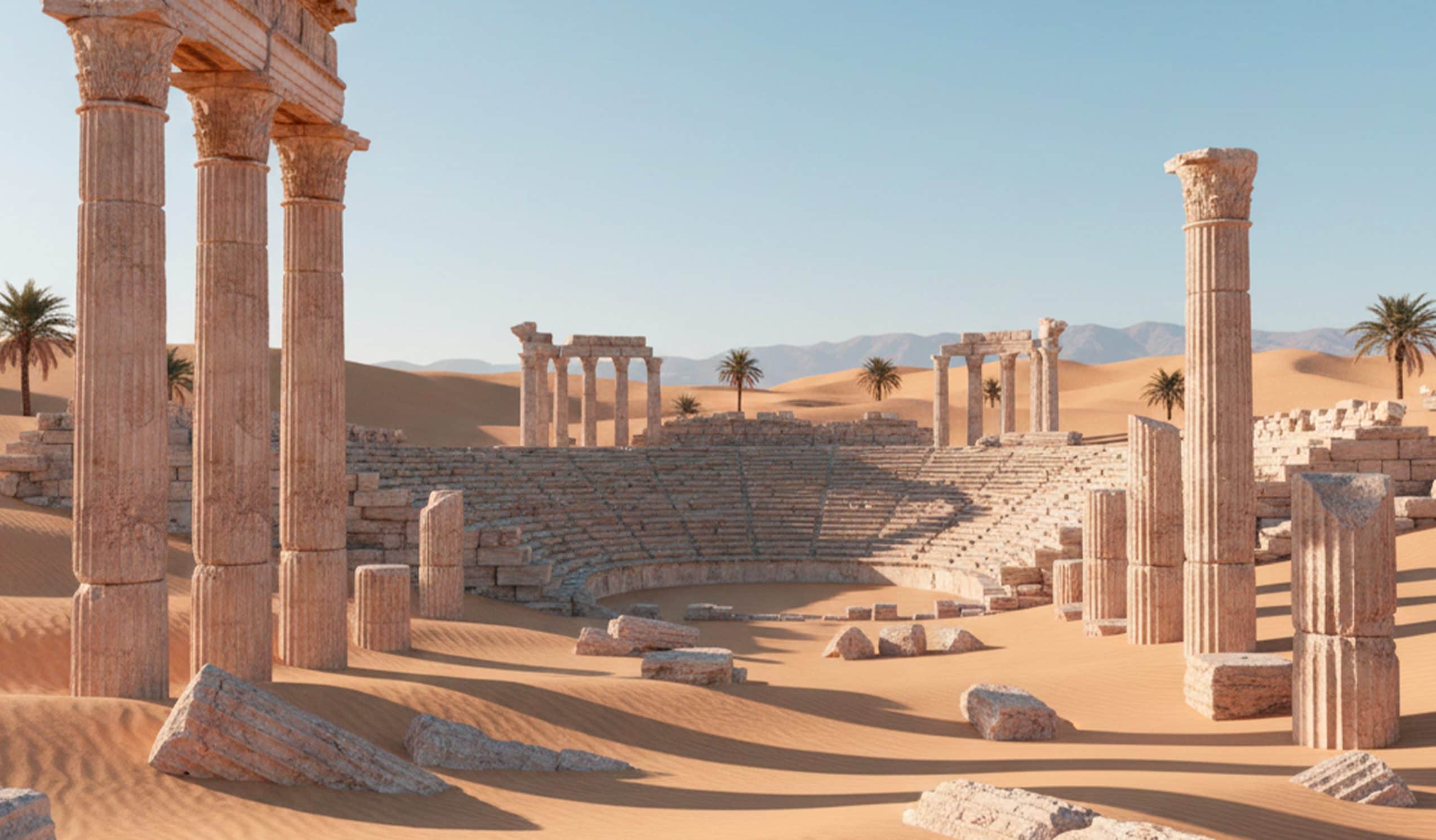
Cities of the past very often are buried. Indeed, sometimes our inhabited centers literally rise above their ruins… But for what reason? The explanation is to be found in buriala process that can be seen as a mix of natural and anthropogenic factors including the accumulation of debris, river sediments, dust and the uncontrolled growth of vegetation. Added to this are sometimes violent and sudden events such as natural disasters (earthquakes, tsunamis or volcanic eruptions). The cases of are famous Pompeii and Herculaneumburied for centuries by the materials erupted from the Vesuvius in 79 AD. Finally, man plays a decisive role. Build new settlements directly above the pre-existing ruins resulted in a constant rise in ground leveleffectively hiding the story under new foundations.
Natural factors
Every body on Earth tends to be covered over time by sand, clay, silt, soil and vegetation. This happens for example during floodswhen the rivers that transport a lot of material from upstream to downstream deposit it over a more or less large area around their banks.
Another key factor is the windespecially in arid regions. When it blows hard it is capable of carrying large quantities of sand long distances but, if its power were to decrease, part of its load would be distributed on the ground, gradually accumulating. The Sphinx, for example, was covered in sand and buried up to its head – at least until it was discovered and unearthed by archaeologists starting in 1817.
Another burial factor may be aeruption volcanic. Lava, ash, lapilli and burning clouds can cover entire cities with levels of material even a few meters thick: in this category, among the most famous examples in the world we can mention Pompeii and Herculaneum.
Finally, the last of the main natural causes can be traced back to one landslide. When this happens a huge amount of material will settle downstream, covering whatever is in its path.
Anthropic factors
In the past it was not so rare for a city to be abandoned: wars, volcanic eruptions, conquests and earthquakes are just some of the reasons that could push an entire community to move elsewhere.
When it was necessary to rebuild in that area, however, rarely the rubble some cities were demolished: it was simpler bury them and build on it. This saved time and resources, making the process much quicker.
