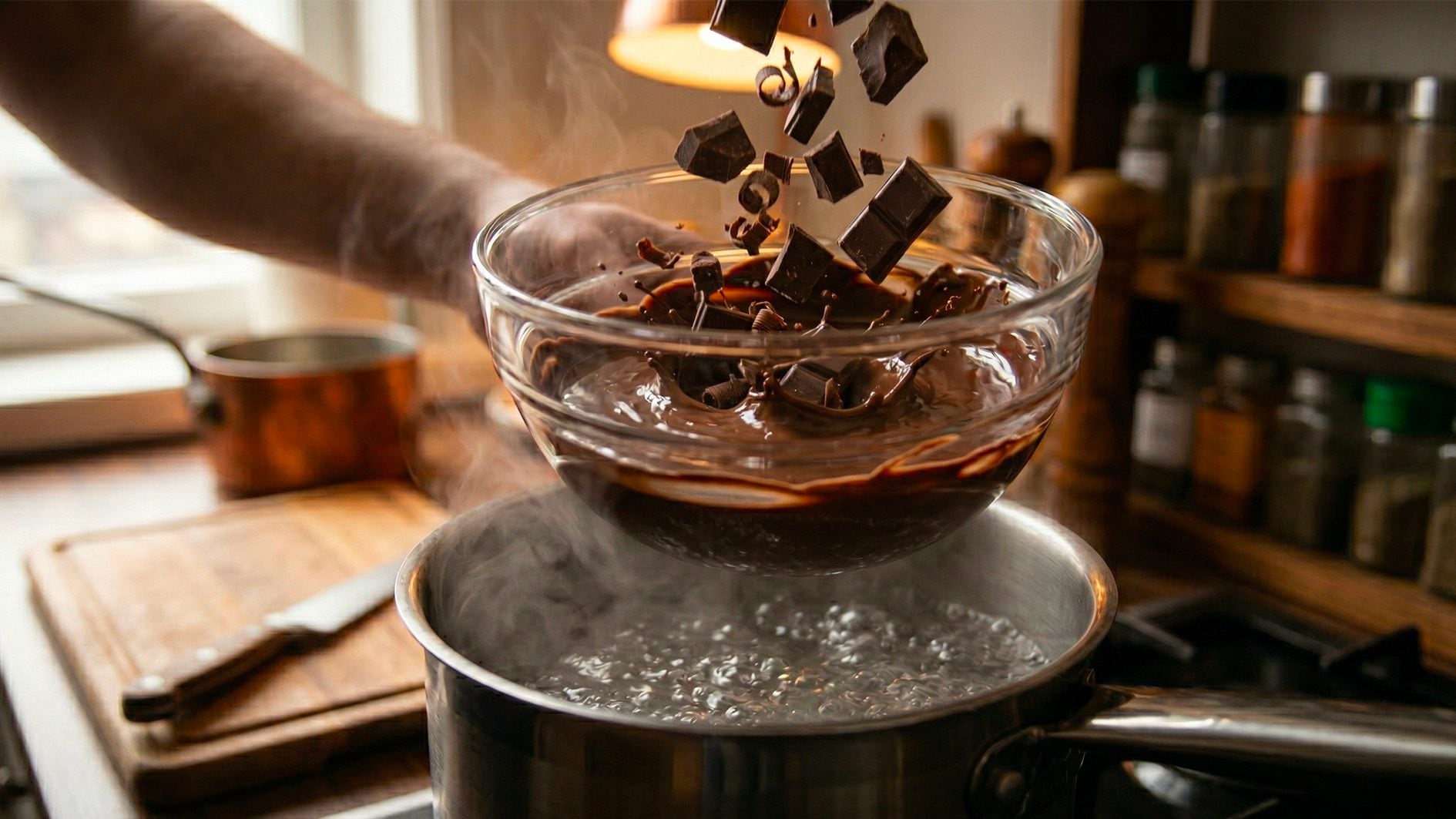
The bain-marie it is an indirect cooking technique that consists of immersing a container inside a larger container hot or boiling waterallowing you to heat or melt foods delicately and evenly. This ingenious method, used daily in our kitchens, bears the name of a woman who lived about two thousand years ago: Mary the Judean. It is exactly the technique you will rely on if, after Easter, you have some chocolate eggs left over and you decide to use them to prepare a cake: all you need is a saucepan with water on the heat and a bowl placed on top to obtain a perfect fondue, capable of making your mouth water without the risk of burning anything.
How the cooking technique works: the physics of water
The bain-marie works thanks to the boiling point: 100°C at sea level. When the water in the external container reaches this temperature, it does not heat up further and all the energy provided by the flame is used to turn the water into steam. The contents of the internal container, therefore, will never exceed 100 °C, regardless of how strong the flame underneath is.
This makes the bain-marie a tool of temperature control precise and reliable. Water baths are also used in the laboratory (thermostatic baths), for example in microbiology, when the required temperature is less than or equal to 100 °C, because they guarantee homogeneous and constant heating without the risk of localized overheating.
Chocolate, which contains cocoa butter, could melt if melted in a pan burn very easily. With this technique, however, the temperature threshold is never exceeded, maintaining uniform heat over the entire surface of the container.
The origin of the name bain-marie comes from Maria the Judea
The name bain-marie comes from an important alchemist of antiquity, Mary the Judean. There are no documents capable of pinpointing exactly when and where Maria lived. The most accredited hypothesis today is that he lived ad Alexandria, Egypt between the 1st and 3rd centuries AD. However, her character is shrouded in myth; according to some theories, Mary was the sister of Moses and Aaron, which would place her historically before the birth of Jesus.
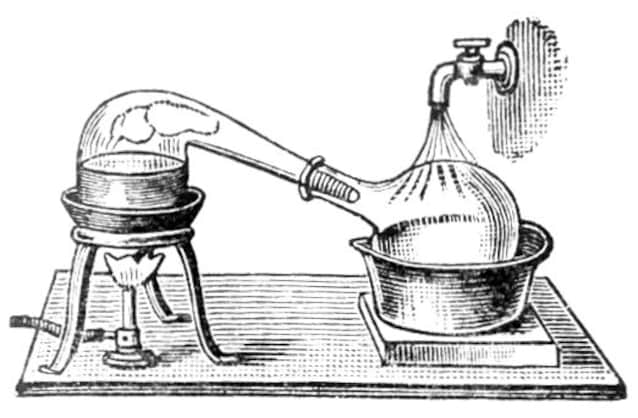
Of his studies and discoveries, however, something more tangible remained. In addition to the cooking method – called in ancient times kaminos Marias and then balneum Mariae – the invention of thestillthe instrument still used today for the distillation of liqueurs.