In recent years several experiments of nuclear fusion have achieved historic goals and many countries are investing billions to transform it from a scientific dream to a concrete energy technology. But it’s true that it doesn’t produce waste radioactive? What differentiates it from nuclear fission?
Fission efusion in comparison
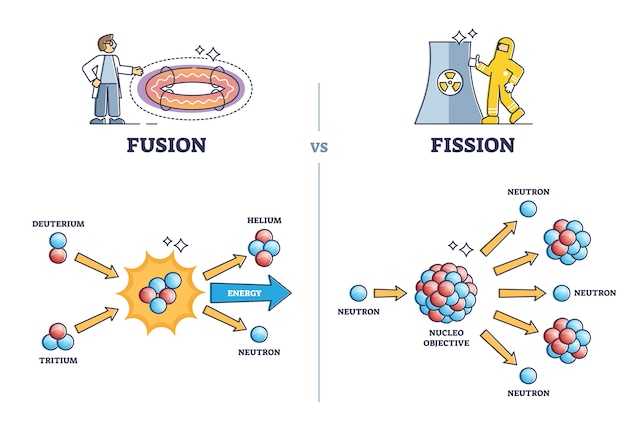
The process of fission used in nuclear power plants break nuclei of atoms heavy like uranium, releasing energy and producing radioactive waste.
There fusionor the process that occurs in the Sun, however, unites nuclei of atoms lightsuch as deuterium and tritium, generating energy but no direct waste. This process, in fact, does not produce fission products or heavy actinides (i.e. radioactive chemical elements found in the lower part of the periodic table), such as plutonium or americium.
In both types of systems, however, some materials or components become radioactive (i.e. “activated”) during operation due to the neutron bombardmentsuch as the internal structure of the reactor and the most exposed components. Furthermore, in the case of fusion, the materials used to manage or produce tritium can also be activated.
Therefore, while for fission the main problem remains linked to the waste of exhausted fuel, for fusion there is no high activity spent fuel; the only radioactivity comes from the activation of the structural materials.
Nuclear fusion does not produce waste and has a low environmental impact
There fusion it does not generate high activity waste because it does not use heavy and unstable atoms as starting elements. THE main products of the reaction of deuterium-tritium fusion are theheliuman inert and non-radioactive gas, ei neutronswhich can make reactor materials slightly radioactive.
This neutron activation is very different from fission waste since does not contain heavy atoms such as plutonium or thousand-year-lived isotopes, decays in a much shorter time (decades and not millennia) and can be managed with already known technologies. This is why scientists talk about low-level, short-lived waste, and not nuclear waste in the traditional sense.
Fusion is seen as a possible energy breakthrough for several reasons.
The fuel that’s pretty much it inexhaustible: Deuterium is present in sea water, while tritium can be produced within the reactor itself via lithium.
Unlike fission, the fusion reaction it turns off immediately by itself and there is no risk of causing accidents or explosions due to man’s loss of control over the reaction.
THE’theenvironmental impact then And reduced since it avoids the release of CO into the environment₂ and high-level waste and does not involve the use of fossil fuels.
The situation in the world: where we are
The fusion race involves several governments, public projects, such as ITER in France, start-ups and private companies. Many experts believe it is plausible to see the first demonstration reactors by the 2030s, although large-scale commercialization will take longer.
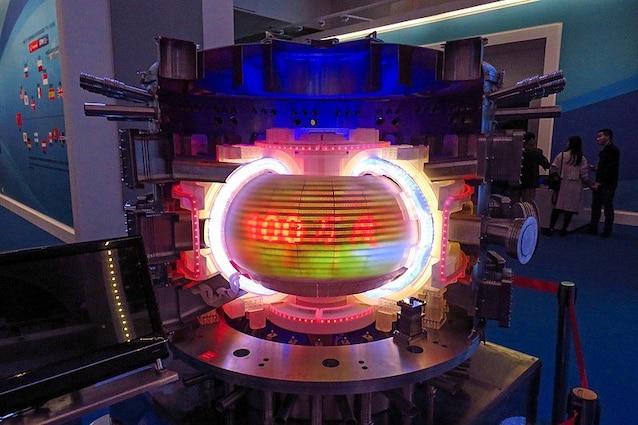
To date the merger process is still ongoing experimental phasebut it could become a fundamental piece of the energy mix of the future.
