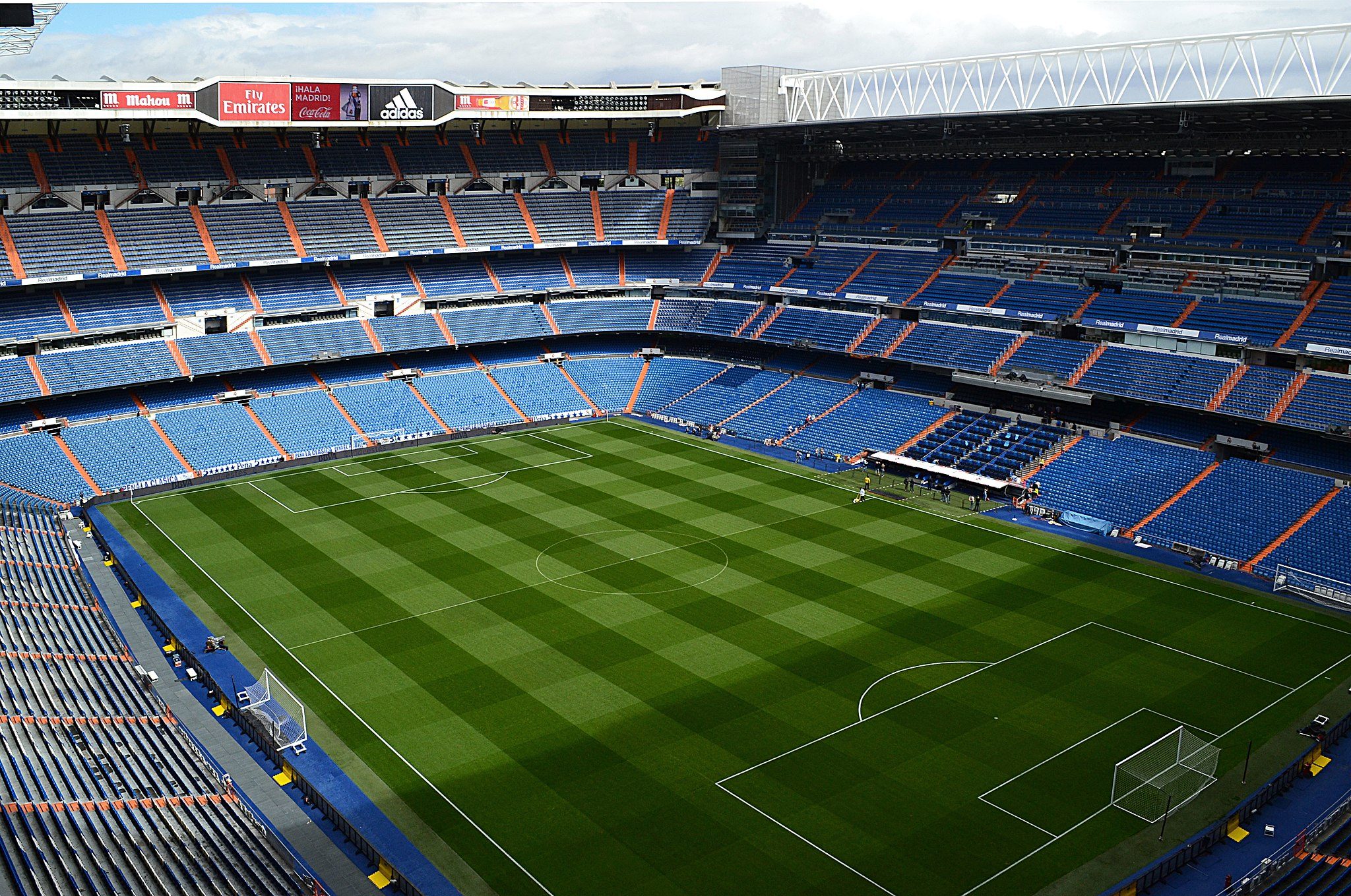
If you have ever watched a game of soccer On TV, you will have seen that the lawn never appears to be a uniform green. The field, in fact, is divided into great bands rectangular, more clear and more dark. How do you explain this phenomenon? Behind those geometries there is a simple optical effect, linked to how the light Yes reflect on the leaves of the grass depending on the direction in which they are folded by cut machines, with the use of a roller After the mowing, the desired effect can be increased. In addition to making the field visually more captivatingthe cutting bands are regulated, in Italy, by Lega Serie A: there are in fact indications precise on the length, on the measure and on way in which they must be arranged, precisely to ensure a television yield improve.
How the grass of a soccer field is cut
Before entering the heart of the matter, it must be specified that there are both grass fields natural That artificialboth governed by competent bodies As for their maintenance. The playing ground, Obviously, he plays a fundamental role in joining the conditions necessary for performance athletics, technique and to safety of players. In fact, there are many variables that can influence the state of a calcium field: the year of construction, the materials used, the climatic and irrigation conditions, the number of training or races played and, above all, the cut of the grass.
This must be carried out, according to the provisions of the Italian League, necessarily in bands parallel (indicatively 9 for each half of the field) in the sense of the width of the ground, in a way perpendicular to the side line, starting from the side left of the field compared to the main chamber. The most used and indicated equipment for the ordinary cuts of the natural grassy mantle is a type cut helical.
Why the football field is in different green stripes
Like all plants, even the leaves of the grassy coat have two different sides: the upper one, which takes the name of Adassialand the lower one, called abassia. Both sides present one Tissue morphology and a number of stomis (small pores on the leaves) very different from each other.
Erroneously, one might think that the reason behind the strips of different color in the fields is due to the re-orientation of the sides of the leaves during cutting. This, however, would mean that the foils would have autonomously with the same side facing up or down, but the probability that this happens, of course, is very low. The real reason why we observe different green bands is the result of reflection of the lightfrom the reflective surface and of the position of the observer.
Suppose we are positioned behind At the Tagliaerba while this is flourishing the pitch, the grass in this case would be pushed towards us, therefore backwards. In this way, the surface on which light can reflect increase and produces a clearer green. Contrary, if we positioned us from the opposite side, the grass would be folded differently during the mowing and, reducing the reflective surface, the result would be a darker green.
In summary, it is the corner of the leaf lamina compared to the light to determine the clearest or darker color. Then there are practices that, in the specific case of the mowing of football fields, help to produce the famous green bands. For example, there are some plants with leaves that yes they fold more easily of others during cutting or, trivially, also the use of a roller After the mowing it can increase the desired effect.
What the official rules on the game land say
There Lega Serie A obliges Italian companies to cut the grass of the pitch to a height of 22 mm in the days of competition and, strictly, with the reason a rectangular bands Parallel (here, however, you find the rules for Wimbledon meadows). Other possible forms (such as diagonala rim etc.), in fact, are not allowed. On rest days, the reference range for cut is fixed to 22 ± 5 mm.

The first four bands, on both sides, must be exactly wide 5.5 m; The others must have a uniform width based on the total length of the field (for example, in the case of 105 m soils, the intermediate bands must measure 6.10 m width). Among the reasons that justify this geometric choice of cut, the one for which in this way the television shooting They are better and more captivating. Finally, the tosaerba blade must always be always well -sharpened (so as to adjust height of work according to the needs of the lawn) and that later come plant debris removedlike the cut grass, deposited on the field.
