
You are full, full, you are about to burst. But to the question “would you like a sweet?” the answer tends to be “Yes!”. The elusive “stomach for dessert” really exists and is found… In brain! It is the result of a series of overlapping brain mechanisms: from satiety sensory specificationwhich makes us bored of a repeated flavor, to the dopamine which “silences” the signals of satiety; from the ghrelin until a 2025 discovery that upended what we thought we knew about neurons from the satiety. According to researchers, when we see a sweet, these “double-agent” neurons release endorphinsactivating the reward circuits and making us rush towards that slice of tiramisu, despite the sumptuous meal. All these mechanisms, probably evolutionarily necessary to vary one’s diet and make the most of access to highly energetic foods, are so strong that “bypass” the physiological sensations of hunger and satiety and make us eat just for the pleasure of it.
The organism gets bored: what is sensory-specific satiety
In 1986, Dr. Barbara Rolls described a mechanism she called specific sensory satiety: as we eat a food, the pleasure we get from that taste decreases progressivelywhile the pleasure produced by different flavors remains intact. Basically, we get tired of pasta with sauce, but a slice of Sachertorte makes our mouth water, even if we’ve eaten enough. And it works for any taste. During a previous study, Rolls demonstrated that the group of participants who ate four courses with very different flavours had introduced 60% more calories than the group that ate four similarly tasting courses.
According to Rolls, this mechanism probably has a evolutionary function: push the organism to vary your diet. The problem is that in a modern context, this mechanism systematically leads us to eat beyond our real needs.
Dessert activates reward circuits
Sensory-specific satiety explains why a new flavor attracts us, but it does not completely explain because we want it so badly. This is where the systems come into play reward. Numerous studies have shown that even just the view of highly palatable foods (i.e. pleasant to eat), particularly rich in sugars and fats, can activate the release of dopamine in the mesolimbic system. The surge of dopamine is such that “silencing” satiety signalsmotivating us to eat that piece of cake, even though we have already met our energy needs. Dopamine also acts as behavioral reinforcement. I eat the cake, dopamine “rewards” me with a feeling of gratification, next time I will have even more motivation to eat the cake.
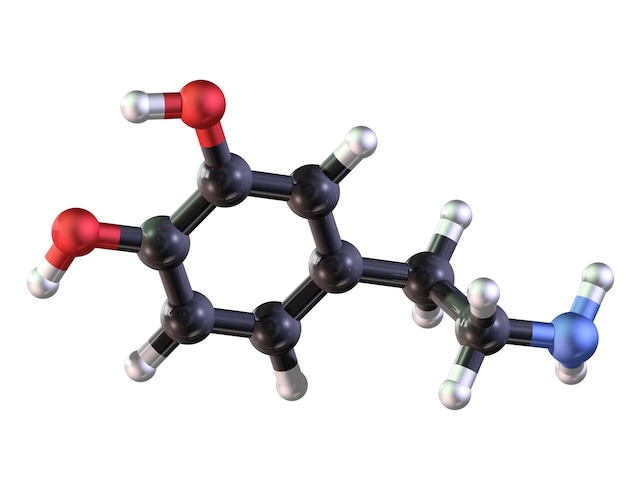
Added to this is the influence of ghrelinthe hunger hormone. In a 2015 research published in Journal of neuroendocrinologyresearchers showed that ghrelin also acts on the reward systemfurther stimulating the release of dopamine. When there is an imbalance in the concentrations and physiological fluctuations of ghrelin, its action can push us to eat that dessert at the end of the meal, even if we are full and we wouldn’t really need it in energy terms.
Hedonic hunger: eating just for the pleasure of it
All this has a name: hedonic hunger. In their 2018 review, Espel-Huynh and colleagues define it as the motivation to eat not in response to a physiological need, but in response to anticipated enjoyment of food. Our body doesn’t really need new energy, as in the case of physiological hunger, but the attraction of that sweet taste exerts a real and measurable force. According to the authors, this drive to consume highly caloric foods, such as sugary foods, may have been selected during evolution to push the organism to take advantage of dense energy sources when available. Useful during a famine, a little less in the era of ultra-processed foods and unbridled consumerism.
From satiety neurons, the urge to eat dessert
Perhaps the most surprising discovery of recent years comes from research published in Science in February 2025, which highlights a paradoxical mechanism observed in mice and confirmed in humans.
The neurons POMC (pro-opiomelanocortin), known as “satiety neurons” and which usually they slow down food intakerelease into the thalamus ß-endorphins (the so-called endogenous opioids), even just at the sight of a sweet, activating the reward circuits. The result is exactly the opposite: the appetite for the sweet flavor is selectively rekindled. On the one hand they tell us “you’re full, just eat”, but when they see the slice of tiramisu arriving they push us to devour it.
When the researchers blocked the release of endorphins, the mice did not eat the additional sugar offered after meals. This paradox was confirmed, through brain scans, also in human volunteers who were administered a sugar solution via a tube: the exact same brain area as in mice was activated, confirming this dual and contradictory nature of the “satiety neurons”.
According to the authors of the study, the evolutionary reason could always be the need to ensure a quota of sugars, the fastest energy source, even after consuming a meal. Since there is no particular need for it in this historical period and in this part of the world, the discovery of this mechanism could however lead to the development of new targets for the treatment of obesity.
Sources:
Rolls, B.J. (1986). “Sensory-specific satiety.” Nutrition Reviews Rolls, B. J., Van Duijvenvoorde, P. M., & Rolls, E. T. (1984). Pleasantness changes and food intake in a varied four-course meal. Appetite. Volkow, N. D., Wang, G. J., & Baler, R. D. (2011). Reward, dopamine and the control of food intake: implications for obesity. Trends in cognitive sciences Perello, M., & Dickson, S. L. (2015). Ghrelin signaling on food reward: a salient link between the gut and the mesolimbic system. Journal of neuroendocrinology. Espel-Huynh, H. M., Muratore, A. F., & Lowe, M. R. (2018). A narrative review of the construct of hedonic hunger and its measurement by the Power of Food Scale. Obesity science & practice Minère M, Wilhelms H, Kuzmanovic B, et al. Thalamic opioids from POMC satiety neurons switch on sugar appetite. Science.
