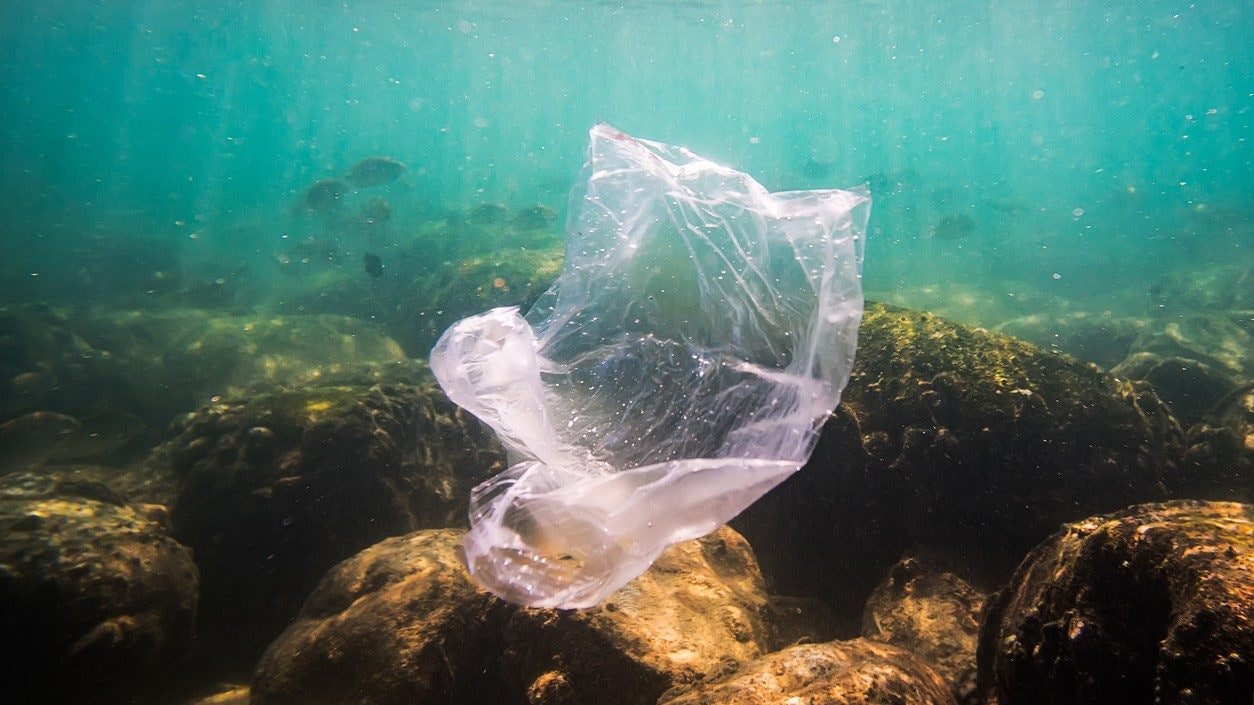
Compostable plastics struggle to degrade in the sea. A study published in Nature shows that by integrating enzymes into the plastic matrix it is possible to accelerate and improve its degradation in marine environments without generating microplastics.
Plastic is now considered an indispensable material. Characteristics such as durability, lightness, resistance and economical price have led to massive use of this material. If on the one hand we have the convenience of using plastic, on the other we have to deal with the heavy pollution of the terrestrial and marine environments that it has generated. It therefore became necessary to develop sustainable, long-lasting and at the same time resistant alternative materials.
From this necessity the biodegradable plasticscapable of degrading in the environment. Ideally it should be a material capable of being degraded completely carbon dioxide and water thanks to the action of microorganisms naturally present in the environment as bacteria, fungi or algae.
Unfortunately however, most of the plastics on the market are biodegradable compostablethen optimized for them industrial degradation (characterized by the use of high temperatures, humidity and microbial activity). The environmental degradation of these materials is therefore more complex, especially in marine environments and even more so in the deep sea, where temperatures are low and the microorganisms necessary for degradation are not present.
A possible solution to this problem was presented in a study published in Naturein which researchers demonstrated that degradation can be accelerated of certain compostable plastics through the use of particular enzymes.
Compostable plastics and the internal trigger that facilitates degradation
The idea behind the study is to not simply wait for marine bacteria to attack the plastic, but to provide some kind of “self-destruct button” to the plastic itself that can initiate degradation and, in general, facilitate the process. To accomplish this, the researchers incorporated a minimal amount of directly into the material matrix hydrolytic enzymessuch as cutinase of Humicola insolens or the lipase of Candida antarctica.
These enzymes remain trapped inside the plastic without degrading and without altering the mechanical resistance of the object. However, once the plastic ends up in the water, the enzymes are activated, acting like molecular scissors which break the structure of the plastic into soluble fragments.
To verify its effectiveness, in addition to the laboratory, the team carried out field trials. Through the Shinkai 6500 research submarine and robotic vehicles, plastic samples were submerged at various sites in the Pacific Ocean at depths ranging from 2 and 5503 meters.
In the seabed, at depths of approximately 757 meterstraditional compostable plastics (without enzyme) showed almost no degradation after 18 months. In contrast, samples with incorporated enzyme achieved one degradation close to 100% in just 5 months. Furthermore, it was seen that in surface coastal waters a minimum concentration of enzyme (around 0.1% by weight) was enough to make the sample almost completely disappear in a month.
A fundamental aspect concerns the microplasticswhich are tiny plastic particles ranging in size from 1 µm and 5 mm. Internal enzymatic action decomposes the material without leaving persistent microscopic particles in the environment. The released soluble molecular fragments are ingested and digested by natural marine bacteria, which convert them into carbon dioxide, water and biomass.
What are the concrete advantages for bioplastics and the sea
Until now, commercially available compostable plastics have represented an unsuitable solution for the marine environment. The idea of incorporating enzymes into the material matrix would make it possible to create objects capable of actually degrading following prolonged contact with salt water.
The most immediate practical applications concern all those artefacts at high risk of dispersion into the sea, such as fishing nets, lines, aquaculture equipment and marine packaging. The minimal amount of enzyme needed to accelerate degradation without compromising mechanical strength could make this technology industrially feasible.
The main challenge at the moment remains that economical. The production costs of bioplastics and enzymes still remain higher than traditional petroleum plastics. However, the results and demonstrations obtained from this study offer a new concrete perspective for protecting our planet’s oceans.
