
It’s always like this: you buy one fridge magnet – maybe a souvenir from a trip, or a magnetic pad to write your shopping list on – and you always find someone who tells you they heard that those magnets are dangerous because they can damage the refrigerator or increase their electricity consumption. Someone even read somewhere that they even could cause cancer. Here, let’s clarify it immediately: none of this is true. The magnetic fields of fridge magnets are too weak and too small to cause any risk, as long as you use them with a little common sense and a few small precautions.
Because fridge magnets are completely safe
The main concern is that the magnetic fields of fridge magnets could interfere with the refrigerator’s electrical system, causing premature damage or higher energy consumption.
Now, it is true that magnetic phenomena often influence electrical ones and vice versa. It is no coincidence that in physics we talk about electromagnetism: the two phenomena are in fact sides of the same coin and work in tandem. This “dialogue” between electricity and magnetism is the basis of the functioning of a lot of gadgets, even those of everyday use, such as induction hobs oh electric vehicles.
But think about it: the hermetic closing of refrigerator doors works thanks to magnets. If magnetic fields of this intensity were a problem for the refrigerator, the door magnets would be enough to damage them!
However, we can demonstrate in a more scientific way that our decorative magnets cannot damage the fridge or have any impact on the functioning of our appliance. The reason is very simple: the magnetic fields of these magnets are far too weak to interfere with the fridge’s electronics or its electrical system. To do this, these magnetic fields would have to pass through not only the refrigerator body but also its insulation layer. But the intensity of their magnetism is too modest (just enough to keep the magnet attached to the body), and then their magnetic fields extend very little into space.
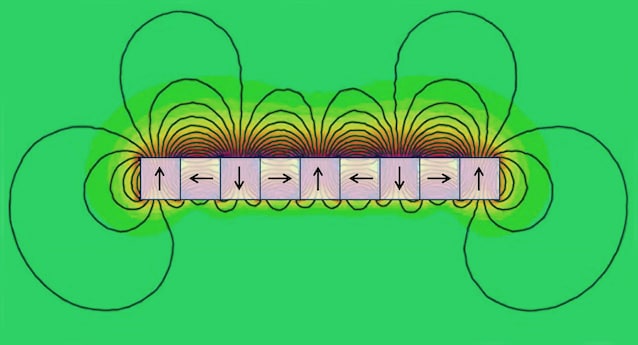
Without going into detail, fridge magnets are not a single block of magnetic material, but are made of many strips with alternating magnetic polarity in the four directions up/down/right/left: this arrangement is called array Halbach.
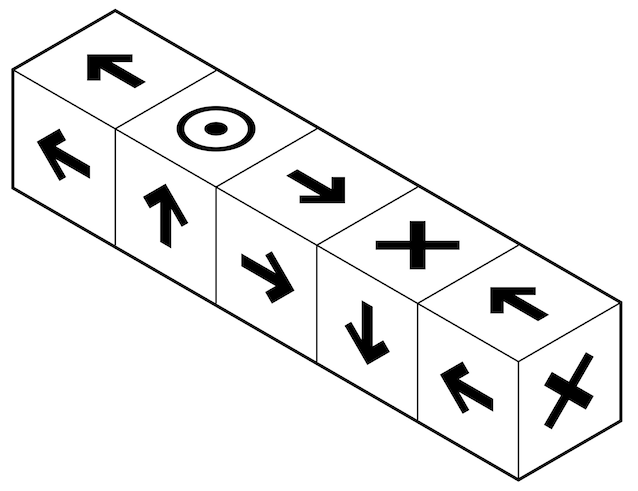
This system allows you to concentrate the intensity of the magnetic fields on one of the two “faces” of the magnetleaving the other relatively unmagnetic. In fact, fridge magnets remain attached to the body only if placed on one side! This allows our magnets to do their job even with relatively weak magnetic fields.
But another effect of this arrangement is that the magnetic field lines of a Halbach array are very “curved” and therefore move very little away from the most magnetic surface. In other words: the magnetic field of a fridge magnet, in addition to being very weak, it penetrates very little into space and therefore has no hope of interfering with the functioning of a refrigerator.
Let’s dismantle the hoax of magnets causing cancer
In 2018, a hoax according to which a study by Princeton University would support that fridge magnets emit electromagnetic radiation which, in the long run, would alter the foods stored in the fridge making them carcinogenic. It’s a shame that – as also confirmed by our National Institute of Health – this elusive “Princeton study” never existed.
Furthermore, even in light of what we have said above, it does not make much sense from a physical point of view to say that these weak magnets can emit electromagnetic radiation with energies capable of altering foods. All of us are literally surrounded by electromagnetic radiation of natural and artificial origin that does not cause an increased risk of cancer. The Istituto Superiore di Sanità, moreover, confirms that «the levels of exposure to which we are subjected are too low» to have effects of this type.
Tips for the good use of fridge magnets
In short, place a few magnets on our fridge to remind us of our holiday in Greece or so we don’t forget to buy lettuce it is in no way a risk either for our fridge or for our health. However, it is good to pay attention to some small precautions:
- Avoid placing too many magnets on the sides of the fridge.
Refrigerators also dissipate the heat they remove from the food through their side walls. If we “paper” these walls with a large number of magnets we make it more difficult for our fridge to dissipate excess heat: better to avoid. - Avoid dragging the magnets too forcefully on the fridge body.
The only real damage that fridge magnets can do to our refrigerator is scratching the body. When we take them off and put them back on (for example during house cleaning) or decide to move them, it is better to be careful not to be too abrupt. - Maintain a buffer zone for displays.
If you have a refrigerator with a touch display, this will most likely be shielded from magnetic fields (which, as we said before, are already present in the door locking system). But if you want to avoid any worries upstream, you might prefer a not too close distance between your magnets and the refrigerator screen.
