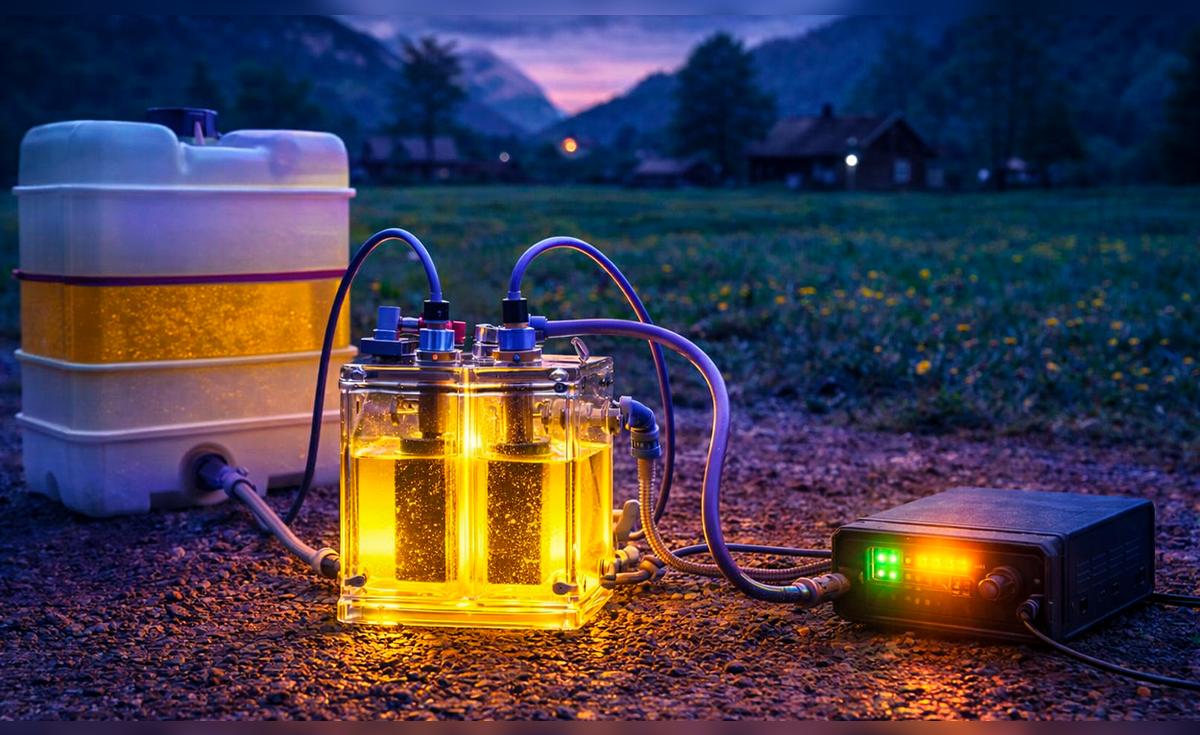
Bioengineering experts from McGill University in Canada perfected a system that transforms human urine into electricity through microbial fuel cells. These bioelectrochemical devices use bacterial metabolism to process organic waste and efficiently obtain direct current. The discovery, published by the magazine Results in Chemistry, highlights the usefulness of this everyday resource to generate clean energy and facilitate wastewater sanitation under simple infrastructure.
These cells (MFC) operate through communities of microorganisms that degrade compounds and transfer electrons to an electrode, which guarantees a constant electrical flow. The engineer Vijaya Raghavan leads this analysis on the impact of various concentrations of urea on energy performance. The research delves into the internal biological mechanisms to maximize the productivity of this sustainable technology.
How did you discover that method?
The group led by Raghavan designed four dual-chamber microbial fuel cells. In these devices, the experts combined authentic human urine and synthetic liquid waste under concentrations of 20%, 50% and 75%. For fourteen days, the research monitored electricity generation, the removal of polluting elements and the biological evolution of the bacterial ecosystem in each unit.
Such an experimental strategy facilitated examination of how substrate mixing affects the electrochemical power of the reactor and the growth of critical microbes. The study incorporated technical evaluations to quantify oxidation-reduction levels, which function as precise signals of electronic transfer within MFCs.
High concentration of urine improves production
The research confirms that there is a direct link between the density of the liquid waste and the energy performance in the cells. Systems with mixtures of 50% to 75% generated electricity constantly, outperforming diluted samples due to the massive contribution of organic ions and nutrients that drive the metabolism of electrogenic microorganisms.
Specific bacteria such as Sediminibacterium and Comamonas they reached a predominant presence under these high doses. This phenomenon demonstrates that the efficiency of electrical production depends on both the volume of available substrate and the microbial structure resulting from the biochemical process.
Other benefits apart from energy
This system transcends electricity generation by integrating effluent sanitation and uptake of essential nutrients. Through the degradation of organic matter, the cells reduce the chemical oxygen demand (COD), a critical parameter that defines water purity. Such capabilities position MFCs as versatile instruments towards environmental sustainability and clean energy supply.
The scientific horizon projects the use of this innovation in rural environments or emergency areas without conventional infrastructure. Experts also propose their use in the form of inexpensive biosensors that monitor the health of the water resource through electrical impulses. Subsequent phases will refine the efficiency of the device in order to translate laboratory results into real applications.
