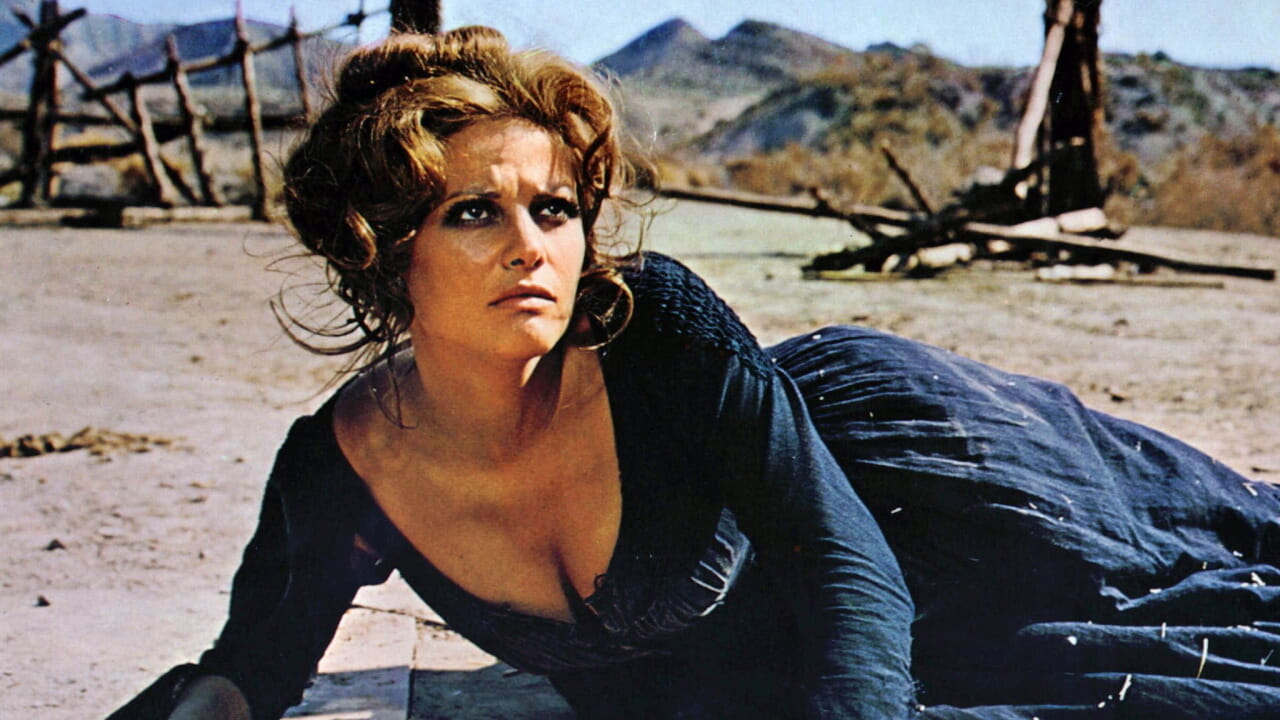
Claudia Cardinale was the truest symbol of female freedom
Claudia Cardinale passed away late yesterday evening, September 23, at 87 years old, in the Paris one where he had lived for a long time. A long career, very fertile, unparalleled his, capable of never stopping, of overcoming fashions, distortions of the market and the cinematographic medium. 150 films, not to mention television, theater, documentaries. A historical witness, but also an undeniable symbol of emancipation, female freedom and identity as few have been seen.
A very precocious talent with films that have become legendary
Claudia Cardinale, aka Claude Joséphine Rose Cardinal, daughter of Sicilian emigrants, who grew up between Tunis and Goulette, very Italian but with a strong link with France, begins on school desks to understand that cinema will be her future, a future that will make her a symbol of the evolution of the Italian woman and beyond. Within a very short time, he begins to take his first steps, the consecration, however (paradoxically given what his path will be) is thanks to a beauty contest that allows it to go to the 1957 Venice Festival.
He was only 18 years old, he faced the consequences of a world, that of cinema of those years, barbaric and violent. Remaining pregnant following a sexual violence, she found in the producer Franco Cristaldi not only the first husband, but the one who opened the doors of the first cinematographic experiences. The first true, great role? “The usual unknown people”, Mario Monicelli’s masterpiece, alongside Gassman, Mastroianni, Totò, Salvatori. It becomes the new female face of our cinema, a status that will never abandon again.
A talent of unique actress, a visceral expressiveness, with two black eyes that become a weapon with which to enhance her ability to be any type of girl, of a woman. Photogenic in an unrepeatable way, Claudia Cardinale refine the talent to find roles of thickness in films such as “a cursed cheating” of germs, it will be with Visconti in “Rocco and his brothers”. But the director who will make it magnificent the beginning of career will be Bolognini: “Senilility”, “The beautiful antonio”, “Free, my love!” And “La Viaccia” are still there today, to remind us what he knew how to do with a single smile.
The flight stands out. Sex Symbol, courted by fashion, an export diva of our cinema, Claudia Cardinale for all 60s and 70s, will also be able to represent the new identity of Italian women, those who no longer agree to be submitted, to be on the sidelines, to be beautiful and that’s it. She, Sophia Loren, Gina Lollobrigida, at that time they are the protagonists of three similar but also distinct paths, with her who, however, will objectively be able to transform himself more radically, to be even less forced into a certain type of artistic stereotype.
Claudia Cardinale, the last years of life in France. The daughter: “Here he had recreated his great Italian house”
A unique ability to determine your choices and your path
Her freedom Claudia Cardinale also defended her in the private, detaching himself from Cristaldi, claiming the right to dress, behave and speak as the best believed, in an Italy far from being open to emancipation. In the private individual it will also avoid binding to colleagues, also of memorable charm, precisely to avoid stereotypes or a personal downsizing.
“Il Gattopardo” by Visconti and “8 and ½” by Federico Fellini in 1963, represent the moment when Claudia Cardinale became a planetary diva. Two roles followed then “The Girl of Bube” by Luigi Comencini, with his first career prize. Throughout the decade he will be courted by Hollywood, he will work with the greatest stars, however choosing the roles in a careful and precise way, avoiding ending up trapped by the majors, eager to object each actress for the box office.
To his overwhelming sex appeal, Claudia Cardinale added a great irony over the years, especially self-irony, the will to be not far from a vision of the woman linked to realism, even in the lighter roles, such as “La Pantera Rosa” with Peter Sellers or “Le Pistolere” by Christian-Jaque.
However, he was also capable of choosing films with a powerful civil tone, seen “On the day of the owl” by Damiano Damiani or to make a female character memorable on the apparently obvious paper such as the Jill of “Once upon a time there was Sergio Leone’s West”. Starting from the mid -70s, Claudia Cardinale will get involved again, embracing a more experimental, more bold, less predictable path. Tied to the director Pasquale Squitieri, he will be in “The Prefect of Iron”, “The weapon” and “Corleone”.
The transfer to France will arrive in the 80s, while collaborating with Werner Herzog, Liliana Cavani, Marco Bellocchio. Able to age gracely, expressing her opposition to cosmetic surgery on several occasions, Claudia Cardinale has never even made civil commitment. He has always fought for the rights of women and the LGBTQ+community, as well as for children.
With her today, one of the greatest female artistic personalities of twentieth century cinema, and above all a modern and powerful female model, which especially in such a confused era as ours, deserves to be remembered.
