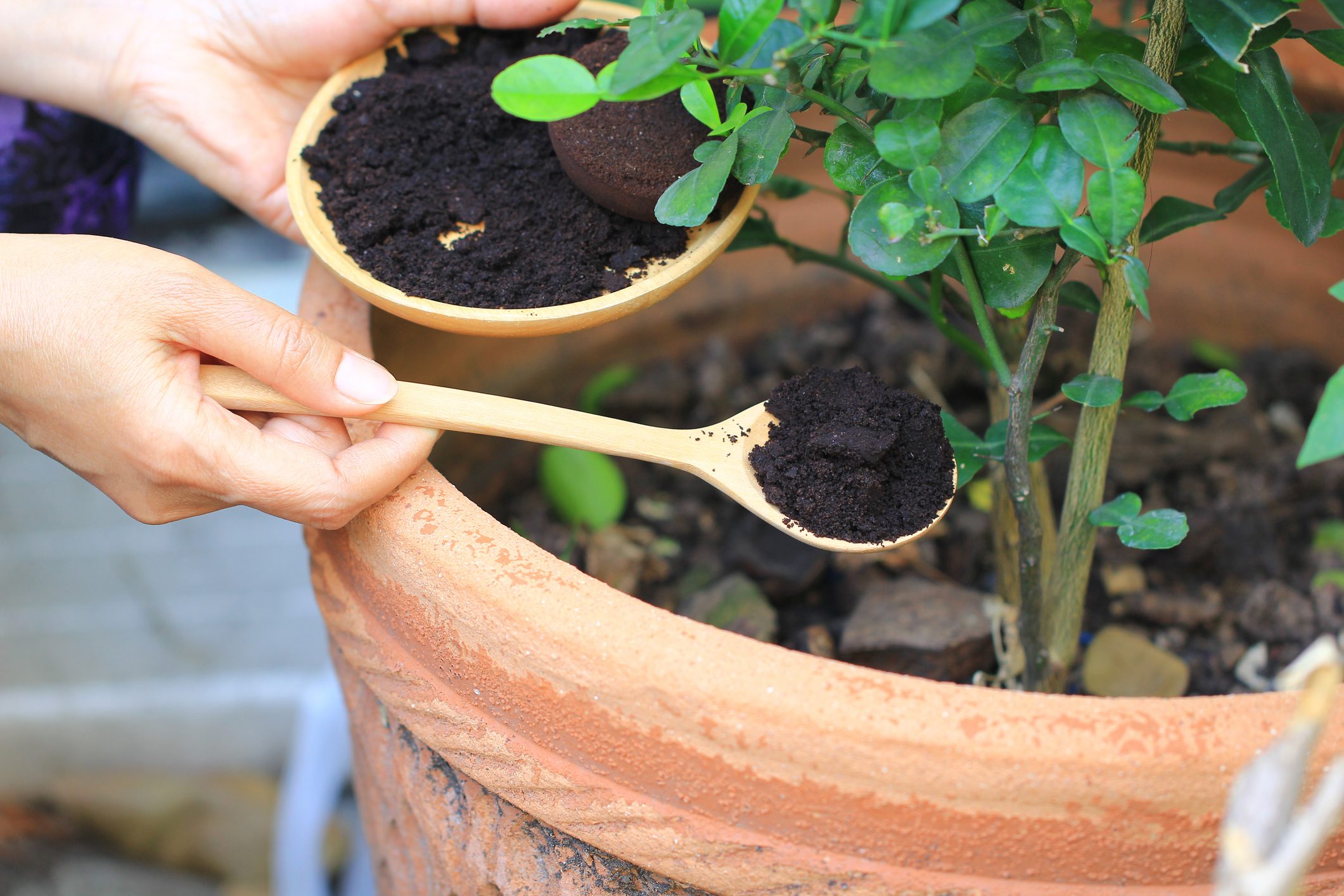
Spent coffee grounds (spent coffee ground in English, SCG) can be recycled as organic fertilizers in our vegetable garden, garden or in the pots of our houseplants, according to a study published byInternational Journal of Environmental Quality (EQA). What we often consider waste turns out to be a precious resource: once mixed with the ground, the coffee grounds gradually release essential nutrients such as nitrogen, phosphorus and potassium, thanks to the action of microorganisms and earthworms which favor their decomposition. At the same time they improve the quality of the soil, ensuring the formation ofhumusa substance capable of retaining water and nutrients. Experimental studies performed on spinach plants (Spinacia oleracea) have shown a more vigorous growth and more abundant harvests compared to those not treated with SCG, while research on radishes (Raphanus sativus) confirm that coffee grounds can also be used mixed with other fertilizers. This results in a double advantage, because in addition to promoting the development of plants, it also helps to limit the use of synthetic fertilizers, making agriculture more sustainable.
Coffee grounds are transformed by soil organisms
If we mix coffee grounds with the soil surrounding the roots of a plant, nutrients are released as they decompose. In particular, coffee grounds contain several nutrients such as nitrogen, phosphorus And potassiumessential for plant development. This process occurs thanks to the activity of soil microorganisms, such as bacteriaor even more complex organisms, such as i earthwormswhich degrade organic matter making these elements available for absorption by the roots.
Coffee grounds can too influence the Soil pHbut it depends on the concentration: if used in moderate quantities they can slightly lower the acidity, helping to improve soil conditions and favor microbial activity, while higher quantities tend to acidify it.
Another essential component is the lignina polymer contained in the plant cells of coffee beans: by decomposing in the earth, lignin forms a substance called humus. This, with its earthy appearance and brownish colour, is essential for retaining water and nutrients in the soil thanks to its colloidal structureMeaning what very absorbent.
What the studies say: the results on plants
All these aspects have long suggested that spent coffee grounds could function as natural fertilizersi.e. substances capable of improving the properties of the soil and providing nourishment to plants, promoting their growth. Precisely to verify this hypothesis, in the study published in the journal EQA the effectiveness of coffee grounds on coffee plants was tested spinach (Spinacia oleracea). The researchers compared two groups: one without fertilizer and one treated with fertilizer made from coffee grounds. The results were quite clear: plants treated with coffee grounds they grew morewith a greater height, a greater number of leaves and a harvest weight almost doubled compared to the other group. In other words, coffee grounds not only work “on paper”, but can actually improve plant growth, proving to be a valid alternative to traditional fertilizers.
In another study published in the scientific journal Foodsresearchers analyzed the effect of coffee grounds, alone and in combination with other fertilizerson plants of radish (Raphanus sativus). The results show that supplementing coffee grounds can help maintain good plant growth performance while reducing the amount of synthetic fertilizers necessary. This is very important from the point of view environmental: traditional fertilizers, in fact, can cause problems such as water pollution or soil degradation, especially if used in excess. The combined use with organic materials such as coffee grounds instead allows these effects to be mitigated, favoring a more sustainable approach.
An important detail that emerges from the studies is that the effectiveness depends on dosage and from the process of decomposition: the radish study, which used different concentrations of spent coffee grounds, showed that too high concentrations can have counterproductive effects.
