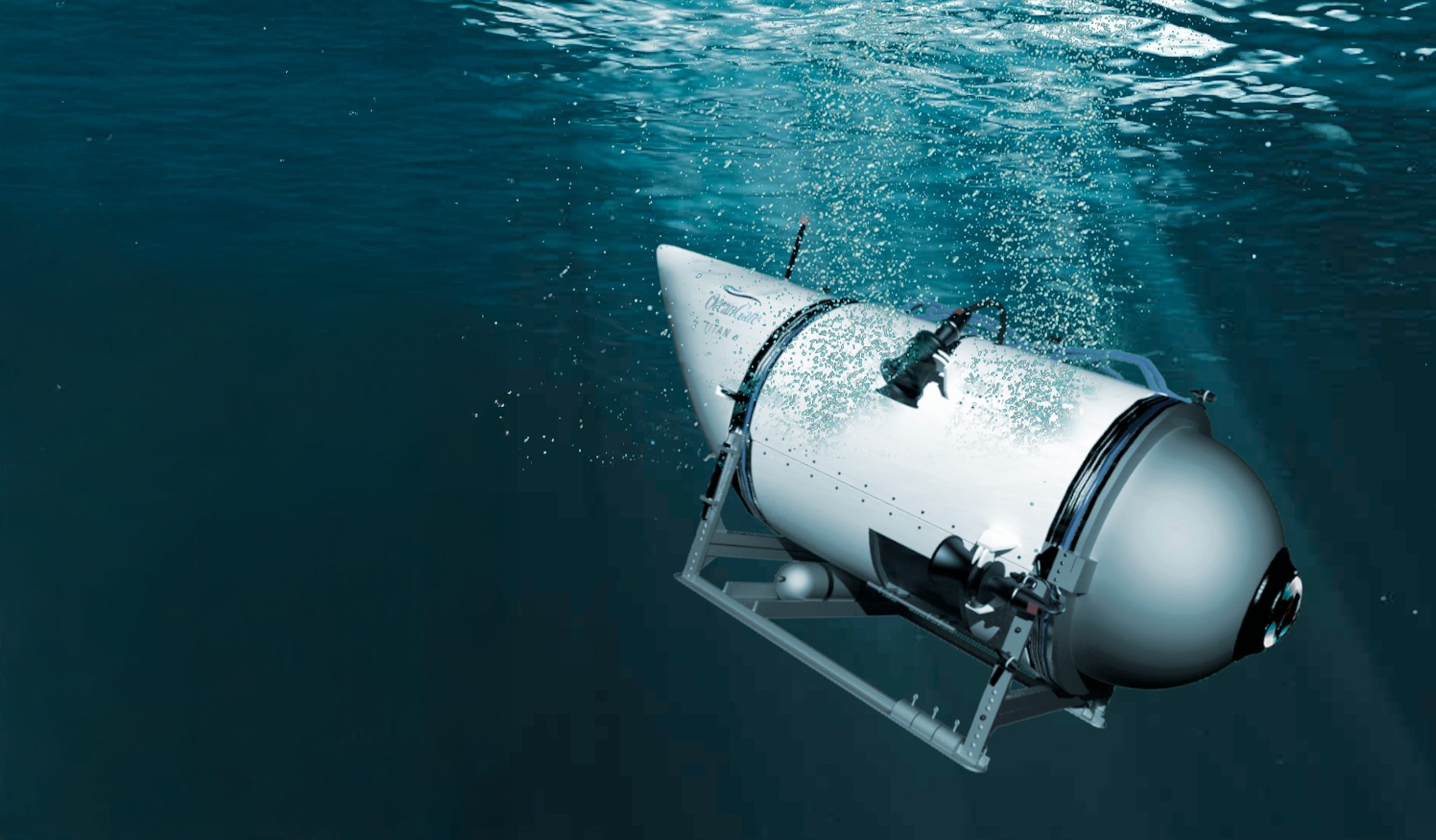
The tragedy of the Batiscoper Titan imploded in the Atlantic Ocean at a depth of about 3800 meters continues to remain impressed even two years after the disaster, in which all the 5 people on board, including Stockton Rush, CEO of the Manufacturer Ocean Gate as well as pilot of the Batiscoper Titan. But could the disaster be avoided or was it an uncontrollable fatality? Establishing it is very difficult; Here we limit ourselves to listing what we could consider the main ones errors carried out by Ocean Gate, by Design choices Dubbie at missed certifications passing through the underestimation of doubts by experts.
1. From materials to the design of the Batisthe
From a technical point of view, the Titan Batiscoper was made up of two domes of titanium united by a carbon fiber cylinder often five inches. This material has great advantages, like a great lightness in the face of a rather contained expense. At the same time, however, it has technical qualities unsuitable for enduring repeated cycles of diving cycles in environments with such high depth, especially as regards compression resistance. Precisely for this reason the Batiscophs are usually made in full with more resistant materials, such as steel or titanium. Also the form It is unusual: in fact, a sphere allows you to better distribute the loads related to hydrostatic pressure, while the cylinder is much more subject to deform in such contexts.
But nobody has ever decided to intervene?
2. Ignoring experts’s doubts
In reality, over time someone tried to warn Ocean Gate of the risk that Titan passengers were running. One of these was David Lochridgeex-director of the operations, who raised his concern regarding the possible failure of the hull due to an increase in the pressure repeated over time. Furthermore, he always informed the company of how the early detection system was in fact useless, given that he would warn a disaster only a few milliseconds before. His fears were brought back to the high floors – including Rush himself – who decided to fire him, accusing him of having brought the false back to his reports and of having revealed industrial secrets to competitors.
Similar speech also for Rob McCallum, consultant for Ocean Gate who left the company in 2009 Following great concerns about the too hasty production of the vehicle.
3. The lack of certifications by external entities
Usually means of this type are subjected to rigid checks of external entitiesso as to guarantee its performance and Second safety standard international. According to what emerged in recent years, Titan was never part of this verification process. He also wrote it David Poguejournalist who went aboard the Titan in 2022 and who declared that he had to pretend a form in which the following wording was present:
This experimental ship has not been approved or certified by any regulation body.
This choice, however controversial, was motivated by Ocean Gate herself on several occasions, saying that checks so stringent suffocated innovation, and that most maritime accidents are not linked to technical errors but ad human mistakes. As history has shown us, however, without the appropriate technical characteristics, even an apparently safe means can turn into a deadly trap.
