If you play sports you will most likely have heard of the creatine to improve your performance. In fact, there is a kernel of truth! And there are also well two claims approved by the European Food Safety Authority (EFSA) which concern creatine and its use in sport for the adult population onlyestablishing the maximum daily limit a 3 grams of creatine in adults.
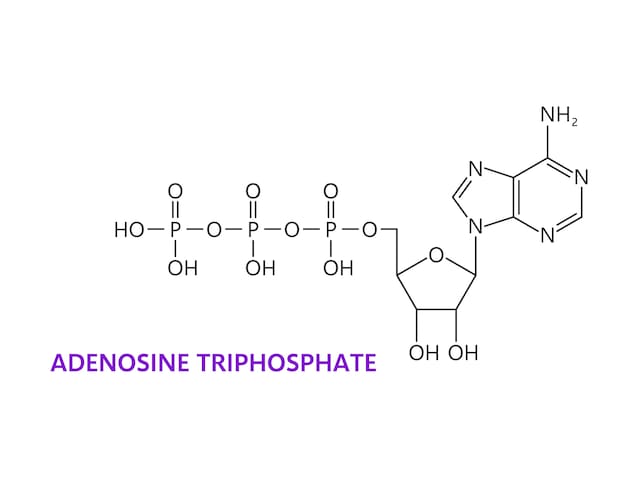
The first claim concerns the effectiveness of creatine in increasing repeated and high intensity physical performance and the second it is instead related to strengthening strength training in people over 55. In addition to being a supplement, we already take creatine alone dietin particular from meat and fish, while a part is produced directly by our liver. Once in circulation, it reaches the muscles where it is stored and used during physical activity regenerate ATP (adenosine tri-phosphate), the organism’s energy molecule, when this is in short supply. In short, a “backup battery”.
Disclaimer: This article is purely informative, it does not intend to give any medical or therapeutic indications.
Creatine: between diet and endogenous production
The name “creatine” comes from Greek kreaswhat does it mean meatand it is no coincidence: it was isolated for the first time in skeletal muscle from French chemist ME Chevreul in 1835. Since then, science has learned a lot about this molecule, and starting from the nineties, it forcefully entered the shelves of sports supplements, with a market that in 2018 was around 400 million dollars a year!
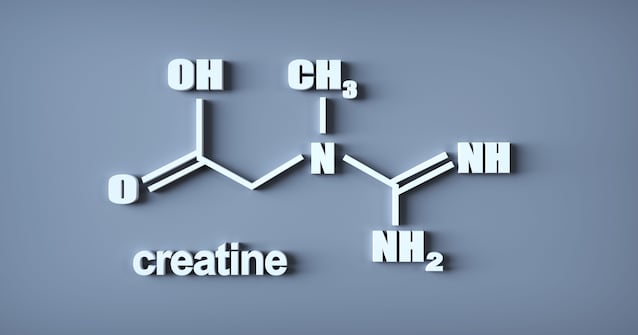
Chemically, it is a non-essential nitrogenous organic acid: it means that our body is capable of produce it independentlyparticularly in the liver, starting from three amino acids: glycine, arginine and methionine. According to the EFSA, a 70kg man needs around 2g of creatine per day and one standard Mediterranean diet provides between 0.25 and 1 g per day, mainly through fish and red meat. The rest, between 1 and 1.7 g, is synthesized by the body.
Where is creatine found and how much do we store?
The main ones food sources of creatine are fish and meat: herring, salmon, cod, tuna, but also beef, pork and chicken. However, it seems that cooking reduces the creatine content in foods. On the contrary, vegetarian and vegan diets provide negligible quantities, with a consequent reduction of creatine reserves by 20–30%again according to EFSA estimates.
In our body, we have a total of approx 120-140 g of creatineof which approximately the 95% is stored in the skeletal musclewhile the rest is distributed in tissues with high energy demand such as the heart, brain and spermatozoa.
What creatine does to our body
The main role of creatine is to support the production of ATPthe “energy currency” of cells. After being synthesized or taken in the diet, creatine reaches the muscle via the blood. In muscle cells, a specific enzyme, called creatine kinase (CK) a group attacks her phosphate (PO43-) transforming it into creatine phosphate.
In this way, it remains “trapped” in the muscle cell, because it cannot cross the plasma membrane: approximately 60-70% of the creatine present in the muscle it is in the form of creatine phosphate, while the remaining part is present in free form, even if the mechanism that prevents it from running away is not known.
Creatine phosphate is the real energy reserve: the phosphate group can be rapidly stored sold to ADP (adenosine diphosphate) to regenerate ATP when energy demand increases. This system becomes particularly important during intense and short-duration exerciseswhen the body cannot produce energy quickly enough through normal aerobic processes.
When we do physical activity, in fact, the muscles consume ATP at a rapid rate. Under normal conditions, ATP is produced through aerobic cellular respiration, a process that requires oxygen and time. The problem arises in the short but very intense and repeated effortsbecause this mechanism is too slow to “recharge” the ATP supply and therefore creatine phosphate intervenes, which regenerates ATP in fractions of a second.
The phosphate group paradox
Here’s a strange thing: the phosphate group for the formation of creatine phosphate comes from none other than… from ATP itself! But how, did you say that it is needed to regenerate it? Don’t panic, it’s a reaction reversible: we store creatine phosphate, removing the phosphate from ATP, but when this is consumed during physical exercise, the creatine phosphate is “broken” releasing the phosphate which is attached to the ADP reforming ATP.
But wouldn’t it be better to keep the ATP? Actually, no. Because storing creatine as creatine phosphate is a kind of investment: at rest, we sacrifice some energy to build a reserve that will be needed at the right time.
What EFSA says: approved and rejected claims
EFSA has approved two “health claims” for creatine, both of which have been applied only to adults who practice intense physical activity, so if you don’t fall into this category or don’t have specific deficiency conditions (but in that case it’s better to get advice from your doctor) it would be useless to take it and the diet would be enough for your daily energy needs. In both cases, EFSA recommends a dose of 3 g per day of creatine.
The first claim concerns physical performance: creatine increases physical performance in case of intense, short and repeated exercise. Studies indicate an improvement in performance including between 5% and 20%while supplementation appears to increase muscle creatine stores by 15–20%.
This increase can be obtained either with a loading phase (about 20 g per day for 4-5 days), or with a constant intake of 3 g per day for about a month. Between the two, it seems preferable to choose the lower and more constant dosagebecause it allows a more gradual and sustainable accumulation at a muscular level.
The second claim concerns the over 55s:
“daily consumption of creatine can enhance the effects of resistance training on muscle strength in adults over 55 years of age”
To obtain this effect, the EFSA specifies that creatine must be taken in combination with a weight training program carried out at least three times a week at high intensity.
For all other claims, for example the one on the benefits of creatine on cognitive function, the EFSA concluded that the available evidence is not sufficient to establish a causal link between creatine supplementation and the improvement of cognitive abilities.
Of the various forms of creatine that exist on the market, the safest and most studied is creatine monohydrate. However, EFSA also considers another formulation, recommending daily doses of 3.41 g of creatine monohydrate or 3.84 g of hydrochloride, corresponding to 3 g of pure creatine.
Side effects between myths and reality
The major side effect reported for creatine use is associated with fluid retentiondue to nature osmotic (i.e. it draws water) of the molecule. In reality, according to EFSA, there is little supporting data. In fact, if it is true that in the first few days you may pee less, in the long term this has a fluid retention effect it wouldn’t be so preponderant. Many studies on integration periods between 5 and 10 weeks, in fact, do not confirm this effect.
Another concern could be the kidneys, which deal with the transformation of creatine into every day creatinine, which is then eliminated in the urine: every day we eliminate approximately 1-2% of the creatine stored in the muscle in this way. If we take too much creatine we could overload the kidneys, but even in this case, EFSA always takes care of reassuring us: To date there is no evidence that creatine supplementation can cause liver damage neither in healthy people nor in those who already have kidney problems.
All in all, therefore, not only short-term use is considered Safebut also in the long term, despite still limited data, the overall safety profile seems reassuring.
Sources:
Butts, J., Jacobs, B., & Silvis, M. (2018). Creatine Use in Sports. Sports health. Fernández, Á.JG, Izquierdo, Á.G. et al. (2024), Report of the Scientific Committee of the Spanish Agency for Food Safety and Nutrition (AESAN) on the risk associated with the consumption of food supplements that contain creatine as an ingredient. Food Risk Assess Europe. EFSA Panel on Dietetic Products, Nutrition and Allergies (NDA); Scientific Opinion on the substantiation of health claims related to creatine and increase in physical performance during short-term, high intensity, repeated exercise bouts (ID 739, 1520, 1521, 1522, 1523, 1525, 1526, 1531, 1532, 1533, 1534, 1922, 1923, 1924), increase in endurance capacity (ID 1527, 1535), and increase in endurance performance (ID 1521, 1963) pursuant to Article 13(1) of Regulation (EC) No 1924/2006. EFSA Journal 2011 EFSA NDA Panel (EFSA Panel on Dietetic Products, Nutrition and Allergies), 2016. Scientific opinion on creatine in combination with resistance training and improvement in muscle strength: evaluation of a health claim pursuant to Article 13(5) of Regulation (EC) No 1924/2006. EFSA Journal2016 Antonio, J., Candow, D. et al. (2021). Common questions and misconceptions about creatine supplementation: what does the scientific evidence really show?. Journal of the International Society of Sports Nutrition,. EFSA NDA Panel (EFSA Panel on Nutrition, Novel Foods and Food Allergens), Turck, D., Bohn, T., et al. (2024). Creatine and improvement in cognitive function: Evaluation of a health claim pursuant to article 13(5) of regulation (EC) No 1924/2006. EFSA Journal.
