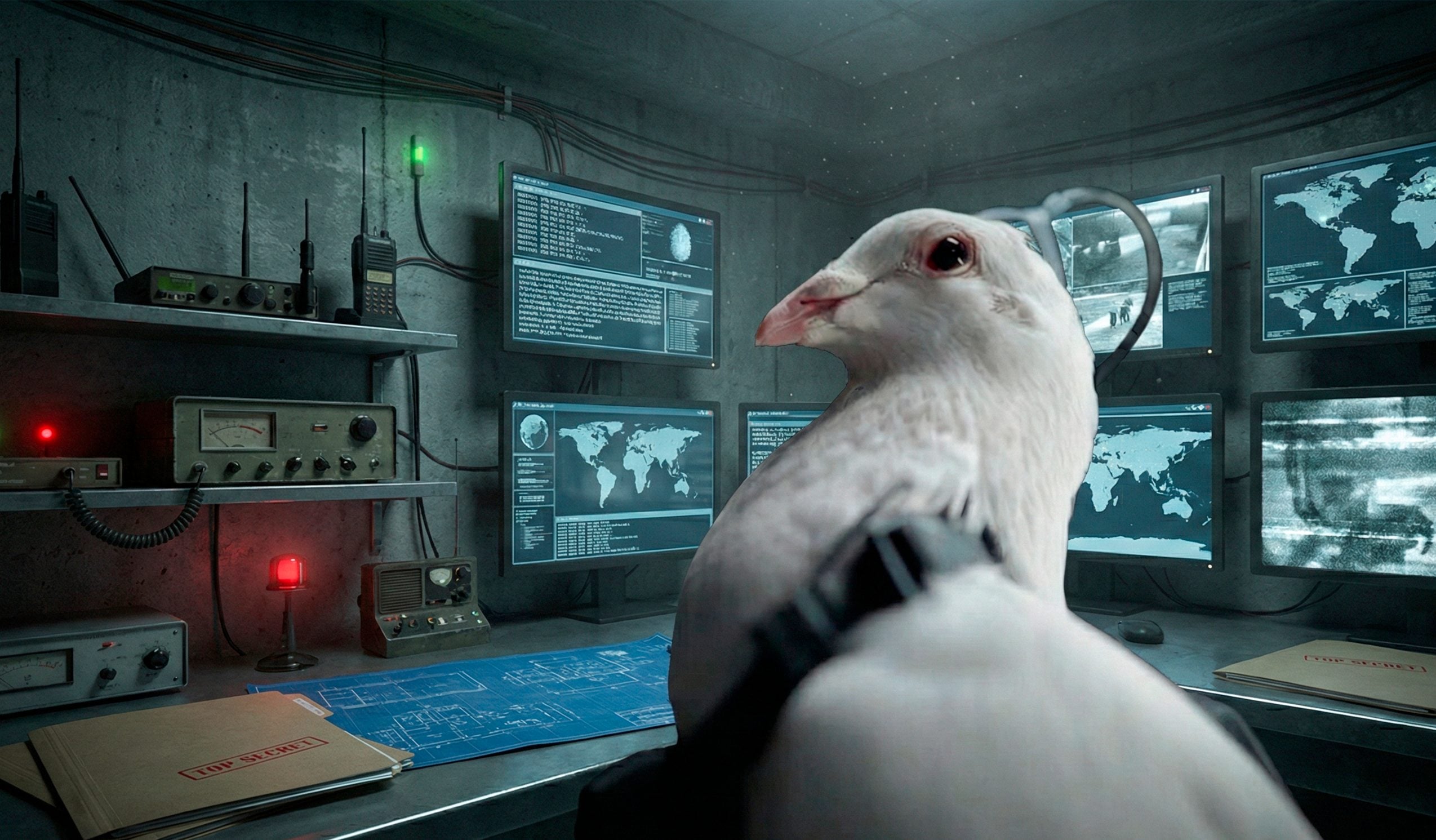
Flight tests were carried out in Moscow pigeons-biodrones equipped with neural interfaces and used for environmental and industrial monitoring operations: like this Forbes Russia headlined a recent article and, within a few months, the news has gone around the world, with many people wondering whether it is true – and if so, to what extent. To understand this we must start from the press release of Neirythe company that produces this technology.
Attention: before continuing I would like to point out that this article will focus exclusively on the technological aspects, leaving out all the ethical implications deriving from the direct use of animals as tools.
The operation of biodronic pigeons of Russia
From a technical point of view i bio-drones they are birds gifted with interfaces neural. Looking at them, it is quite easy to distinguish them from a normal pigeon: a neural interface wire protrudes from their head, on their back there is a backpack with the control electronics and batteries for its operation, and a video camera.
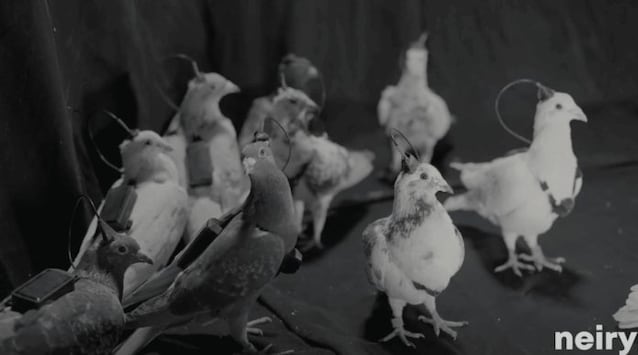
The system uses electrodes implanted in specific areas of the bird’s brain and connected to a stimulator. The controller receives a pre-loaded flight task similar to those used in conventional unmanned aerial vehicles, while the stimulator sends impulses that influence the bird’s motivation to turn left or right, with positioning provided by GPS and other navigation methods. So, on paper, no training needed because the pigeon is “enticed” to turn by the system itself.
The first return flight took place on November 25, 2025 and – again according to the manufacturing company’s declarations – they have already produced dozens of these birds. The goal? On paper the applications are in the scope of monitoringsuch as the inspection of industrial and environmental systems, or in search operations e rescue. But don’t think that the project is limited only to pigeons. These are the words of Alexander Panov, founder of Neiry Gorup:
We are currently focusing on pigeons, but depending on the environment or payload different species could be used. With the system ready for real-world deployment, this versatility becomes particularly relevant in scenarios where conventional drones face physical limitations.
The truth behind the “cyborg” birds of the startup Neiry
Neiry is currently financed largely by the fund Vladimir Potanin (Interros) and collaborates closely with the institute Innopolpraktikadirected by Katerina Tikhonova (Vladimir Putin’s daughter). The idea of many newspapers – such as T-Invariant – is that this demonstration flight was done not so much to promote bio-drones themselves, but rather to attract even more investorsperhaps even in the military field.
In fact we have on the actual functioning of Neiry’s pigeon-drones very little concrete informationgiven that no scientific studies have ever been publishedneither internal nor independent. Of course, internationally this technology is not new and in the past have been conducted experiments in China, the United States, South Korea and India, but in none of these cases have the results been so striking as to promote this tool on a commercial level.
For this reason it is impossible to say with certainty whether these animals respond correctly to commands. Also because it is true that (potentially) their autonomy is greater than that of a drone, but most likely it is equally true that the level of precision it probably will much lower compared to a normal drone, especially in complex urban contexts.
A last major issue is that relating to the life of pigeons: according to the company, the chip is installed in such a way as to do not change the average lifespan of the pigeon; independent newspapers, such as the aforementioned T-Invariant, however, question these statements, given the high risk of inflammation and infections for this type of surgery. Furthermore, the number of animals involved in this experiment and how many of these lost their lives was never revealed.
In conclusion, the pigeon drones seem more like a well-orchestrated advertising campaign rather than an actual scientific achievement. If, in the future, more in-depth studies, technical reports and interviews are released on the matter, we will update you.
