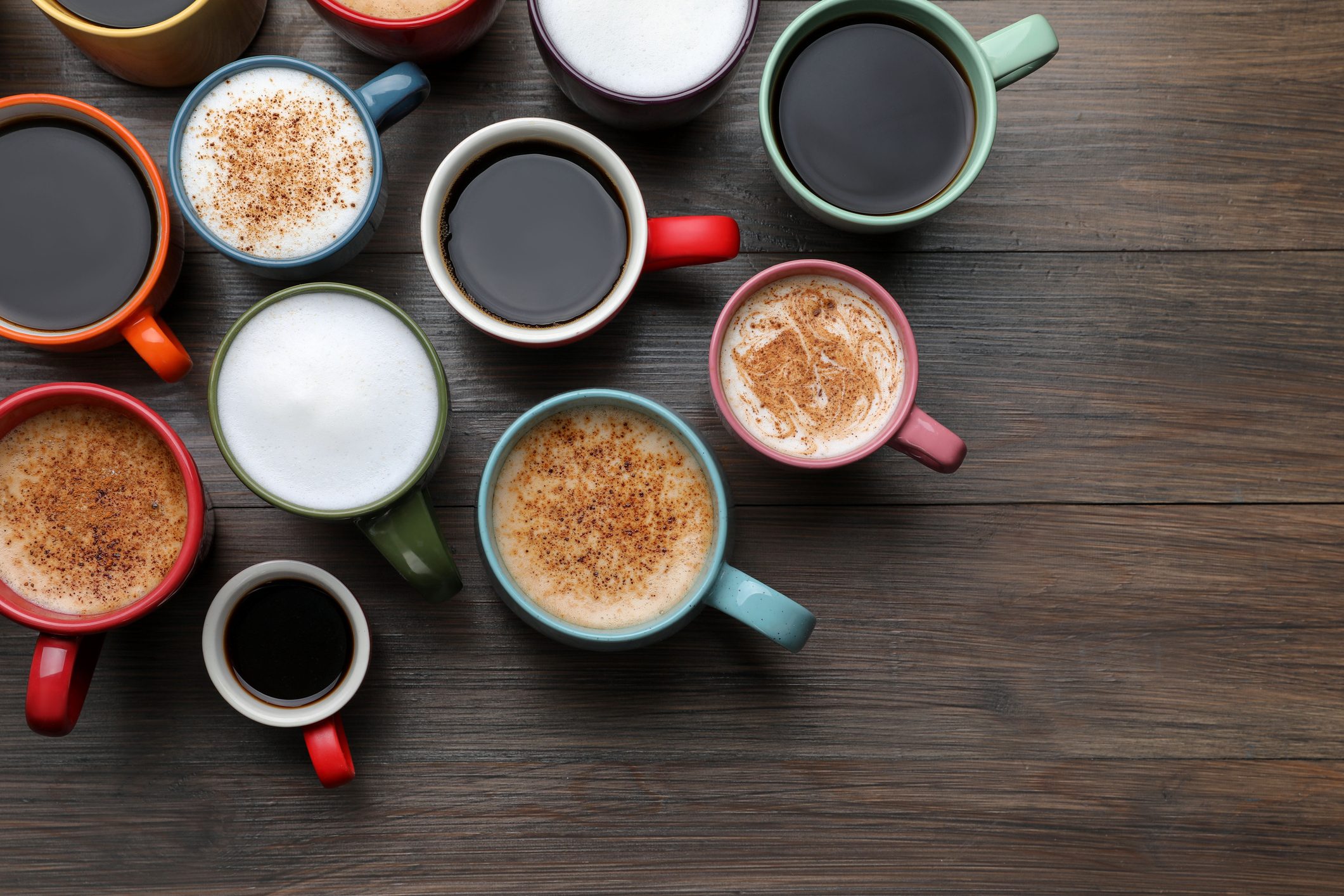
When we sip a coffee, we tend to think that the taste depends exclusively on quality of the mixturefrom the roasting or by the skill of those who prepared it. However, science reveals a singular reality to us: our perception of taste is a multisensory experience that comes profoundly influenced by the container of the drink, the cup! Our brain constantly makes predictions (expectations) about what we are about to consume, even before the food or drink enters our mouth. To do this, uses anticipatory signals and exteroceptive such as sight and touch. What’s fascinating is that the visual and tactile cues from the cup put the brain in such a powerful “anticipatory” mode that physically modify the activation of primary sensory regions of the braininfluencing our expectations about coffee. A heavier cup is associated with a stronger flavor; a smooth or pink cup increases the sensation of sweetness; rough or green cups increase the sensation of acidity.
The taste “weighs”: the size of the packaging
The first physical element capable of altering our taste experience in a totally unconscious way is the weight of the container. Studies in the field of sensorial marketing have shown that interacting with packaging or heavier containers causes consumers to perceive the taste of the product as significantly more intense. A so-called effect is created prior entrythat is, the signal of the weight of the cup takes the attention of our brain which maintains that sensation even during the moment in which we sip the coffee.
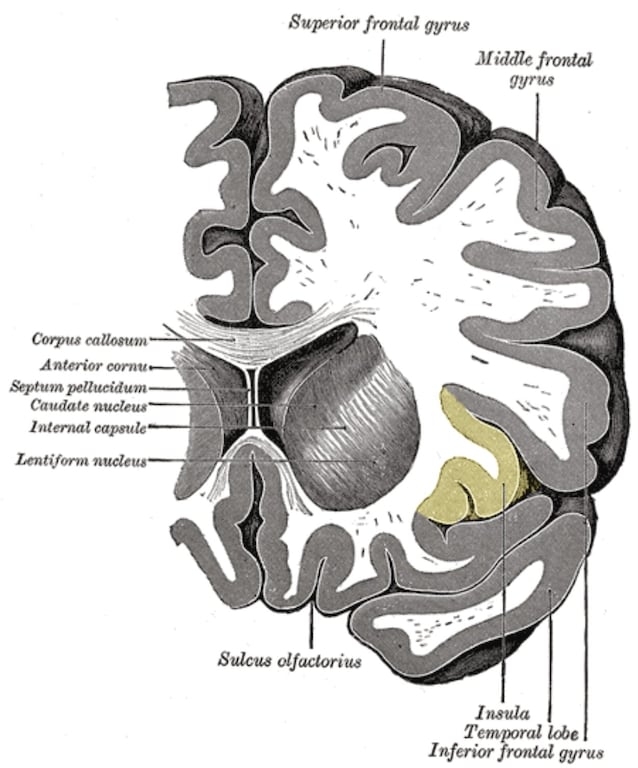
This perceived intensity is not limited to a simple illusion of the palate, but triggers a real chain reaction: a flavor rated as stronger and decided leads to a very overall rating more favorable of the drink. Consequently, both the desire to consume coffee and the economic availability increase pay a higher price for it. The human brain, in fact, tends to instinctively associate the concept of “heaviness” with that of high qualitydensity and importance. If we drink from a robust and heavy cup, our palate will expect, and probably perceive (by self-suggestion), a full-bodied coffee, rich in aromas and of greater value. On this, according to research in 2018, neuroimaging studies speak clearly, demonstrating that the expectation of a certain sensation concretely increases the activity of theanterior insulaan area in the brain predominant in the primary gustatory cortex.
A question of form: how design shapes aroma and bitterness
It’s not just the weight to play a role, but also the cup geometry. For example, the study “The shape of the cup influences aroma, taste, and hedonic judgments of specialty coffee” found that the “tulip” shaped cups (with the wide base and narrower opening) have proven to be the most effective for enhance the aroma of the coffeeas they trap volatile compounds, conveying them in a concentrated manner towards the taster’s nose. Beyond smell, shape also generates precise expectations about taste: a 2017 study tells us that we tend to associate short cups with a narrow diameter to much more bitter and intense coffeeswhile the cups with a wider diameter they are instinctively connected to mixtures sweeter.
Particularly rounded and bulbous shapes therefore tend to amplify the real perception of sweetness and acidity at the time of tasting. Too risky a design, however, can lead to disaster: although unusual shapes enhance some flavours, they can lower the satisfaction of less experienced consumers, who prefer the reassuring familiarity of traditional cups.
Colors and textures that deceive the palate
Clearly, the color and the textures outside of the cup. As reported by a 2019 study published in Food Quality and Preference, color works like a powerful warning for our brainbased on ancient evolutionary and cultural associations. Serve a coffee in one pink cup significantly increases both the expectation and the actual perception of sweetnessdecreasing its acidity. On the contrary, the use of green or yellow cups enhances the tones acids And citrus fruits of the drink. But be careful, too much is too much: when the color of the cup “betrays” the real flavor of the coffee (for example, a naturally very acidic coffee served in a pink cup that promises sweetness), this strong contrast generates disappointment in the consumer, drastically lowering the overall satisfaction.
Likewise, according to recent research, the “textures“, or the roughness or smoothness of the cup, alters the tactile sensation of the drink in the mouththe so-called mouthfeel. Drinking from a ceramic cup perfectly smoothhere too, amplifies the perception of sweetness. Instead, interact with a surface rough to the touch (like an unglazed cup on the outside) it will make the coffee feel like more acidic and, above all, it will leave an aftertaste characterized by a sensation of greater dryness and astringency on the palate. As anticipated for the color, also for the texture, the effects of the cup on the perception of coffee that we talked about only work as long as the discrepancy between expectations (given by the characteristics of the cup) e taste effective is not too large.
The next time you order your coffee, pay attention to the container: the cup does not simply contain the drink, but is in all respects a ingredient.
Sources
Carvalho and Spence, 2018, The shape of the cup influences aroma, taste, and hedonic judgments of specialty coffee. Carvalho et al, 2020, Cup texture influences taste and tactile judgments in the evaluation of specialty coffee. Carvalho and Spence, 2019, Cup color influences consumers’ expectations and experience on tasting specialty coffee. Spence and Carvalho, 2019, Assessing the influence of the coffee cup on the multisensory tasting experience. Kempfer et al., 2017, Touch-flavor transference: Assessing the effect of packaging weight on gustatory evaluations, desire for food and beverages, and willingness to pay. Van Doorn et al., 2017, Does the shape of a cup influence coffee taste expectations? A cross-cultural, online study.
