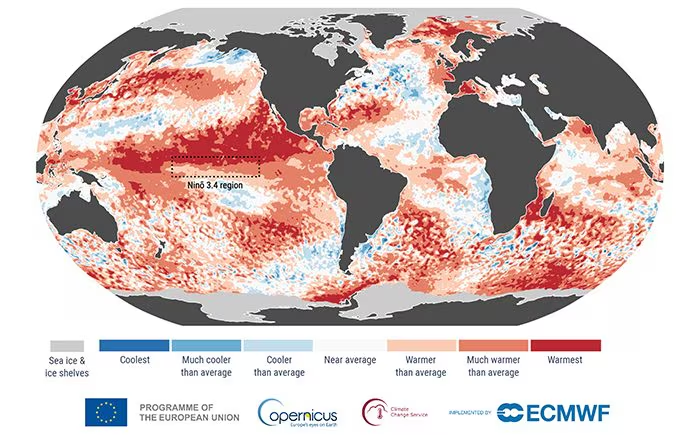
After confirmation from the United Nations World Meteorological Organization (WMO) on the rapid development of El NiñoThe NOAA (the US Federal Oceanic and Atmospheric Agency) has released the latest official update which confirms the progressive and decisive strengthening of the phenomenon.
The statistical data of the forecast models now indicate a new picture: there is an 81% probability that the event underway in the equatorial Pacific will reach exceptional intensity by the end of 2026positioning itself as one of the strongest ever recorded since instrumental measurements have been active.
The physical mechanism of El Niño 2026 and the Pacific Ocean anomaly
To understand the significance of this announcement we must analyze the physics of the phenomenon. El Niño represents the hot phase of the natural cycle ENSO (El Niño-Southern Oscillation). Under normal conditions, trade winds blow from east to west along the equator, building up warm water in the western Pacific (near Indonesia).
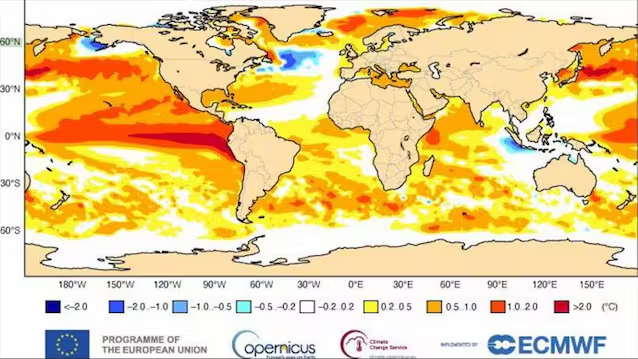
Currently, the weakening of these winds has triggered the opposite process: a gigantic one mass of superheated water is moving towards the coasts of South America. NOAA oceanographic buoys and satellite surveys have already recorded very important surface thermal anomalies in the eastern Pacific region, with water temperatures higher by as much as +2.7 °C respect to the norm.
The “booster” effect on global warming
The aspect that partly worries UN and NOAA scientists is the synergistic interaction with global climate change caused by human activities. El Niño actually acts like a thermal multiplier: the enormous release of ocean heat adds to the warming trend background of the planet.
Experts warn that if the peak event occurs between late autumn and winter, 2026 seriously risks becoming the hottest year ever recorded in the history of humanitywith even more evident thermal consequences in 2027.
The global impacts of a “Super El Niño”
An El Niño of exceptional intensity tends to literally split the planet’s weather behavior in two, intensifying the opposite phenomena depending on the geography of the territories. In particular, the following are expected:
- Drought and fires in the Western Pacific and Central America: forecast models indicate a drastic reduction in rainfall in Indonesia, in Southeast Asia and Central America. The lack of precipitation dries out plant biomass, preparing the perfect fuel for large forest fires;
- Floods and torrential rain in the eastern Pacific: on the contrary, the coasts of South America (such as Peru, which has already activated a state of emergency) and the southern United States will be exposed to a surplus of oceanic humidity, with a very high risk of floods, torrential rains and violent coastal storms.
The confirmation of the 81% probability of a “Super El Niño” event confirms the need for plan the management of water resources and civil infrastructure at the government level.
