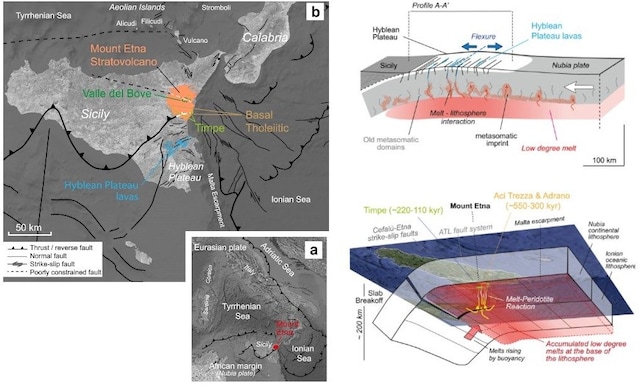
Etna might have a unique origin and feeding mechanism to the world. Until now, it has never been possible to explain exactly how this volcano was formed, since it does not fit into any of the typical cases in which volcanoes are born on the planet. Now, however, a new study by the University of Lausanne and the National Institute of Geophysics and Volcanology (INGV), published in the journal Journal of Geophysical Research – Solid Earthmay have solved this geological mystery. According to researchers, Etna could belong to one little known category of volcanoes and have formed similarly to small underwater volcanoes called “petit-spots”fed by pockets of magma present in the upper mantle.
The most active volcano in Europe with an uncertain origin
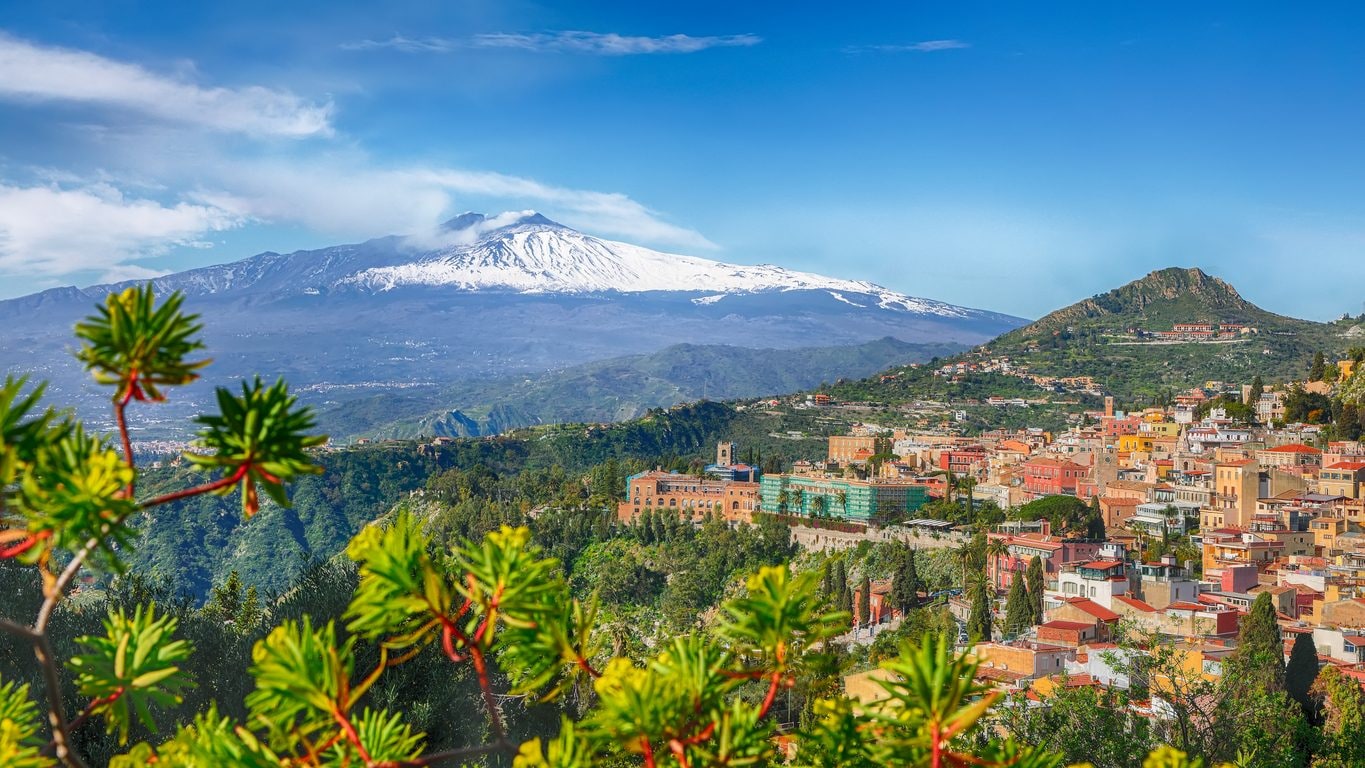
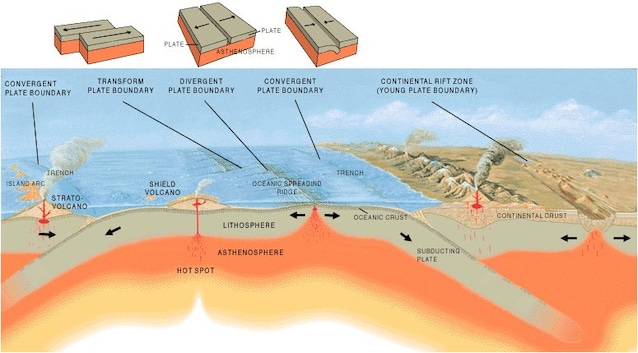
Etna is the most active volcano in Europe, with an activity characterized by frequent eruptions. Eruptions are both effusivewith basaltic lava flows, either explosivewith lava fountains and gas and ash emissions. Over time, these made the volcano grow in height until it reached the current 3403 m. The history of Etna begins around 500,000 years agowhen it originated on the seabed as a shield volcano, while now it has become a stratovolcano (with the shape of a cone). Its formation, however, had not until now been precisely explained by any geological process. The mechanism with which Etna originated, in fact, does not fall within any of those with which volcanoes usually form on the planet. Volcanoes originate mainly in three cases:
- Along the border between two lithospheric plates that are moving away from each otherwhere the magma rises from the mantle and emerges from long cracks, to then solidify forming new crust; it is what happens at the ocean ridges or of tectonic pits on the continents.
- Where one lithospheric plate sinks beneath the other diving into the mantle (subduction) until it melts due to the release of the fluids it transports, capable of lowering the melting point of the rocks; this is how the archipelagos of islands volcanic or the chains of volcanoes on the continents.
- Inside a plaque of oceanic or continental lithosphere, due to the presence of a particularly hot area of the mantle calledhot spot” (or hot spot); here a column of magma rises which gives rise to volcanoes on the surface.
Etna belongs to the category of “petit-spot” volcanoes
Etna is located near one subduction zonewhere the African plate sinks beneath the Eurasian plate. By analyzing the chemical composition of the lava it has emitted throughout its history, however, researchers have found that it is similar to that of hot spot volcanoeseven though there are none in this area. Furthermore, on the basis of experimental data, scholars have demonstrated that the composition of magmas that fueled Etna remains almost always constanteven during variations in the type of movements that affected the lithosphere.
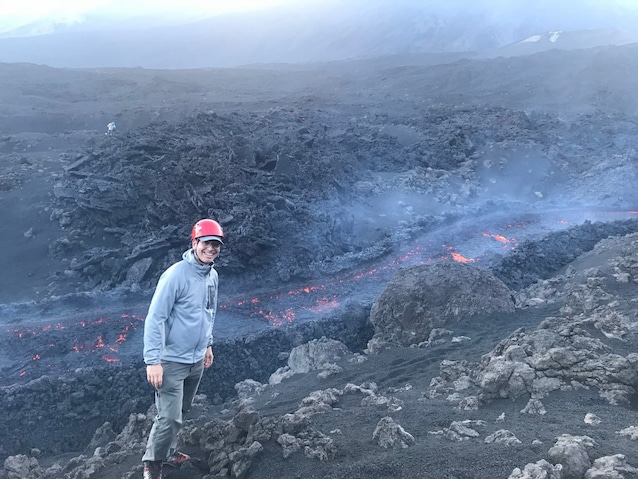
The researchers’ observations suggest that Etna, unlike conventional volcanoes where magma forms relatively shortly before an eruption, is fed by small quantities of magma already present in the mantle deeper than approximately 80 km. Periodically, the movements between the lithospheric plates cause them to rise to the surface through fractures that are created in the plate which sinks as it folds.
According to the study, Etna therefore belongs to a fourth category of volcanoes, little known: that of volcanoes “petit-spot”, described for the first time in 2006 by Japanese geologists very small underwater volcanoeslinked to the presence of magma pockets in the upper mantle. The difference is that Etna is considerably larger in size. Understanding the origin and feeding mechanism of Etna is essential to improve the assessment of volcanic risk in the area.