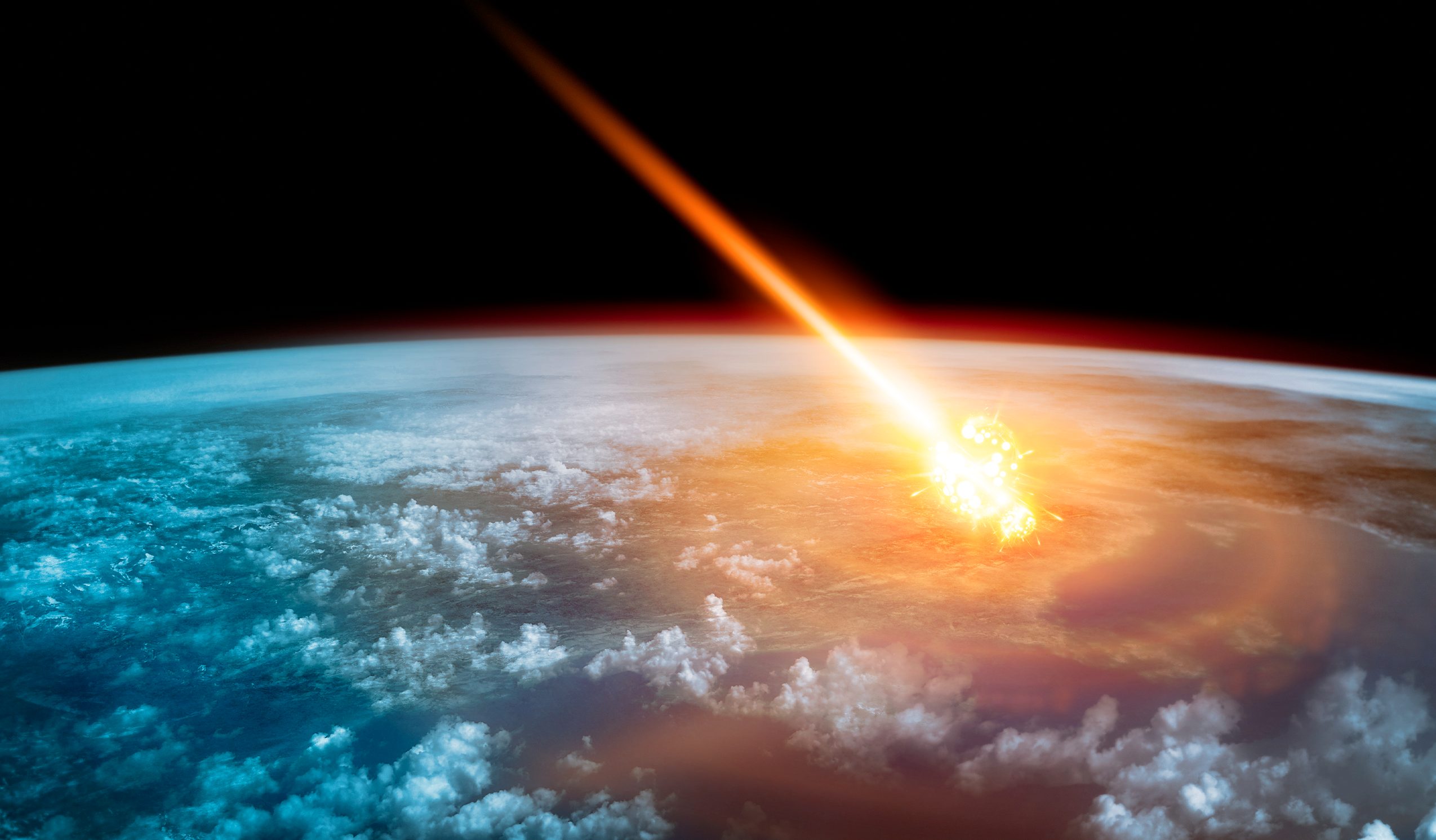
Researchers have finally found evidence that the Silverpit Cratera depression approximately wide 3km and located beyond 400 m deep underground North Seawas created bymeteorite impact more than 40 million years ago. The celestial body, with a diameter of approx 160 mequal to approximately one and a half times the length of a regular football pitch, would have impacted the earth’s surface at a speed of approximately 15 km per second, originating a crater approximately AA 130 km off the coast of YorkshireIn the United Kingdom. The new study thus places a strong claim on a debate that lasted over two decades, during which the origin of the crater was attributed to very different causes of the impact of an extraplanetary body.
The Silverpit Crater and the debate over its origin
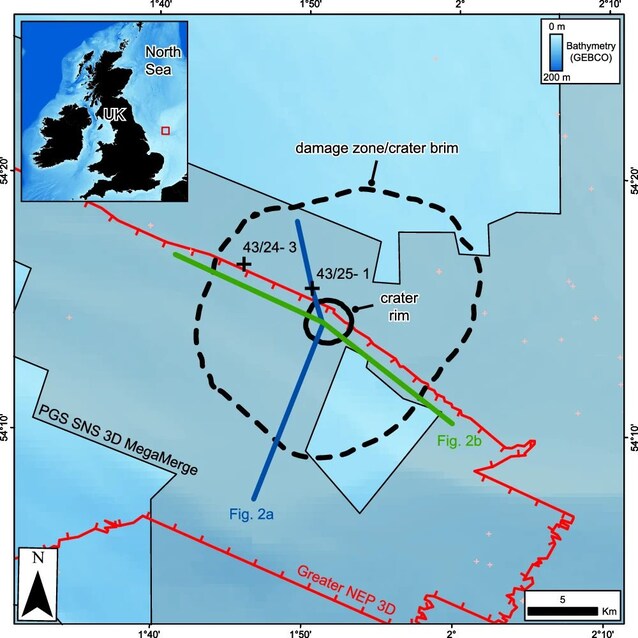
The Silverpit Crater is found in the homonym Pelvis Of SilverpitIn the Sea of Northapproximately 130 km off the coast of YorkshireIn the United Kingdom. This geological depression, whose diameter reaches i 3 kmlies underground, buried under until 400 m of rocks sedimentaryand was originally discovered in 2002 during one countryside Of prospecting geophysics conducted by oil companies looking for potential targets.
Already at the time, some experts hypothesized that it could be the product of a meteoric impact. However, theabsence Of evidence led the scientific community to propose alternative explanations, such as the movement of salts underground, a process known as diapirismcommon in buried rock layers of the North Sea, or even aorigin volcanic. In the 2009during a public debate organized by Geological Society of Londonone of the most prestigious institutions in the field of geology, numerous experts voted in favor of an origin “not extraplanetary”, thus supporting the hypothesis that the Silverpit Crater was not produced by a meteorite impact.
Today, however, a new study conducted by an international research team led by geologists fromHeriot-Watt University Of Edinburghin Scotlandreopened the debate by bringing to light new evidencedata and numerical models that support its interpretation as an impact crater. The results of the study were published on August 29, 2025 in the prestigious magazine Nature Communications.
The evidence produced by the new study
In order to test the impact hypothesis, scientists used a approach multidisciplinary integrating a new reprocessing of geophysical data (in particular of 3D seismic reflection), analyses microscopic petrographic And biostratigraphic Of drilling debris (the so-called cuttings) e models numeric aimed at simulating the energy necessary to generate the morphology of the crater and obtain information on the impact event.
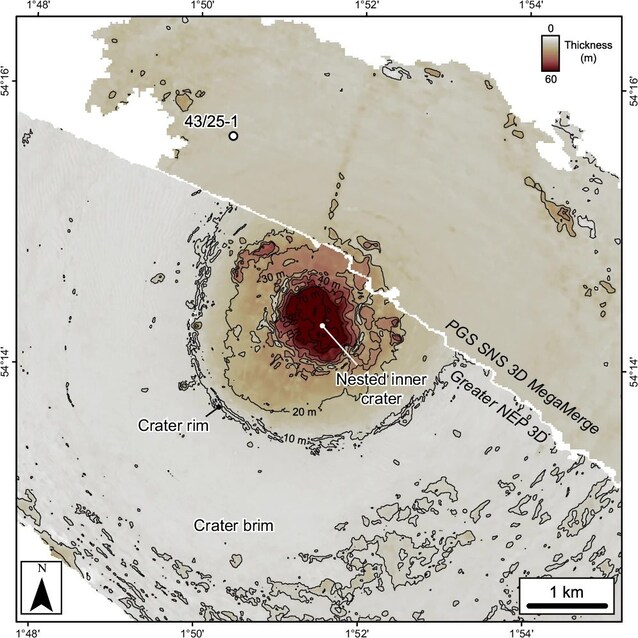
3D seismic highlighted morphologies of unequivocal impactincluding a lifting centralzones a intense fracturing in the annular region and even small “secondary craters“generated by the fall of debris. Furthermore, the absence of marked deformations in the rocks below the crater, starting from about 700 m deep, disproves other theories which attributed its formation to internal and deep processes, as in the case of diapirs salts. By analyzing the distribution of fractures around the crater, scientists have also deduced that the asteroid impacted from west.
The most convincing evidence, however, comes from microscopic analysis and, in particular, from the finding of shock mineralsi.e. minerals that present structures of deformation shocking. These are grains of quartz And feldspar whose internal structure was modified following the rapid exposure at extremely high pressures highsuch as those generated by a meteor impact extremely fast. Under the microscope, these minerals show shock lamellae and other features typical of impact metamorphism.
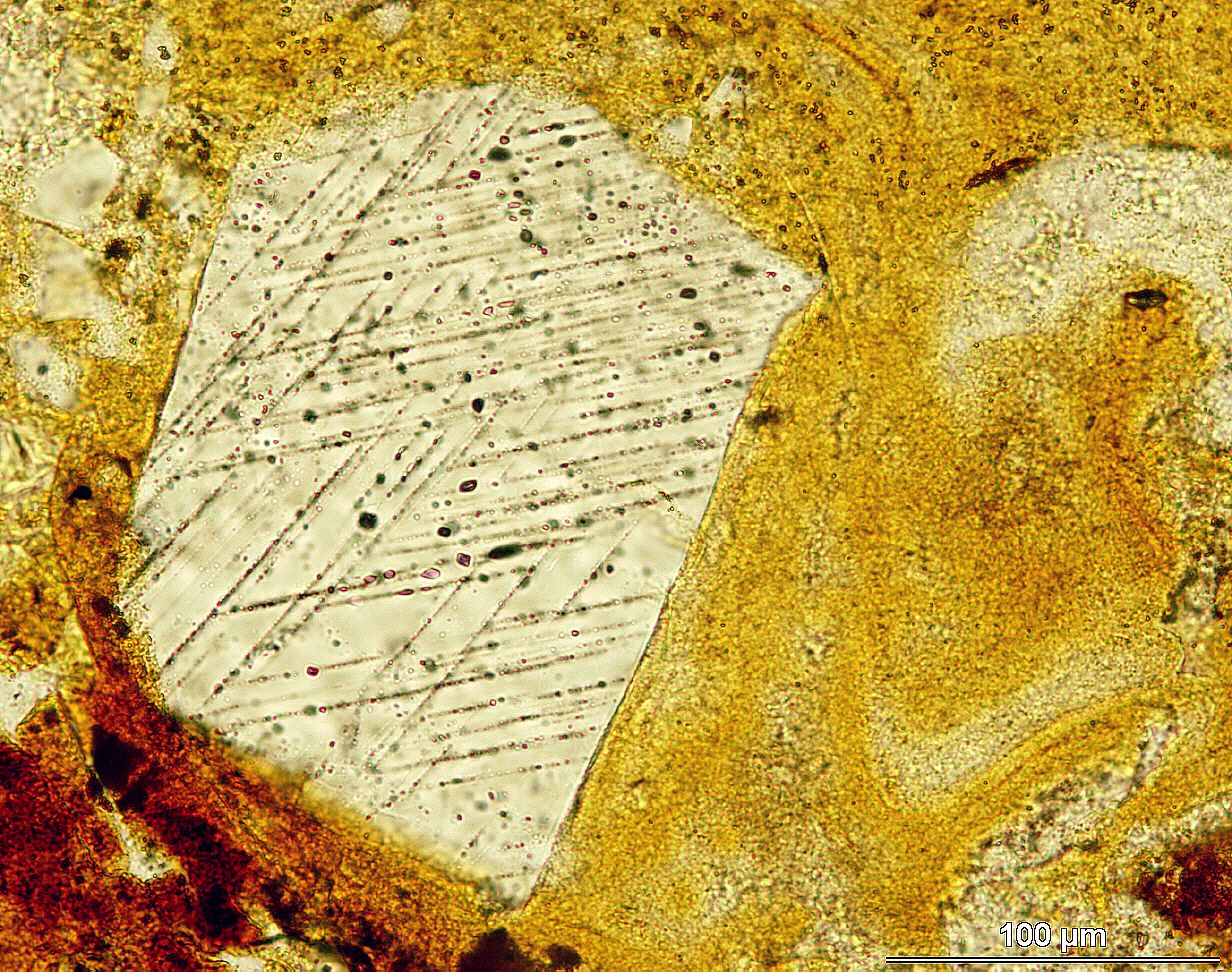
“We were lucky enough to find them” he declared Uisdean Nicholsonassociate professor at Heriot-Watt University in Edinburgh and lead author of the study. “This evidence confirms without a shadow of a doubt the impact crater hypothesis, as it shows a structure that can only originate in conditions of extreme shock”.
Finally, through numerical modeling, scientists were able to reconstruct the conditions of the impact. The crater would have been generated by an asteroid from diameter of approx 160 mtraveling at a speed of 15 km/s. The impact would have caused the expulsion of large volumes of debris and sea water into the atmosphere, giving rise to a column up to 1.5 km. This material would later be reworked by waves of tsunami. Subsequently, the crater would have been submerged to a depth of approx 100 m.
Biostratigraphic analyzes finally made it possible to date the event between 43 and 46 million years agoin the geological period known as Eocene medium.
