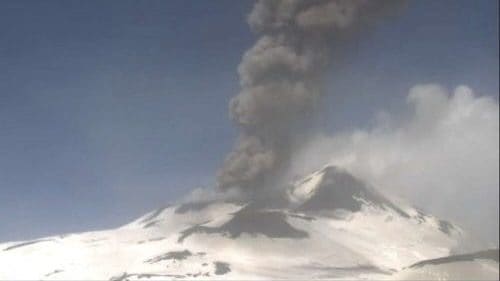
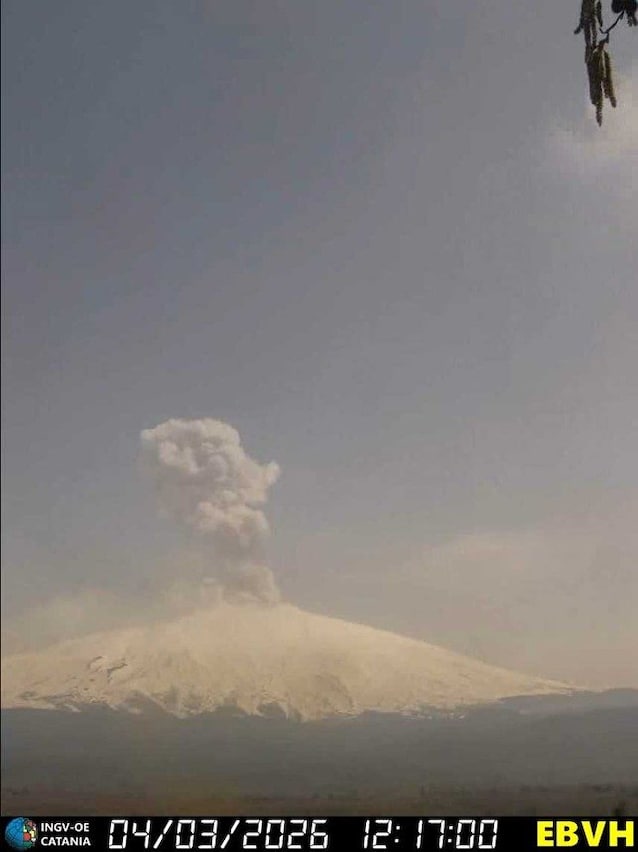
THE’Etna gave birth to aexplosive eruption today Wednesday 4 March 2026 at 1.12 pm. As reported by theINGV Etna Observatorythe event affected the crater Bocca Nuova and it lasted a few minutes – therefore classified as impulsive. Following the explosion, an ash cloud of approximately 1.5 km rose into the sky. However, the column quickly dispersed due to high-altitude winds, generating a light ash fall in the upper part of the volcano. At the moment the activity of the volcano he’s not threatening no inhabited area. The event was also accompanied by a modest increase in the average amplitude of the volcanic tremor from the early hours of today until approximately 09:40.
The province of Catania was affected this morning by a strong earthquake of magnitude 4.5 which occurred at 07:05 with an epicenter at 3 km North West from Ragalnaa municipality of almost 4,000 inhabitants located at the foot of the volcano. INGV underlines there is currently no scientific evidence linking the 1.12pm explosion to this morning’s earthquake. These explosive phenomena are sudden and do not give any geophysical warning signal, but are part of the normal activity of Etna’s summit craters.
However, while individual events are unpredictable, seismology allows us to look deeper. A 2025 INGV study showed that it is possible to predict volcanic eruptions months in advance by analyzing deep seismic activity. By studying the earthquakes recorded on Etna between 2005 and 2024, researchers discovered that the variations in the so-called “b value” – i.e. the ratio between mild tremors and stronger ones – allow the rise of magma from underground to be traced with extreme precision. This parameter proved to be an exceptional precursor signal, capable of raising the alarm long before the classic gas emissions on the surface are recorded.
