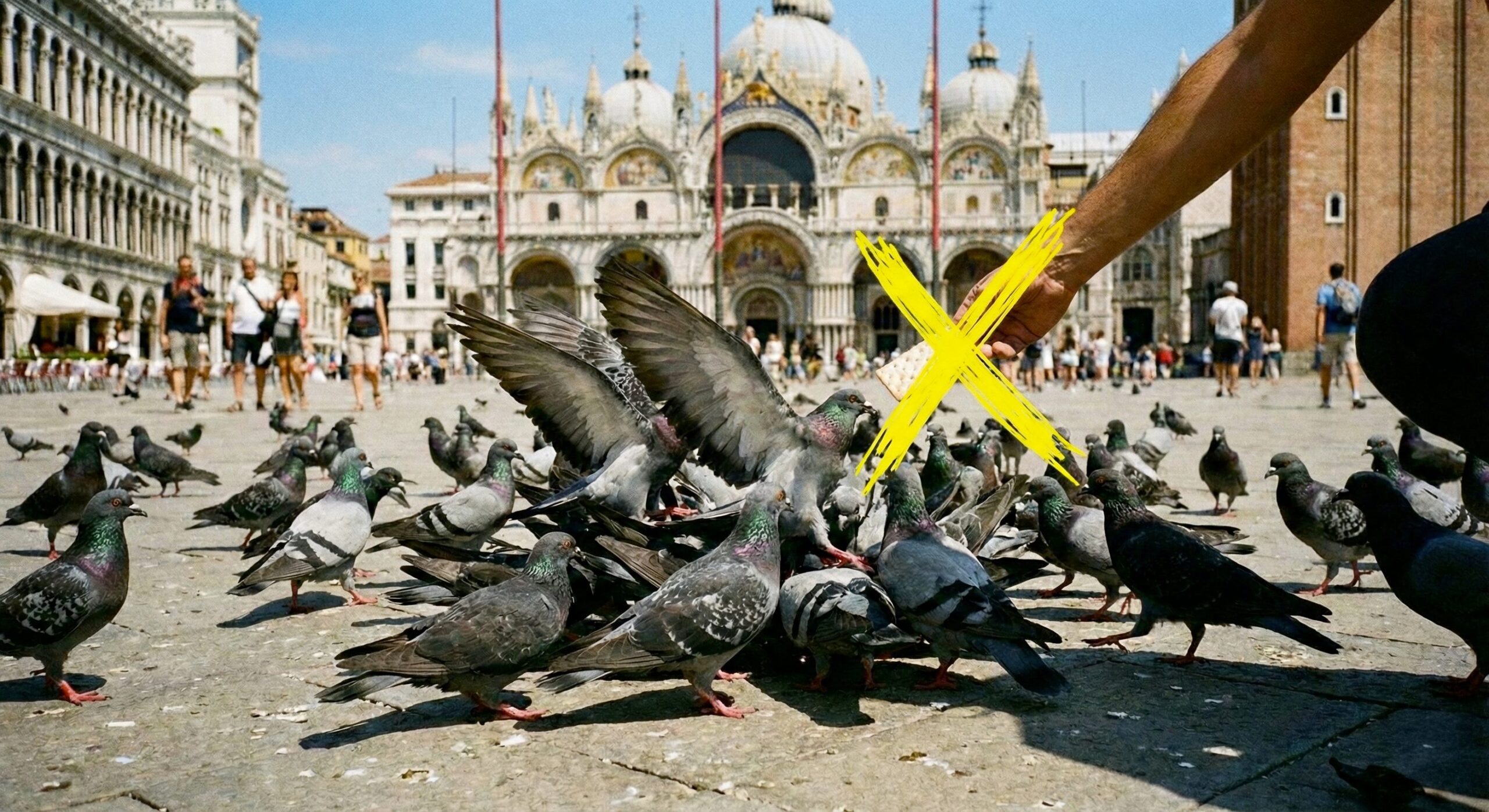
It has happened to us all: while we are in the park or in a square, we have a piece of bread or breadstick left over and we decide to throw it to the pigeons around us. It seems like a harmless gesture, and yet in Italy it is forbidden to feed pigeonspigeons and, more generally, all wildlife. The issue has reignited in recent days after a street vendor in Venice was fined 10,000 euros for selling pigeon feed in Piazza San Marco.
In reality, there is no single legislation at a national level, but most municipalities impose a ban on giving food to animals: exactly as with ducks and fish – which should not be given bread – pigeons and seagulls should therefore not be fed by humans. Among the reasons that explain this decision there is clearly the protection of urban decorumbut also reasons of public safety and compliance with health and hygiene regulations.
As highlighted in the ordinances, artificial feeding alters the biological balance of the species, favoring unnatural proliferation and overcrowding which can facilitate disease transmission among the specimens. At the basis of this decree, therefore, there is also the well-being of the animal: not surprisingly, the food provided by man (such as bread, crackers or crumbs of various foods) is often unsuitable for their diet. By remaining on the ground, it then risks attracting other pest species (such as rats), creating serious sanitation problems for urban centres.
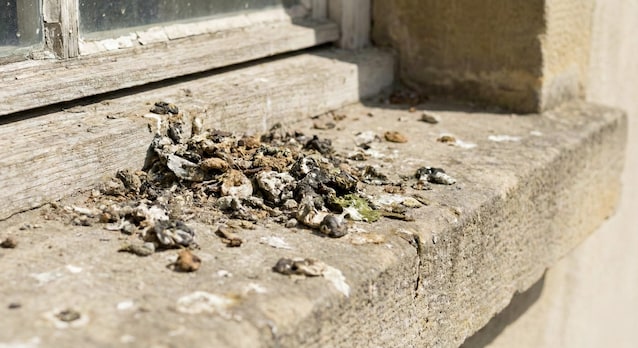
Finally, we add to this the potential damage to the urban heritage: the disproportionate increase in the bird population leads to an accumulation of guano – that is, the accumulation of the excrement of these animals – which, due to the presence of uric acidrisks deteriorate monuments or other structuresalso requiring expensive cleaning and restoration work. In this case, the strictest ordinance is that of Venice:
In order to prevent the chemical components of the guano of pigeons or other birds and the mechanical action of the beak and legs from deteriorating the architectural structures and creating degradation for urban hygiene and in order to prevent possible transmission of pathologies to humans (zoonoses), the owners of properties must provide, at their own expense and responsibility, for the rehabilitation, cleaning and closure of the premises (e.g. attics, terraces, dormer windows, etc.) and of the ravines in which the pigeons have nested and left guano or other traces.
Exactly like La Serenissima, too other large Italian cities (from Milan and Turin to Bologna and Trieste) have imposed the same ban, with fines ranging from €25 up to €500.
It must be said, however, that the high presence of pigeons in Italian cities does not depend only on the food factor which, however, remains easily available in urban environments: also to be considered is the fact that these birds they tend to nest on hard surfaces and, precisely for this reason, they prefer buildings, where they find numerous places to shelter safely from predators.
