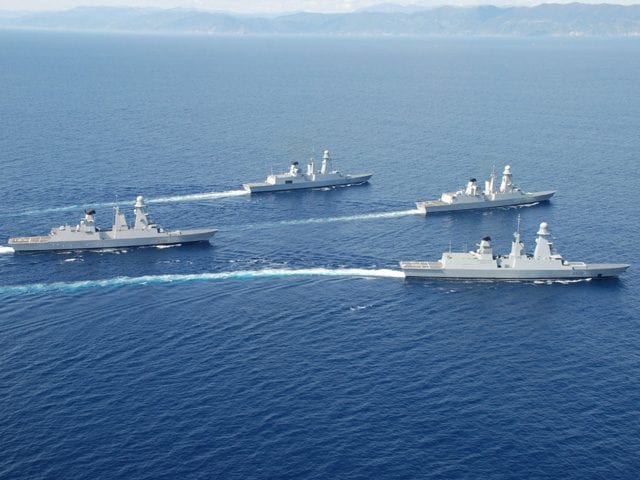
There Global Sumud Flotilla It continues its navigation through the Mediterranean with the aim of force the naval block imposed by Israel on the waters in front of the Gaza Strip and bring humanitarian aid to the GazaWi. While the expedition approaches the destination, the concern is growing towards the reaction of the state of Israel. Beyond the considerations on the legitimacy of the naval blockade, that many humanitarian organizations and governments have denounced as pretentious and unjustified, what does international law say about this tool?
When the Global Sumud Flotilla arrives in the area at risk off the coast of Gaza
The 43 humanitarian boats which make up the flotilla are currently in the moment international watersoff the city of Alexandria of Egypt. The position of the fleet is updated in real time thanks to a tracker on the Global Sumud Flotilla website.
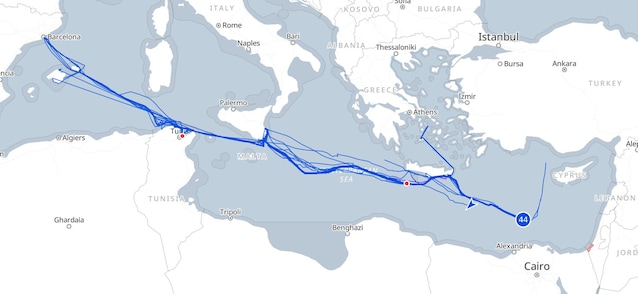
The possible arrival in the waters subjected to the naval block established by Israel is foreseen for Thursday 2 October. However, there are many variables involved, both diplomatic and linked to any attacks on boats by the state of Israel.
When a naval block is considered legitimate: the rules of sea law
There UN Convention on Sea Law (UNCLOS) of 1982 establishes the fundamental principles that are valid in peacetime and, with some specificities, even during armed conflicts. According to the legislation, each coastal state has sovereignty on its own territorial waterswhich extend up to 12 nautical miles from the basic line of the coast. Within this band, the State can regular access, navigation and exploitation of resources. However, foreign ships can exercise the so -called harmful passagethat is, cross the territorial waters without causing damage to the safety or public order of the state in question. However, this right is not unlimited: the state has the right to suspend it if it believes that there is a threat to its safety, in particular in conflict time.
In the event of war or armed conflict, specific rules apply, coded in Sanremo Manual on international law applicable to armed conflicts at sea of 1994 According to the document, a naval block It can be declared legitimate if it respects three main conditions. The first is the declaration and notificationthat is, it must be made public and communicated to belligerent and neutral states. It must then be taken into account of theeffectivenessfor which it must be concretely applied and not only proclaimed (for this reason the so -called “Paper Blockades” have no legal value). Last point is theimpartialitywhich does not provide discrimination between ships from different countries. If these conditions are respected, the blockage is also considered binding for civil ships or neutral countries.
Civil ships and NGOs: what they can and cannot do
Civil ships trying to violate a declared naval blockage risk precise consequences. The Sanremo manual establishes that a ship suspected of violating the block can be stop, inspected and captured. If this refuses to stop, it can be attacked, but only after clear warnings and in case of active resistance. Once captured, the ship is subjected to jurisdiction of prey: In practice, a special state court that made the kidnapping will decide if the ship and its load must be confiscated. Returning to the specific situation of the Global Sumud Flotilla, the organizers know that by entering the Israeli or Gazawi territorial waters subjected to the blockade by the Tel Aviv Navy, they can run into the capture of the ship, in the confiscation of the load and in the temporary arrest of the crews.
The limits imposed by international law
However, international humanitarian law provides for important limits for the naval block tool (and terrestrial). The Geneva Conventions and their additional protocols prohibit the use of blockade as a tool of Starvation Warfare (hunger as a war method). All form of collective punishment of the civilian population. This means that, even in the presence of a block, the passage of essential humanitarian aid – food, medicines, water – as long as coordinated with the competent authorities and under international supervision. All these limits have been repeatedly violated almost every day by the Israeli military and civil authorities since their military campaign began in Gaza.
Neutrality and responsibility of third parties
A little known aspect is the position of the ship’s flag states. If a flotilla starts under the flag of a third country, that country has the responsibility of informing its citizens of legal risks and coordinating with the state that applies the block. Neutral states cannot ignore the existence of a declared block: if they allow their own ships to deliberately violate it, they therefore risk compromising their neutrality and exposing their citizens to judicial proceedings or diplomatic accidents.
What the flotilla is in concrete terms
To summarize, the crews aboard the boats that are approaching the waters in front of the Gaza strip in these days first of all to be stopped, questioned and subjected to legal proceedings by the Israeli authorities. Furthermore, even if Tel Aviv has guaranteed that it will not happen, it is not excluded that during any detention operations the lethal force by the Israeli Navy is used. In 2010 the Israeli special forces attacked in international waters the Mavi Marmara and five other boats of the Freedom Flotilla headed to Gaza, killing 10 activists on board. In addition to the risk for the safety of the crews, it is very likely that the load of humanitarian aid will be confiscated. Also according to international law, any Flotilla Fermo activists will be able to contest the legitimacy of their stop in front of international courts or with diplomatic tools.