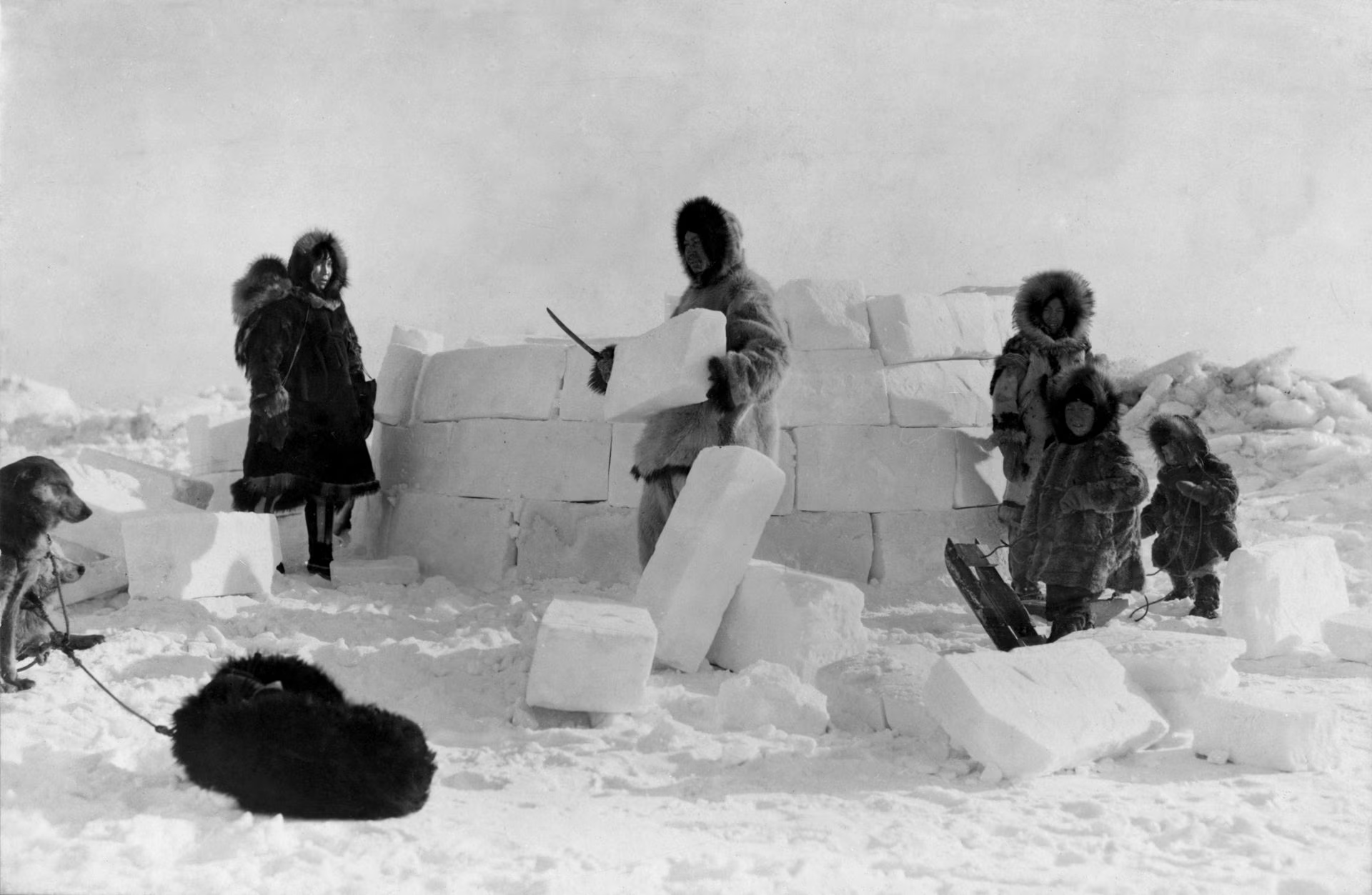
How did Arctic societies survive without agriculture, and what strategies, from hunting and nomadic farming to vertical gardens, can guide us today in the face of soils increasingly compromised by climate change?
THE’agriculture is often considered the turning point which made it possible development of civilizations. But this narrative contains an implicit assumption: that the land is cultivable everywhere. In Regions of the Great North this assumption collapses: with the ground frozen, “summer” lasting a few weeks and the light disappearing for months, agriculture has always been impracticable for some peoples, the peoples of the cold. These indigenous communities that inhabit the Arctic, subarctic and circumpolar regions of the Earth live without agriculture: for thousands of years, human societies have not only survived, but have built sophisticated cultures without ever sowing a field.
The biological limit of agriculture
Agriculture, far from being an indispensable achievement, represents one highly specific ecological strategywhich can emerge and stabilize only in the presence of favorable environmental conditions: fertile soils, relatively mild temperatures and predictable seasonal cycles.
In Arctic and subarctic regions the presence of permafrosta layer of permanently frozen soil that prevents roots from penetrating deeply, drastically limits the possibility of cultivationwhile the brevity of summer further reduces the time available for plant growth.
These limitations already existed tens of thousands of years ago, when groups of Homo sapiens they lived there steppes cold of Eurasia during thelast glaciation. To survive, these peoples had to use the hunting el’farm of large herbivores, reindeer, bison and mammoths.
Rather than transforming the environment to make it productive, these societies adapted to its natural productivity by developing mobility systems and ecological knowledge extremely sophisticated.
Society beyond agriculture
The failure of the use of agriculture emerges, with particular clarity, in cases where agricultural societies have attempted to expand into ecologically marginal, hostile or impracticable environments.
An emblematic example is represented by Norrone colonies, founded in the 10th centuryin Greenland. Groups from Scandinavia they tried to reproduce your own economic model based on livestock and agricultural production in Greenland. For several centuries, these communities managed to maintain a precarious balancebut with the arrival of the so-called little Ice Agecharacterized by progressive climate cooling, their dependence on a fragile agricultural system became a critical factor.
In the same territories, the Inuit they not only survived but continued to prosperthanks to an economy based on the hunting of marine and terrestrial mammalswhich allowed them to access energy resources regardless of soil fertility.
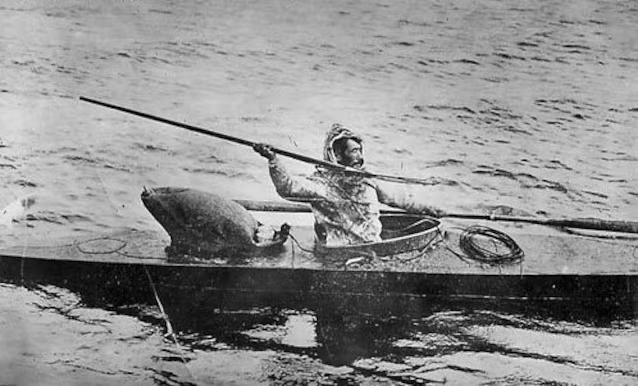
A third example comes from Siberiain which populations such as i Nenets they Evenki they developed subsistence systems based on nomadic reindeer herdinga species capable of feeding on lichens and other plant forms that are not nutritious for humans.
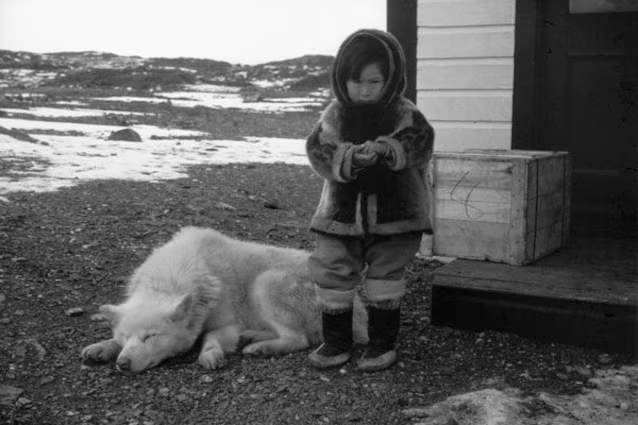
In the last two examples we discover that one is fundamental for the survival of human beings accurate and careful reading of the context that surrounds us. In fact, the possibility of experiencing a place strictly depends on ability of a people to adapt to it, and enter into dialogue with nature and its local specificities.
Imposing a lifestyle and economic modelas the Norrone colonies did, often leads to results opposite to those hoped for.
The contemporary crisis and new agricultures
If for millennia the inability to cultivate mainly characterized the coldest regions of the planettoday the climate change it is producing phenomena that threaten soil fertility even in historically agricultural areas.
Among these, the salinization represents one of the most critical challenges: the accumulation of salts in the soil – caused by the increase in temperatures, the reduction of precipitation and the intrusion of sea water in coastal areas – compromises the ability of plants to absorb water, making once fertile land becomes progressively unproductive.
In response to this crisis, they are emerging forms of agriculture which, for the first time in history, they no longer depend directly on the soil. THE’hydroponic farmingfor example, allows you to grow plants in liquid nutrient solutions, eliminating the need for soil and dramatically reducing water consumption.
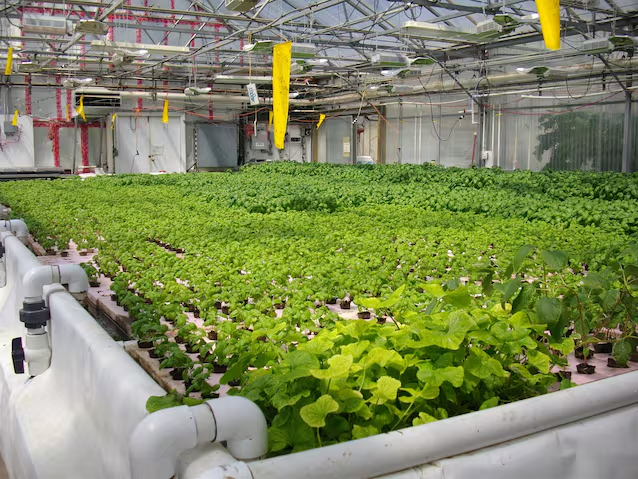
THE’vertical farmingdeveloped in closed and controlled environments, allows you to produce food on multiple levelsoptimizing space and making cultivation possible even in urban or climatically hostile contexts.
Even more advanced systems, such asaeroponicsthey nourish the plants through a direct spraying of the rootsfurther increasing efficiency.
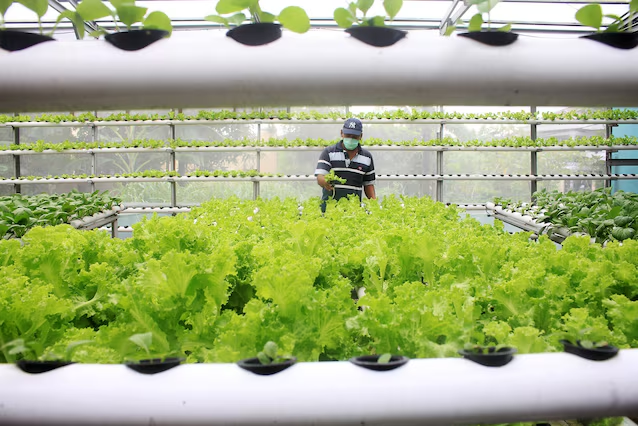
These innovations mark a profound conceptual transformation: farming for the first time can be separated from the groundparadoxically approaching the logic of societies that, by necessity, have never depended on it.
Rethinking survival
In the present, time in which climate change is altering global agricultural balancesthese experiences of cold societies take on a new meaning, showing us that agriculture is not the only way to sustain human lifebut one of many possible strategies.
More than representing a distant past, they show a fundamental principle: the human resilience it does not depend on a single technology, but on the ability to continually reinvent one’s relationship with the environment.
