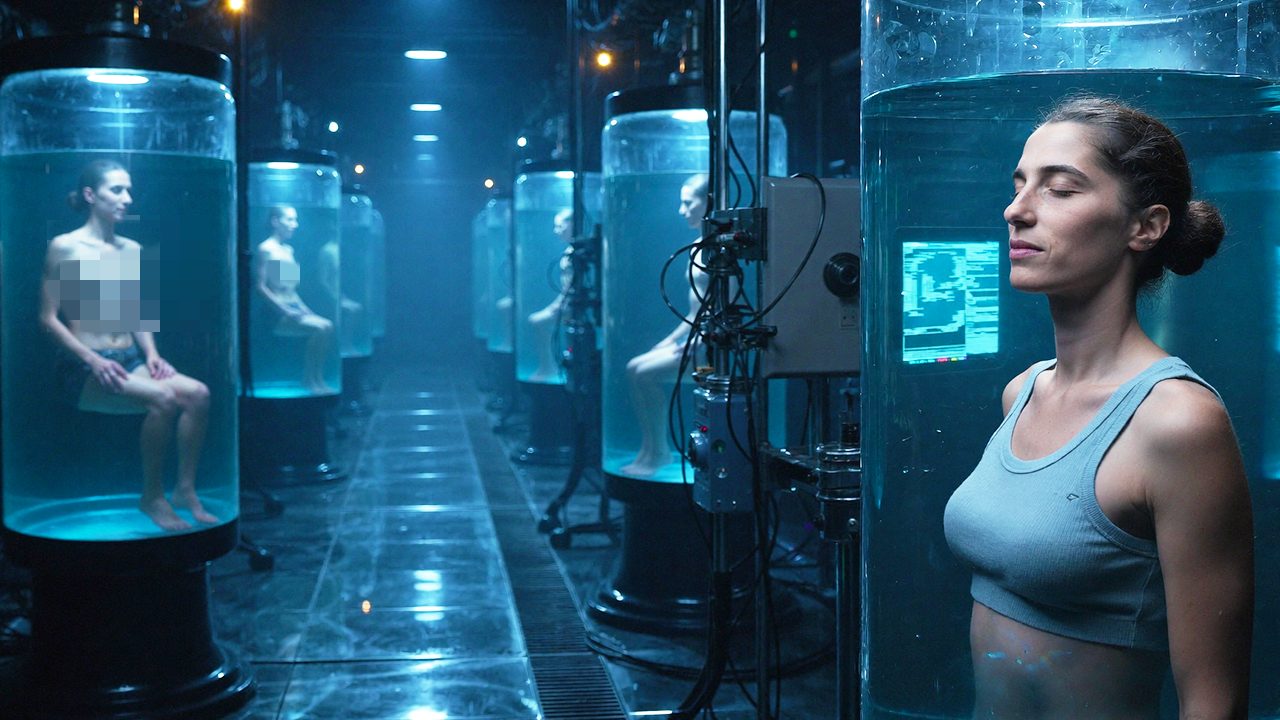
If we are capable of cloning sheep, horses and dogs, the question arises: can we? clone humans too? Short answer: no, it can’t be done. Although there have been sensationalist announcements in the past (such as the case of the Raelian sect in 2002), there is no scientific evidence that human cloning has ever been successful. The reasons are both technicians That ethical. In Italy, for example, the law 40 of 2004 prohibits cloning for both procreative and research purposes.
In biology, clone it means creating a genetically identical copy of a living being, that is, with the identical DNA. But what if we tried to clone one adult personwe wouldn’t have another of the same age with all the physical characteristics or memory and past experience but we would have a new organism. So when you clone, first an embryo will be born, then a baby girl, and over time a “new person” will grow who will have the same genetic heritage, but could have some physical or character differences.
Is a clone identical to the original?
From a genetic point of view, yes, the DNA is the same, but the appearance and above all the character can change, because they do not depend only on the genetic heritage, but also on how the organism will develop, from the environment in which it will develop. To understand this concept, let’s take the example of homozygous twins that is, those derived from the same egg cell fertilized by the sperm, the zygote. In a certain sense, we could say that identical twins are clones of each other, because they have the exact same genetic heritage. This is why they look so much alike, but often have differences, sometimes slight and they seem truly identical, sometimes a little more marked.
This is because we we do not express all the genes we have in DNAbut only some are read and therefore expressed. So two homozygous twins could have some genes expressed differently and therefore some differences. And genes are activated and silenced over time, which is why our bodies and characteristics change. In short, some characters are influenced by the external environment, therefore by lifestylefrom thediet, give it stressfrom theaging. It’s the so-called epigenetics. And it also influences the psychological aspects of an individual and his character. This doesn’t mean that the clone, for example of a cat, will be completely different from the original, but we shouldn’t expect an exact photocopy, especially with growth. An example of this is the world’s first cloned cat, CC (Carbon copy), who was different in both appearance and behavior from the cat that had donated the genetic material.
Because it is technically difficult to clone a man
From one point of view biologicalcloning primates – including humans – is much, much more difficult than other mammals. And the main reason is that extract the nucleus of human cells is very complex. This is because in our cells, unlike those of other animals, the proteins necessary for cell division (those of mitotic spindle) are positioned so that when attempting to remove the core they are often eliminate. In short, the extraction of the nucleus compromises the reproduction of the cellso even if we have implanted the nucleus, it will not be able to produce the embryo, and therefore no living being.
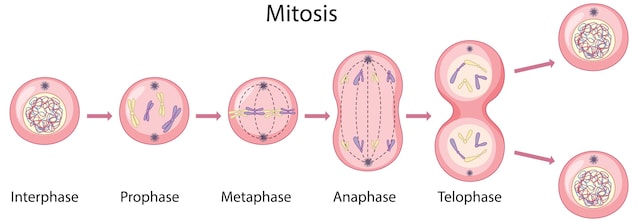
Only in 2020, the Chinese Academy of Sciences announced in Nature Communications that it had successfully cloned a specimen of Macacus rhesusthe first monkey clone. To achieve this they added a step to the technique used to clone Dolly the sheep, the Somatic Cell Nuclear Transfer (SCNT).
Then there are the health risks. In fact, cloned animals often present organ defects, malformations And immune system problemsbut above all there is the question of cell aging.
The problem of aging: telomeres shorten
As we know, our body ages over the years, and so do all our cells. And how do they age: every time they divide, that is, replicate, i chromosomes that they contain get ruined a little. And inside the chromosomes is our DNA. So, to protect the valuable information contained in DNA, the end of chromosomes have protective caps called telomeres, which contain repeating DNA sequences, so no important instructions. You can think of them as the plastic tips at the end of shoelaces.
Here, as the cell ages and divides, these caps they get shorter and shortersacrificing themselves to save the actual DNA. But when they run out, what happens is that the cell stops dividing and therefore stops reproducing.
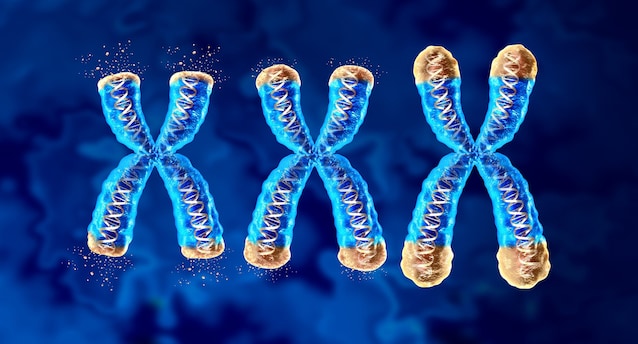
And the problem of cloning lies right here. If we take a cell from an adult, that cell has its own biological age and its telomeres are already consumed. So the cloned individual will not be born with wrinkles, of course, but his cells will have a biological clock which marks an hour later than his chronological age. That is, they are already old, and therefore stop reproducing soon.
To clarify, the case of Dolly the sheep is the perfect example. Having been cloned from a sheep’s cell 6 yearsshe was born with chromosomes that were already biologically old. And given that the average lifespan of a sheep is 12 years, Dolly died at just 6 years old, because it is as if she had been born 6 years old on a cellular level, and therefore developed problems typical of old age, such asarthritisvery early.
Ethical limits and legal prohibition in Italy
However, let’s assume that one day scientific progress will be able to overcome technical obstacles, reducing the risks of malformations and physical problems, and therefore becoming safer. Well, even if the technique became perfect, they would still remain enormous ethical and moral issues.
Human cloning, in fact, in Italy is prohibited by lawbeyond technology. There law 40 of 2004 prohibits experimentation on human embryos and cloning through nuclear transfer or embryo splitting, both for procreative and research purposes. And this for two main reasons. The first problem is the violation of human dignity: cloning risks reducing the person to a simple product or commodity, opening the way to the exploitation and exploitation of life. On the floor social And psychologicalThen again, the scenario is complex. Think about it, if you were clones, what would you think? What would people who know think? Would you be stigmatized? In short, it would be easy to have profound identity crisisfeeling not unique or different from one’s “original”. Or maybe not knowing who to recognize as parents.
In short, human cloning is currently not feasible due to technical problems and biological risks, but above all it has ethical limits that are difficult to overcome. However, it remains an important technology, for example it could be fundamental in the future for organ transplant – the so-called therapeutic cloning – but, for now, it remains a technology relegated to the animal world.
