You’re watching Toxic Don’t miss out on more content from Geopop

Toxic changes perspective. After giving voice, in the first season, to those who have experienced addiction firsthand – including the story of Gianluca and his relationship with the heroine – this time with the second season he leaves the story to who was close to those who abused substances: parents, children, family, friends. Because drugs don’t just affect those who use them, but the entire system of relationships that revolves around them.
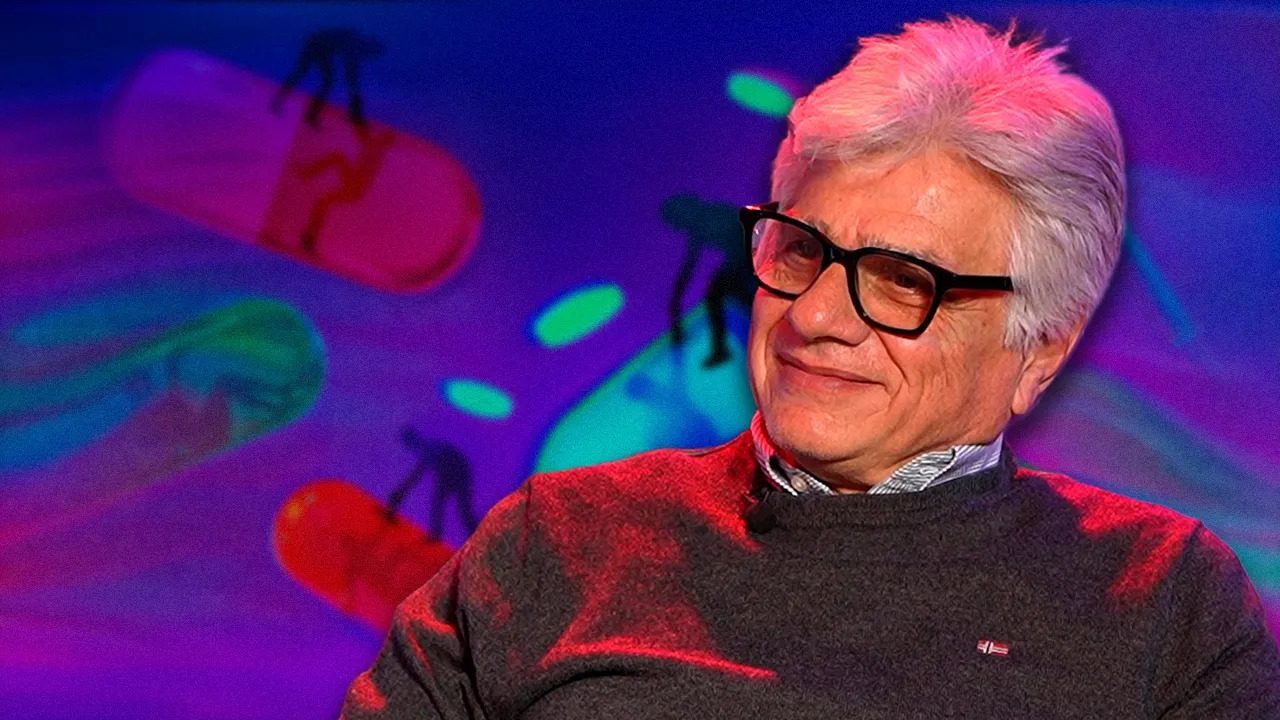
It’s telling itself Piergiovanni Ceregiolifather of Gianlucawho successfully emerged from addiction, as he himself told us. His is the testimony of a parent who had to deal with his own silences, with his “role” as a father and with the very common mistake of wanting to solve everything alone.
The Ceregioli family lives in a small, quiet town in the Macerata. He is an architect and has worked in the design sector; his wife is a doctor in public health. Two sons: Gianluca, the second son, and his older brother, now a professional musician. A united family, with grandparents always present to look after the children. Exactly the profile that, according to a widespread prejudice, should protect you from trouble. “We were the family that couldn’t happen to,” he tells us. «One of those families who think: the problem of drug addiction doesn’t happen to us… Everyone thinks it only concerns complicated families. It’s not like that.”
Gianluca was a lively, curious, creative child: in love with music and with a more marked sensitivity than his brother. The first signs, in hindsight, arrive already in middle school, with a musical recital in which, despite being very prepared, Gianluca refuses to participate. At the moment it just seems like a childish whim. At the scientific high school, however, things don’t work: Gianluca is distracted, not very involved, he is sent back and finally fails. The family reads everything as an “adolescence phase” and runs for cover with repetitions, remaining on the surface. «We never thought that underneath those behaviors there was a deeper problem that we could work on to help him. For us it was just adolescence.”
Meanwhile Gianluca has already started with joints and then with other substances. The transition to art high school, decided by his parents to indulge his creative streak, exposes him to an environment in which it is easier to access that “artificial dream”. The truth comes only when he declares it himself: he uses heroin, and not only that. Years of strange behavior (red eyes, days-long absences, sums of money and missing objects) suddenly find an explanation.
The first reaction is the instinctive one of Piergiovanni and his wife and that of many parents: managing everything at home, alone. More presence, more attention, even the attempt to “keep marijuana under control” by rationing it. Nothing that works. Because the real issue, Pier Giovanni recognizes, was another: a relationship that remained on the surface. «Ours was a closeness of control, not of dialogue. It wasn’t natural for us to delve deeper. You have to take off your parents’ jacket and hang it in the closet.”
What changes things is determination and luck. The determination of the family and Gianluca; the luck of some encounters: the art school teachers who believe in him and push them to get help, and a work colleague who puts them in contact with aparents’ association linked to San Patrignano. It is there that the Ceregiolis understand the most important thing: «The problem is not drug addiction: there is a problem that leads to drug addiction, and that is where we need to work.» Behind Gianluca’s abuse there was a sense of inadequacy that he had carried with him since middle school, the feeling of not feeling accepted or understood.
The task that the association entrusts to parents is clear: to physically protect him from the worst risks, starting from overdose, while the community works on his will to get out of it. Because as an adult, you can only enter San Patrignano voluntarily. So the family “surrounds” him: parents and grandparents, in turn, day and night. House locked, cell phone off, sleeping in shifts to avoid escapes. Once Gianluca escapes by jumping from the terrace, but returns. The “quarantine” lasts four monthsfrom the day after the final exam until October 30th, when he enters the community. In the meantime, with the help of his professors, he still manages to graduate with a good grade.
Piergiovanni describes it with a harsh metaphor, that of tuna fishery: progressively close every avenue of maneuver until the only viable path is the right one. And he arrives at a gesture that still shakes him: «For a month I didn’t speak to him again. At the table it was as if he didn’t exist. Something very hard for him, but also very hard for me.”
In San Patrignano Gianluca finds the pictorial decoration workshop and a “guardian angel” who is by his side 24 hours a day for a year. Over time he himself becomes the guardian angel of others. Today, the family almost doesn’t talk about the past anymore: it’s a problem faced, not a label to bring back to light. It remains a ritual, at every meeting: a hug that lasts a few seconds but is felt.
If he could speak to a parent who is experiencing the same thing, Piergiovanni has no doubts: «Ask for help immediately, it can’t be solved alone. And no shame: my son was at San Patrignano, I’ve always said so.» And he would tell the version of himself from fifteen years ago to do the one thing he couldn’t do then: actually talk. «I would have sat next to him and started talking, without stopping at the first answer that satisfies me. If I open up, perhaps the other opens up too.”
