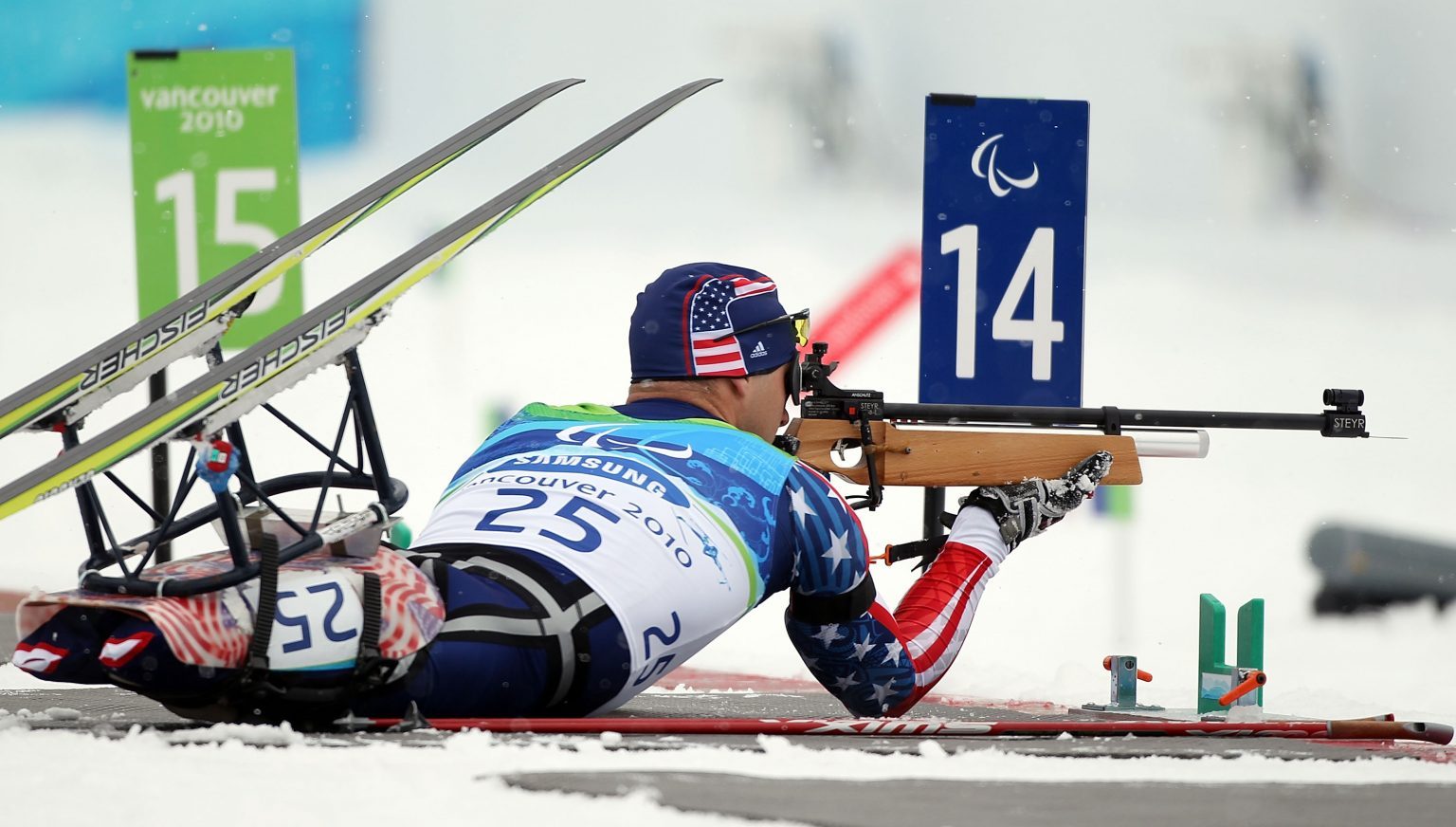
At Winter Paralympics of Milano Cortina 2026 the biathlon races will be held in Tesero, in Val di Fiemme, and will feature athletes divided into different functional classes. In the Paralympic biathlon, cross-country skiing and shooting sessions alternate: apparently nothing different than the Olympic version. But when athletes compete visual impairmentthe moment of shooting at the range becomes an extraordinary case of technology applied to sport. How do you hit a target without being able to see it? The answer lies in a system that transforms aim into sound and exploits the extraordinary capacity of the brain to adapt. Italy competes at the Olympic Games on home soil with Marco Pisani for the category sitting And Cristian Toninelli for the category standing.
Rules and curiosities of the Paralympic biathlon: the three categories
In Paralympic biathlon, athletes are not classified simply based on the type of disability, but according to functional classes, i.e. based on how much that condition affects sporting performance.
The three macro-categories are:
- Standing: athletes with lower or upper limb disabilities who ski in a standing position.
- Sitting (sitting): athletes with paraplegia or significant limitations in the lower limbs who use a sit-ski.
- Vision Impaired (VI): athletes with visual impairment.
In the case of the category Vision Impaired there are three subclasses:
- B1: no perception of light or inability to recognize the shape of a hand.
- B2: very reduced visual ability or visual field less than 5 degrees.
- B3: greater residual vision than B2 but with a field of vision less than 20 degrees.
The athletes of the three macro-categories they compete together between them, but to ensure fairness between the different subclasses, the final times are corrected with a compensation coefficient, which takes into account the level of disability and residual functionality.
How shooting works for a blind athlete
In the biathlon for athletes with visual impairments, the presence of a guide is expected, who has a fundamental role: anticipates the athlete by a few meters by signaling curves, climbs, descents, managing the race pace and constantly communicating with him. For the athlete, the guide is also the only point of reference on the direction to follow: a visually impaired person would have a single white expanse in front of him if there wasn’t a person in colored clothes to follow.
However, when it comes to the shooting range, the athlete shoots independently, and this is where it comes into play technology. The target is placed at a distance of 10 meters, compared to 50 in the Olympic biathlon, but the system is completely different from the traditional one. In fact, the target cannot be “seen”: you listen. The rifle is connected to an electronic device that translates the alignment of the aim into an audible signal, transmitted to the athlete via headphones.
When the athlete orients the weapon towards the target, the system emits a sound, which increases in frequency or intensity as one approaches the center of the target. When the sound reaches maximum intensity, it means that the aim is centered, and that is the moment in which the athlete decides to shoot. However, the device does not correct the aim, it only provides feedback proportional to the precision of the alignment. Stability, control and timing remain entirely the athlete’s responsibility.
The neuroscience behind shooting: sensory substitution
The system uses a principle known as sensory substitution: in subjects with visual impairment, in fact, the brain areas normally dedicated to vision are involved in the processing of auditory stimuli. With training, the athlete learns to distinguish minimal variations in frequency and associate the intensity of the sound with the spatial position, in order to create an “acoustic” representation of the space. Everything, as in the Olympic biathlon, takes place in a few moments after an intense effort on skis, with a high heart rate and accelerated breathing. Stopping, slowing down your heartbeat and interpreting a sound signal requires a very high level of concentration, combining control of your body with sensory perception.
