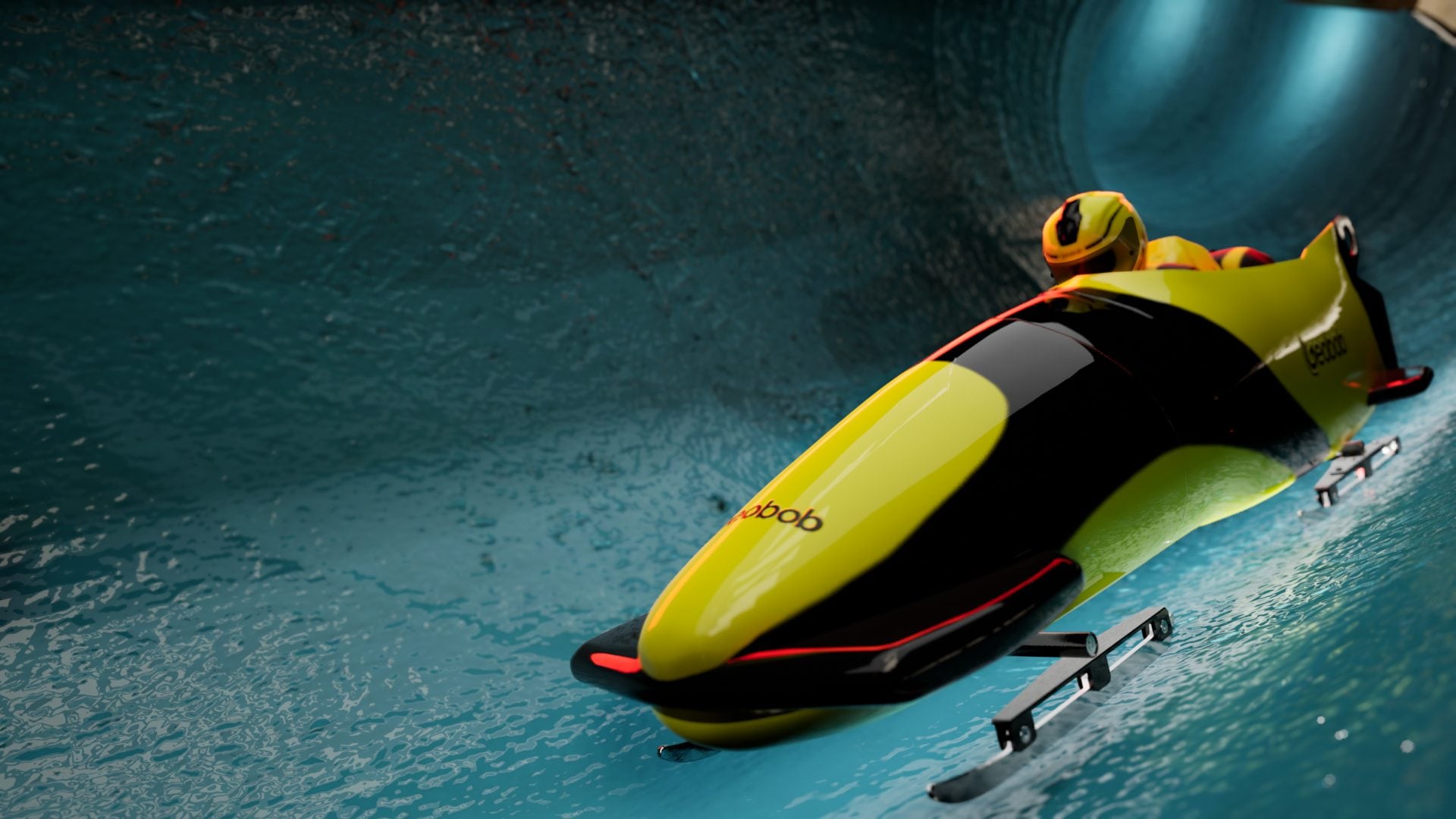
The bob it is one of the most spectacular Olympic sports, but also one of the most “scientific” of the Winter Olympics. No engine on board: all the energy that allows the vehicle to exceed 140 km/h it comes from the push of the athletes and the simple force of gravity, exploited in an optimal way. In fact, the race begins with one acceleration phase in which the crew, made up of one, two or four athletes based on the specialty, pushes the bob for a few meters before jumping inside and starting the descent on a track approximately 1500 meters long (the Milan-Cortina one is 1650 meters long). This phase is fundamental, and it is no coincidence that, especially in the 4-man bob, some athletes try their hand at bob after a past as sprinters in athletics. It is the same reason why from 1988 onwards it appeared several times at the Winter Olympics Jamaican national team of bobsleigh, even without obtaining significant results.
How it reaches speeds above 140 km/h: the physics behind the bobsleigh
In those few seconds, a large amount of kinetic energy is generated, which is fundamental for the success of the heat, because the higher the initial speed, the greater the speed will be maintained throughout the entire descent. From the point of view physicistit’s about the transition from chemical energy of the muscleskinetic energy of the bob-athlete system.
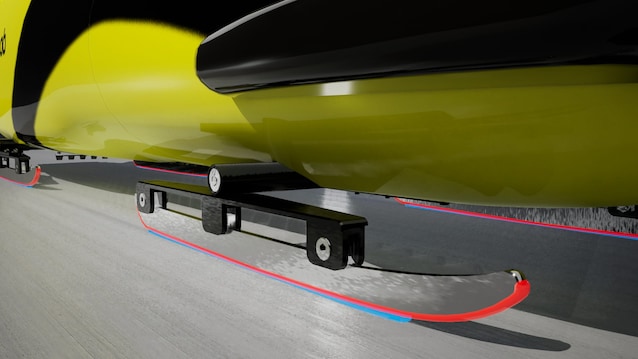
Once the bobsleigh enters the track, the dominant component becomes the transformation of gravitational potential energy into velocity. Bobsleigh tracks are in fact designed as continuous descents, with variable slopes and banked curves, so that gravity keep accelerating the vehicle during the race. If friction were high, this acceleration would quickly be canceled out, but in bobsleigh, friction is minimized thanks to metal blades which rest on the ice. The pressure of the blades concentrated on a very small surface causes the formation of a very thin film of water between the blade and the ice, which drastically reduces resistance to movement. It’s the same principle that makes skate blades slippery, but taken to the extreme.
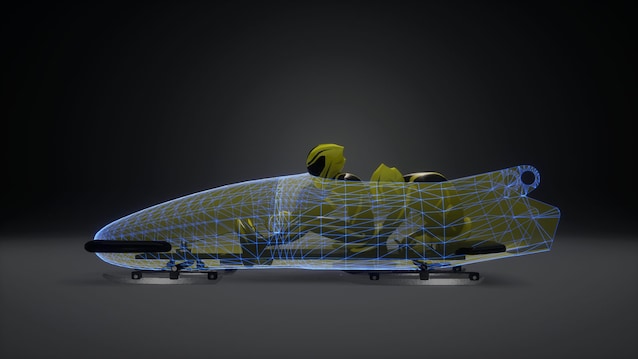
When speed increases, another crucial factor comes into play: the air resistance. At almost 140 km/h the aerodynamic force becomes one of the main obstacles to speed, for this reason the bobsleighs have rounded shapes and extremely smooth surfacesand the athletes assume an almost completely closed position inside the vehicle, with the head lowered and the shoulders aligned with the profile of the shell. The design of modern bobsleighs also takes place through wind tunnel tests, similar to what happens with racing cars, because even small turbulences can cost thousandths of a second which could separate those who will wear an Olympic medal around their necks from those who will not be able to get on the podium.
G-force and aerodynamics: not only athletes, but also pilots
The curves they represent the most extreme part of the race from a physical point of view. At those speeds, athletes experience acceleration that can reach up to 4 or 5 times the force of gravitythe so-called G force. Parabolic curves are designed to transform part of the centrifugal force into a downward thrust, in a balance between speed, curve radius and inclination in which much of the spectacularity of the sport is played out.
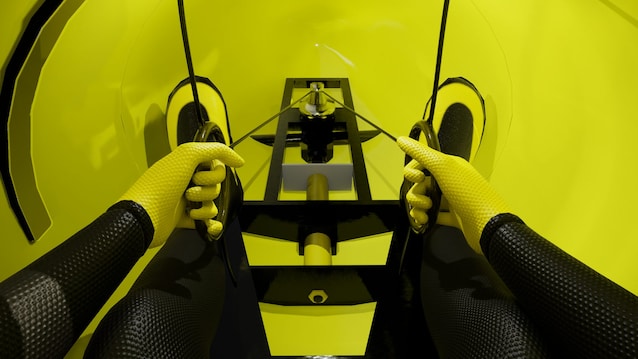
From a control point of view, the pilot does not drive the bobsled as if it were a car. The steering happens through small tie rods connected to the front blades, and the movements are minimal, almost imperceptible. More than “turning”, the pilot corrects the trajectory with micro-adjustments continuous, based on one’s own sensitivity and perfect knowledge of the route.
At these speeds, even an error of a few millimeters can cause contact with the walls which would slow down the bob and could compromise the entire descent. This is why training is not just physical, but also mental: learning a track means memorizing sequences of curves, ideal entry and exit trajectories, in a sort of very high-speed choreography.
However, all this technical complexity is regulated by very strict rules. The international federation imposes precise limits relating to weight, dimensions And materialsto prevent technology from creating too marked differences between teams. The objective is for the race to remain a challenge between athletesnot among engineers.
How a bobsleigh race takes place at the Winter Olympics
At the Winter Olympics, bobsleigh is divided into four events: women’s monobob, men’s and women’s 2-man bob and men’s 4-man bob. Each competition is not decided in a single run, but by adding the times obtained in 4 heats, spread over two days of competition.
This format rewards not only maximum speed, but above all speed constancybecause a single mistake in one of the runs can compromise the final result even if the other runs were very fast, making bobsleigh a sport in which strategy it matters as much as pure performance.
At the Milan-Cortina 2026 Winter Olympic Games all the bobsleigh, skeleton and luge races took place and are taking place in the new Sliding Center in Cortina entitled to Eugenio Montione of the Italian legends of this sport. The teams had official training sessions available in the days preceding the competition, which were essential for memorizing the track and adapting the riding to the specific characteristics of the track, but the pressure of the Olympic race makes each descent different, because psychological factors, variable ice conditions and the need to always push to the limit so as not to lose ground on the opponents come into play.
