
In the Soviet Union of the Cold War Western music was prohibitedbut the desire to listen to it found an alternative and ingenious way. On old radiographies, cut and engraved like vinyl, i were born “Bone discs”: clandestine copies of jazz and rock that brought the prohibited sound in Soviet homes. During the Cold War, Western music and especially rock and roll and jazz came prohibited by the party for fear of ideological corruption. However, the need for music and the taste of western novelty did not vanish, which many had experienced during the Second World War: this led to a strategy to get around the ban.
Although this invention is disputed between different countries and in several years, the Phd James Taylor of Department of Music of the University of Bristol has identified the birth of This idea in 1946 in Leningradoin a study on the Nevsky perspective called “Audio Message”. Here its founder Stanislav Filon used a German musical remastery Telefunken to replicate musical recordings from the original vinyl on low -cost reinvented radiographic material: the X -ray slabs.
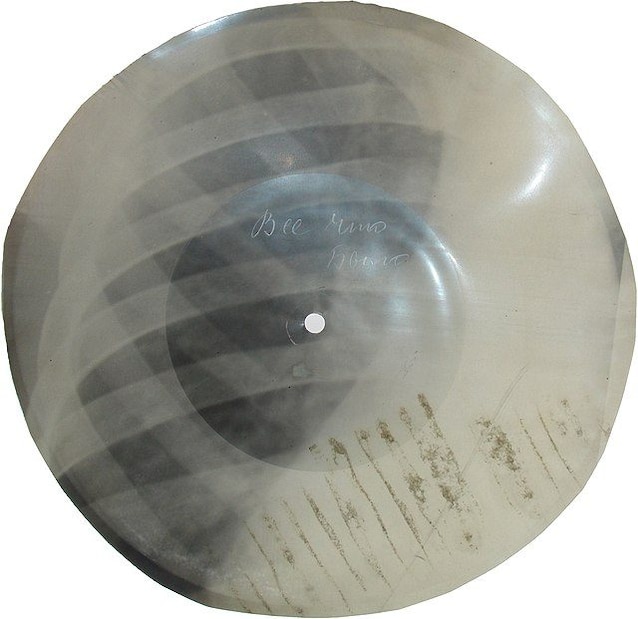
These records (on which did not appear titles of songs or group names) became known as “rëbra“, that is, ribs – because the radiographs of the slab were often visible – but they were often called”Roentgeniizdat“(” X -ray publications “) or bone music.
The slabs were rounded with scissors and perforated in the center (often with a cigarette). The quality of these copies was not very high, but they cost little To do and buy, and soon they proved to be very effective in bringing forbidden music where he could not arrive: Louis Armstrong, Duke Ellington, Ella Fitzgerald, Elvis Presley but also the Beatles, the Rolling Stones and Beach Boys Now they played in the houses of theSoviet Union.
Many other Underground studies began to produce thousands of radiographic copies, which were sold on the black market until they became, at the end of the 1950s, “The common currency of the Soviet bloc“.
They became very popular also thanks to the Soviet subcultures, primarily the “Stiliagi“, The stylosis (the equivalent of the” hipsters “in western literature), which represented a refusal of musical, fashion and behavior styles promoted at institutional level in the USSR, becoming the supporters of a new westernized model (with a somewhat” Grease “style) and promoting dancing encounters in large Soviet cities.
The censorship then got on: the jazz musicians were arrested, often shipped in the gulag, and the official Soviet press made continuous attacks on the stylies, helping to strengthen the idea of the Roentgeniizdat As a “subversive practice”: in vain. The popularity of the discs of the bones – given by the American cultural hegemony and the growing consumer culture in the Soviet post -war union – did not stop for all the 1960s, and declined only with the arrival of musicsest.
