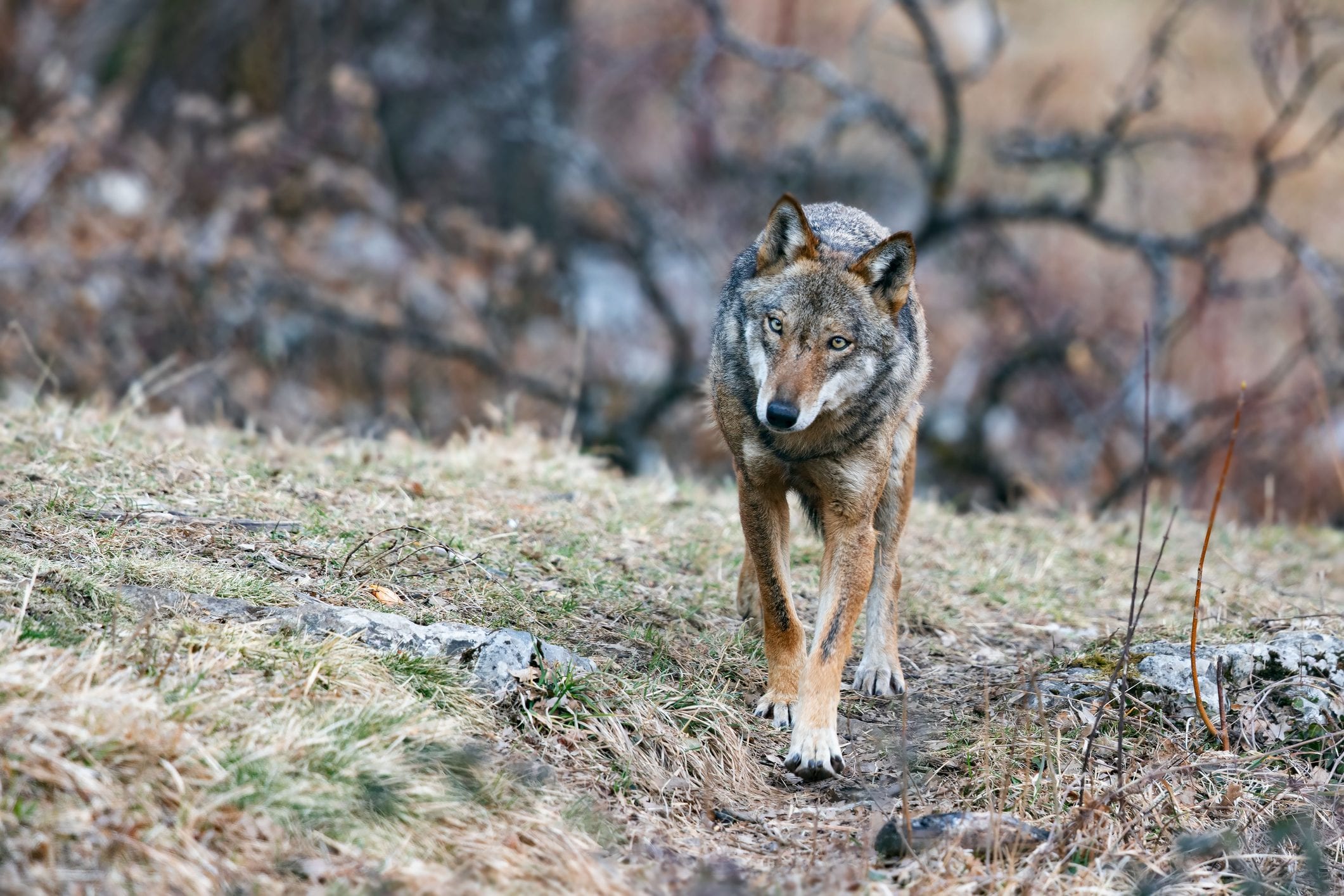
The first national monitoring conducted between 2020 and 2021 and coordinated by the Institute for Environmental Protection (ISPRA) provides data on gray wolves (Canis lupus) currently present in Italy: approximately 3,501 specimens (average value in a range between 2,949 – 3,945 individuals) distributed across the national territory, with approximately 952 wolves in the Alpine areaparticularly in Piedmont, the Italian region with the most wolves, and approx 2,557 along the peninsular area and the Apennine ridgewith the exception of Sardinia where the wolf is absent. It is important to underline that this is a “esteem” as we are talking about an extremely animal elusivewhich is difficult to observe directly and which, therefore, it must be surveyed looking for indirect signs of its presence (excrement, footprints, fur samples, remains of predation) or by positioning appropriately camera traps. Although genetically all gray wolves belong to a single species, the subspecies of the Apennine gray wolf has been recognized for Italy (Canis lupis italicus).
The Italian region with the most wolves is Piedmont
In the first national census, in the Alpine regions they were counted 102 packs and 22 pairsin much of the western area. The Piedmont with 67 herds the region with was found to be multiple families in the northern sector of Italy, followed by Veneto with 10 registered packs. On the Apennines, however, the highest average density was calculated in Emilia Romagna, in the area between Parma and Piacenza, followed by the Tuscany area between Arezzo and Florence and then by the central Apennines area between Marche, Abruzzo and Molise.
By the mid-20th century the wolf was almost extinct in much of Europe and, in Italy in particular, just over a hundred specimens had survived in the central Apennines. Since 1976 the wolf has been strictly protected by national and international regulations (Bern Convention, Law n.157 of 1992, Community Habitat Directive) and has finally begun to recolonize the Apennines and also the Alps. Over the course of about 50 years, wolves, from the central Apennines, have begun to recolonize suitable environments in various Italian regions: in 2014 they had now settled permanently in the western part of the Alps, between France and Italy, with a total of 51 herds and at the same time populations coming from Slovenia have colonized the eastern side of the Alps.
Around 2017 the wolf began to become a stable presence in some areas of the country Po Valley. The second census conducted in 2023 and 2024 in the Alpine area carried out with the same methodology as the previous one, highlighted the fact that wolves, in numbers approximately 1124 individuals in total, they occupy an estimated total surface area of approximately 60,600 km², so overall their range is expanding especially in the central-eastern side, where there is still a numerical increase in populations, while in the western area the growth rate is more limited and the populations are close to stabilisation. Yes, because the wolveslike any other animal, they do not always continue to increasebut once the maximum number that each territory can support has been reached, they stabilize. Today, between Liguria, Piedmont and Valle d’Aosta, the wolf is expanding towards the hilly and plain areas and the Piedmont with an estimated 464 individuals the Alpine region with more specimens is confirmed. The map proposed below is a simplified reworking of the ISPRA data on minimum presence ascertained in the Alpine and Apennine regions. For detailed technical cartography, please refer to the organisation’s official website.
Which wolf species is present in Italy
When we talk about wolves in Italy we tend to make a distinction between Alpine wolves and Apennine wolves, in reality the Gray Wolf (Canis lupus) is a single species present in North America and Eurasia, composed of populations which, due to a progressive phenomenon of numerical reduction, have undergone long periods of isolation and therefore progressive genetic differentiation. Studies conducted on wolf genetics in Europe show that there is a certain genetic distance (therefore a certain difference) between Italian wolves and those of other European countries.
In particular, in Europe they can be distinguished three groups (or cluster): an Italian population, a population from the Carpathian area and one from the Balkan area and the Dinaric Alps. A subspecies has been recognized for Italy, the Apennine wolf (Canis lupus italicus) which therefore differs from other populations of the species present in Europe. It must be said, however, that wolves have ahigh mobilityonce new territories have been reconquered, individuals from different populations interbreed with each other and genetic divergences tend to decrease.
What to do if you encounter a wolf
As we have already said, the wolf is an animal extremely shy and elusive which senses the human presence several kilometers away and tries to stay away, therefore, a close encounter is truly an unlikely event. His amber eyes and “magnetic” gaze undeniably leave an unforgettable emotion in anyone who can see him even for a moment, but this charm also generates a “polarization” effect on public opinion between those who are attracted to him and those who fear and feel aversion to him.
Some rules of correct behavior outdoors still avoid any risks. Here is what the Forestry Service and the Large Carnivore Center recommend:
- do not abandon the mountain paths e keep your dog on a leash because by moving away he could fall prey to the wolf who recognizes him as his rival;
- if the wolf should be very close, speak loudly or clap your hands because he will immediately tend to flee;
- do not leave food waste that might attract him.
How to count wolves
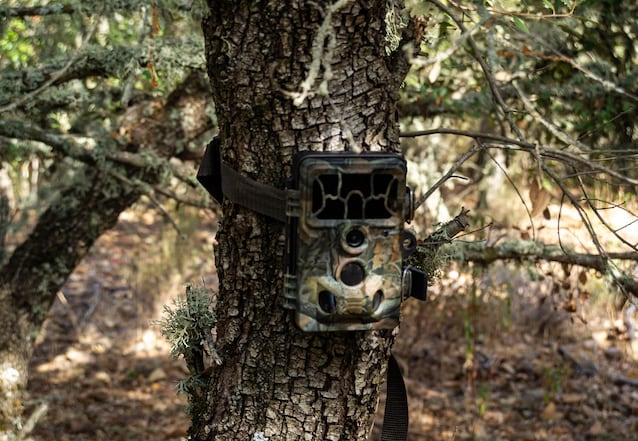
Wolves cannot be counted by direct observation, but, by following paths of predefined length and position, the so-called transepts, must be detected indirect signs of presence: excrement, footprintstracks on snow, fur samples, remains of predation. Alternatively, camera traps, photo or video systems that are activated by movement can be positioned. A further alternative is to use recall techniques, such as Wolf howling. The estimate is therefore rather complex also for the behavior of this species: it makes long journeys to hunt and mark the territory and young wolves move away from the packs and migrate in search of new territories. They are wolves defined in dispersion: a bit like young people who decide to leave their family and go live alone. The effort to carry out the first national monitoring of this species was truly impressive: 3,000 operators experts and volunteers have done well 85,000 km throughout Italy, observing and collecting well 24,490 indirect signs of wolf presence.
Italy has been ideally divided on specific maps into 1,000 cells of 10×10 km and within each cell special transepts have been identified to walk along, precisely “on the trail of the wolf”. They were also placed more than 1,000 camera traps in various Alpine and Apennine districts. An impressive amount of data was then analyzed by applying statistical indices and mathematical models, to obtain the definitive estimates.
