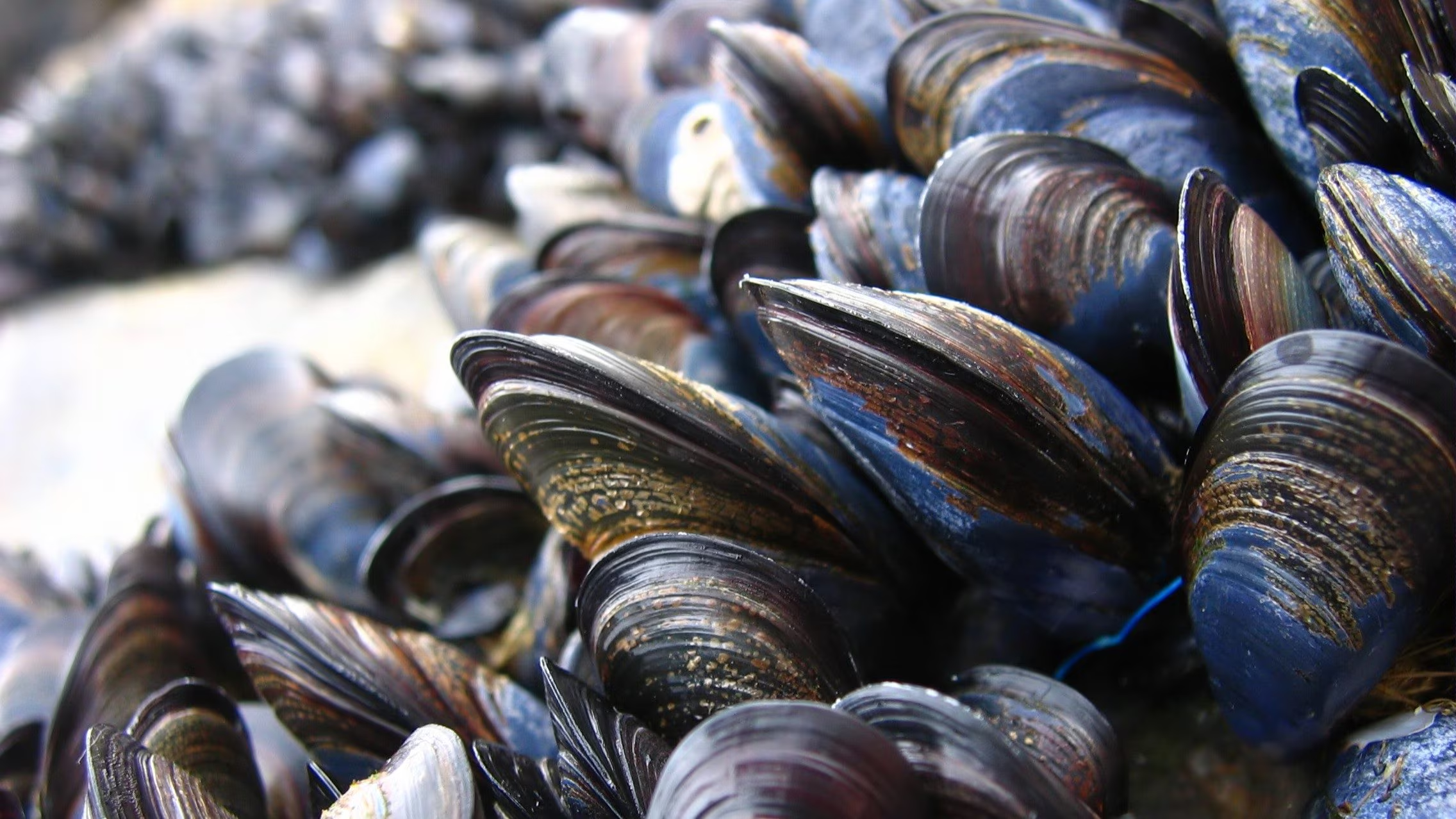
We are used to seeing the mussels firmly attached to rocks, docks or other substratesso much so that it may seem that they are already born there, ready and made. In reality, at the beginning of their lives they are very different from how we know them: they are born as tiny larvae that move freely in seawater.
The Mediterranean mussel, Mytilus galloprovincialisis a bivalve mollusc and, in most cases, there are distinct male and female specimens. During the reproductive period, males produce sperm and females produce eggs. But instead of meeting inside the female’s body, sperm and eggs meet directly in the seawater, where fertilization occurs.
Males and females release gametes into the sea
Mussel reproduction begins with gametogenesisthat is, the process through which sperm and egg cells are formed and mature in the gonads.
But how do you recognize if a mussel is male or female? During the reproductive period, the coat, the internal and edible part, develops: it is generally whitish in males and orange in females. However, it is not a completely reliable criterion, because the color can also vary due to other factors.
The moment in which reproduction occurs is not always identical: it depends on environmental conditions, temperature, availability of food and geographical area. In different populations of Mytilus galloprovincialis the maturation of the gametes occurs in the months preceding reproduction, while deposition can occur in several episodes during the year. In a study conducted in the Gulf of Naples, for example, the formation of spermatozoa (spermatogenesis) it began between the end of summer and the beginning of autumn, while several reproductive events occurred subsequently, until June.
When conditions are favorable, males and females they simultaneously release large quantities of gametes into the water. The sperm can thus reach the egg cells and external fertilization occurs. The phenomenon is particularly efficient precisely because the gametes are released into the aquatic environment and can meet without the need for physical contact between the adults.
A completely different phase of the mussel’s life therefore begins from fertilization. The fertilized egg divides rapidly and, within about a day, the embryo reaches the stage of trochophorea small larva with cilia that allow it to move in the water.
Before becoming a mussel, the larva spends weeks in the sea
The trochophore does not yet resemble the adult mussel. It is a microscopic larva which, as it develops, also begins to form the future shell.
Approximately 24-48 hours after fertilization, the stage develops sailor. At this point the veluma structure rich in cilia that the larva uses to move and feed, while the shell becomes progressively more evident. In the Mediterranean mussel this phase can last several weeks.
During this period the larva then lives in the water columnalso transported by currents. It then develops a muscle called “foot” and reaches the stage of pediveligeroduring which it begins to look for a surface on which to settle.
It is at this point that its life changes again: from the free phase in the water it passes to that associated with the seabed. After finding a suitable seabed, the larva completes its metamorphosis and becomes a small mussel.
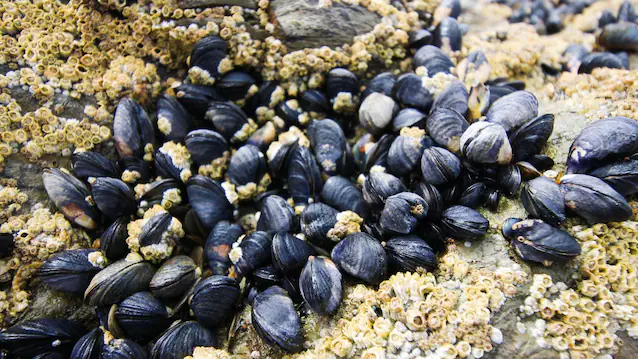
The young mussel can then attach itself thanks to the byssusa collection of protein filaments produced by a gland in the foot. The same system allows adults to remain firmly anchored to the rocks despite the movement of the water. Once anchored, the young mussel continues to grow. Generally, it takes about a year, from 12 to 14 months, to reach the commercial size of 5-6 cm.
But how long does a mussel or mussel live? On average around 4-5 years, although the lifespan depends greatly on the environment and can reach, in exceptional cases, even 10 years.
In short, that mussel that we see motionless on the rock was not born there: first it was an egg, then an embryo, then a larva free in the water and only at the end a small mussel capable of attaching itself to the substrate.
Sources
Eads AR, Evans JP, Kennington WJ. Plasticity of fertilization rates under varying temperatures in the broadcast spawning mussel, Mytilus galloprovincialis. Ecol Evol. 2016 Aug 23;6(18):6578-6585. Prisco M, Agnese M, De Marino A, Andreuccetti P, Rosati L. Spermatogenic Cycle and Steroidogenic Control of Spermatogenesis in Mytilus galloprovincialis Collected in the Bay of Naples. Anat Rec (Hoboken). 2017 Oct;300(10):1881-1894. Miglioli A, Tredez M, Boosten M, Sant C, Carvalho JE, Dru P, Canesi L, Schubert M, Dumollard R. The Mediterranean mussel Mytilus galloprovincialis: a novel model for developmental studies in mollusks. Development. 2024 Feb 15;151(4):dev202256. Heres P, Troncoso J, Paredes E. Long-term study on survival and development of successive generations of Mytilus galloprovincialis cryopreserved larvae. Sci Rep. 2022 Aug 10;12(1):13632. FAO, Cultured aquatic species fact sheets: Mytilus galloprovincialis
