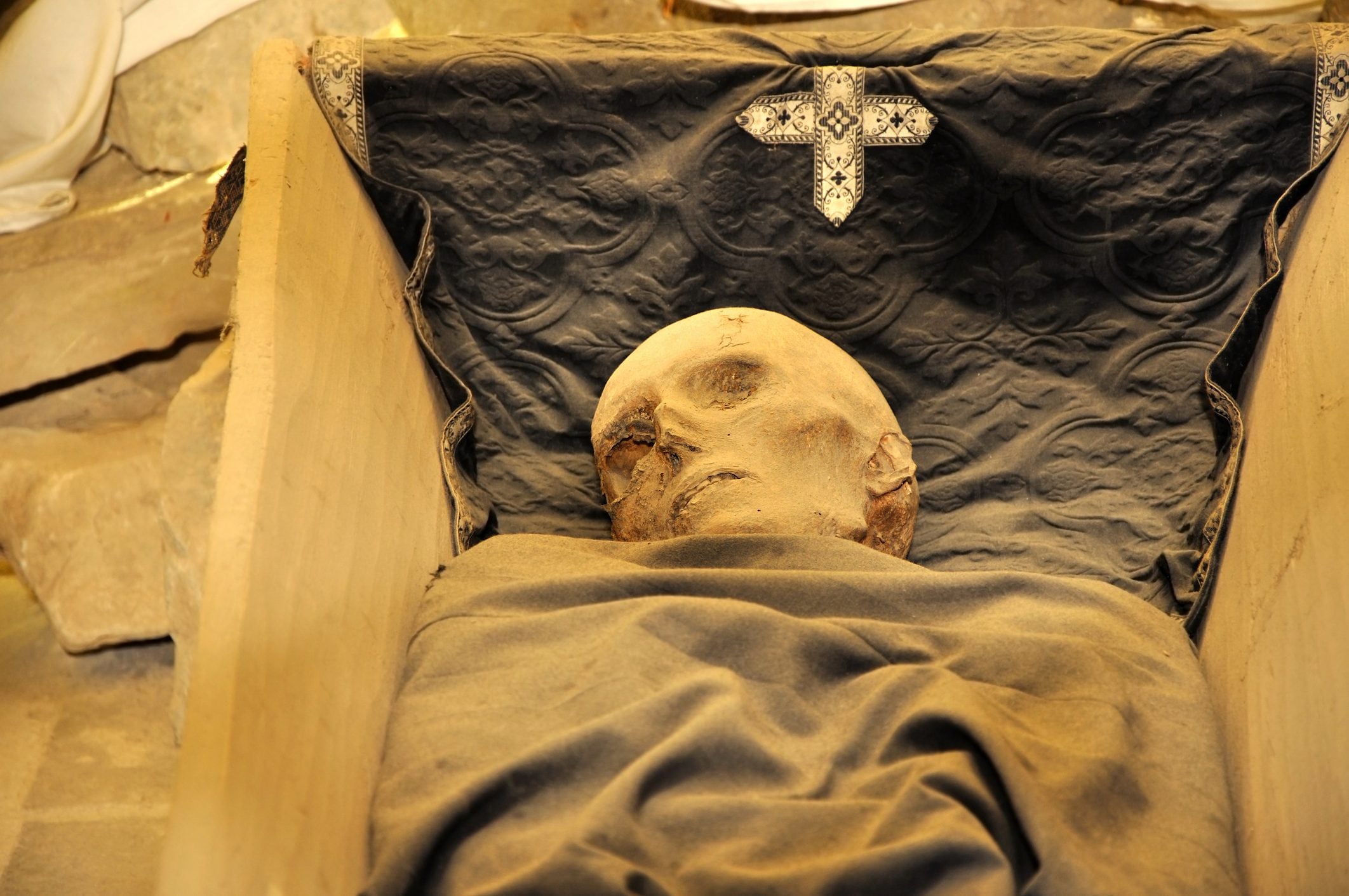
Mummies are not just those of ancient Egypt! In fact, the mummification process also occurs naturally under specific temperature and humidity conditions due to intense and rapid drying of tissues which prevents bacteria from activating putrefaction processes. Although talking about desiccation immediately brings to mind dry and arid environments, mummification can also occur in very cold temperaturesthink of Ötzi, or for the presence of salts that dehydrate the tissues. In addition to the lack of water, the focal point is theinhibition of bacterial activity which can also occur in particular acidic conditions typical of Northern European swamps. The concept is always the same: no water and/or no bacterial activity.
The key to mummification is the loss of water
Water is fundamental for our life, but also for that of bacteria. When a body dries out quickly, the bacteria that should begin to decompose it no longer have water available to survive and at the same time, not even the enzymes that degrade our cells can work anymore. The same goes for insects that feed on decaying material: without water, they cannot lay larvae or proliferate.
In fact, several studies show that if drying occurs just after death, as in the case of Egyptian practices, no signs of active microorganisms are found. In cases of natural drying, in some areas of the body there may be signs of putrefaction and bacterial decomposition, a sign that the two processes, for a certain period, occurred simultaneously. The actual mummification begins the moment all bacterial activity stops.
High temperatures favor drying
As it is easy to imagine, arid and dry environments, typical of desert regions, favor a rapid drying of the body and faster mummification. Even closed and very ventilated spaces can reproduce on a small scale the ideal conditions for the formation of an “urban” mummy, and also reduce the accessibility of the body to insects. The process in any case, should require weeks or months in order to reach a level of mummification that allows the body to be preserved over time.
Net of the necessary environmental conditions, even tight clothing and subcutaneous fat can facilitate mummification: the former reduce the access of insects to the body, while the latter can lead to the formation of adipocerea byproduct of fat breakdown. This whitish, wax-like substance can settle on the skin and, when it dries, gives it a look translucent.
Ice and salt mummies: the example of Ötzi
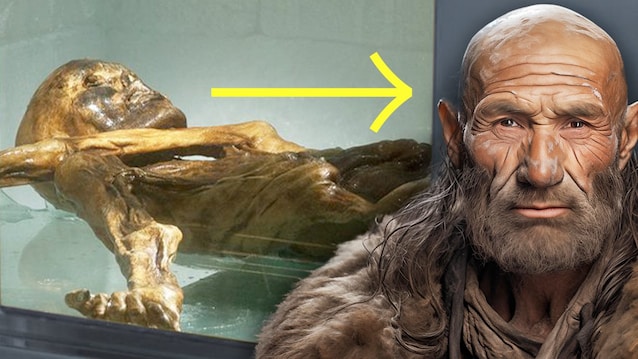
Ice mummies are formed by intense dehydration caused by contact with the permafrosta sort of natural freeze-drying. A famous and national example is Ötzi, the mummy found in 1991 on the Giogo di Tiso alpine pass and exhibited at the Archaeological Museum of Alto Adige in Bolzano. Contact with permafrost is able to quickly dry tissues, while inhibiting bacterial activity and allowing optimal conservation of muscles, connective tissues and internal organs.
Even environments with high salinity can dry tissues quickly: this is the case of mummies found in salt lakes, salt mines or near the coasts. Salt, in fact, draws water from the surrounding environmentdehydrating the bodies and creating an unsuitable environment for the survival of bacteria. Some salt mummies have been found in Austria, but the only ones currently preserved were found in the Chenrābād salt mine in northwestern Iran.
The strange case of the swamp mummies
If lack of water is the key, why do mummies exist in extremely humid environments like swamps? The bog bodies, precisely “swamp mummies” or “peat bog bodies”, are formed due to chemical and environmental conditions which prevent bacterial proliferation and therefore putrefaction. They have been found mainly in Northern Europe and the oldest case isCashel manfound in Ireland and dating back to 2000 BC
In addition to low temperatures and lack of oxygen, mummification is possible thanks tohigh acidity of the environment and in the presence of some substances, such as i tanninswhich chemically alter tissues, preventing them from being degraded by bacteria. It’s the same mechanism by which these molecules are used to tan leather and makes all swamp mummies very similar: dark, leathery skin and bright red hair.
In these environments there is also a particular moss that releases a substance called they sfagnanowhich deprives bacteria of the nutrients necessary for their survival. Only problem: it also removes calcium from the bones. Indeed, swamp mummies are particularly well preservedbut have weaker and demineralized bones.
Sources:
Marina Dobosz, Principles of Forensic Medicine and Forensic Biology in Investigation and Security Sciences, (2013) Aracne ed.
Ceciliason, A. S., Käll, B., & Sandler, H. (2023). Mummification in a forensic context: an observational study of taphonomic changes and the post-mortem interval in an indoor setting. International journal of legal medicine,. Mummification – “Mummified Tissue” from Encyclopedia of Archeology (Second Edition) A. Pedergnana, R. Seiler, L. Öhrström, F. Rühli, PE Eppenberger (2024) Otzi Cashel Man National Geographic – These mummies were made … by accident?
