The first tests of autonomous cargoes, from Pyka’s Pelican Cargo drone to modified Cessna Caravans from Reliable Robotics and Joby Aviation, open up new perspectives for aviation, but also raise questions about safety. How reliable are unmanned aircraft and what guarantees must they offer before entering service? And in light of recent cyber attacks, how real is the risk of a hacker taking control of a plane, with or without a pilot?
In the past few days dozens of European flights were diverted or escorted by fighter jets for bomb warnings arrived via email. There was nothing on board, but in a climate of cyber attacks and drones on airports it is natural to ask: Can a hacker take control of a plane? And what would happen if there was no pilot in the cabin? The second question is not science fiction.
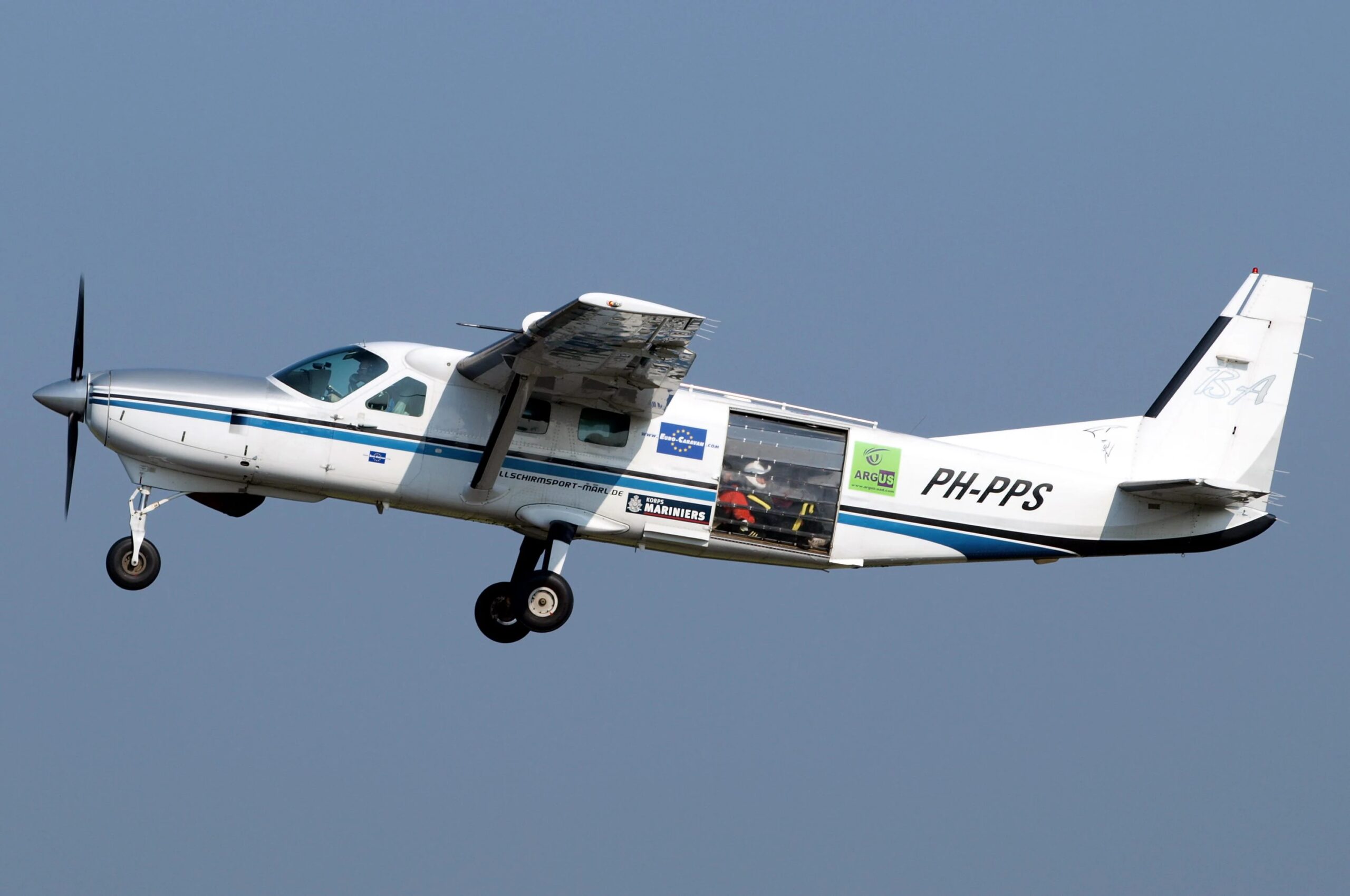
Can a cargo plane really fly without a pilot? Yes. In California, cabinless cargo drones like the have been tested for years Pelican Cargo by Pyka. In mid-October a Cessna Caravan cargo taxied, took off and landed at the airport in Albuquerque, New Mexico, led by software from Reliable Roboticswhile a pilot monitored it from California, over 1,100 km away, and a safety officer remained on board. In September, another Caravan, modified by Joby Aviation, crossed the United States from coast to coast, for more than 5,000 km, without the safety pilot on board touching the controls.
We see how these planes workhow secure they can be and how exposed they are to attacks.
What is the difference between autopilot and autonomous flight?
THE’autopilot it already does most of the work. In a normal approach, theautomation brings the aircraft up to about 60 meters altitude: at that point, generally, the pilots see the runway and perform the landing manually. Automatic landing exists, but requires specific technical conditions, dedicated ground systems and pilots to supervise it. And it is precisely during the take-off and landing phases that, according to Boeing statistics, this happens approximately 70% of fatal accidents of commercial jets.
THE new autonomous flight systemsinstead, they aim to manage the entire operation, from starting the engines to parking, including taxiing, take-off, cruising, landing and braking, without necessarily requiring special infrastructure at airports or a pilot on board.
Functions and main developments of an unmanned cargo aircraft
To fly without a pilot in the cabin, a cargo plane must be able to follow its route, communicate with air traffic controllers and detect other aircraft in the vicinity. Its operation is basically based on three elements that operate in a coordinated manner:
- The on-board system: computers and actuators that move controls and throttle. To know precisely where it is, the plane crosses GPS, on-board sensors and the official data on the position of the runways published by the FAA, the US civil aviation authority;
- The ground station: A remote pilot supervises the flight via a data link. He can change destination or go around a storm and speaks to air traffic controllers via the plane’s radios;
- The “detect and avoid”: Today the rules require pilots to see and avoid other planes by looking out. With no one on board, a substitute is needed: ADS-B, with which planes transmit their position via radio, and a radar, on board or on the ground, for those who do not transmit it, like many gliders and ultralights.
The choice to start experimenting with this technology in freight transport it responds above all to safety reasons: the absence of passengers on board reduces the risks associated with its use. In fact, there would be no one to protect other than the pilot, who is precisely the person the system would like to remove.
Furthermore, flights connecting small airports to logistics hubs are often night, at low altitude and operated by a single pilot. Reliable expects to obtain the first FAA approvals by the end of 2027with a pilot still in the cabin; to achieve completely unmanned flights, further technological developments and authorizations will be needed.
What the authorities predict
In 2025, a study commissioned by EASA, theEuropean Union Aviation Safety Agencyconcluded that, with current technologies, it cannot be demonstrated that a single pilot in the cabin during cruise is as safe as two.
The presence of a second pilot it is in fact fundamental for cross-checking operations, managing tiredness and workload, as well as intervening in the event of a colleague falling ill. According to EASA, the introduction of the single pilot is therefore not expected in the next decade.
The experimentation of unmanned cargo instead it proceeds step by step. The first rules on artificial intelligence proposed by EASA in November 2025 concern exclusively systems that assist the pilot or collaborate with him, while those intended for autonomous flight are still being studied. The FAA also recognizes that there is not yet a shared methodology for demonstrating the safety of AI systems used on board.
Can a hacker take control of a plane?
In Italian we use only one word, safetyto indicate two concepts that have different names in English. According to ICAO, the United Nations civil aviation agency, the safety concerns the prevention and control of risks associated with flying, while the security refers to protection against unlawful acts and intentional threats.
The alarms of these days fall into the second category, but do not involve a compromise of the on-board systems: in fact they are threats transmitted via email from false or anonymous addresses. The problem is that every report must be taken seriously and may therefore make it necessary to make a precautionary landing at the first available stopover, followed by the appropriate checks. These false threats therefore exploit security procedures to interfere with flight operations, without directly intervening on the controls.
On board airliners, i Computer systems are organized into separate domains: those who manage the flight, those intended for airline operations and those dedicated to passenger entertainment and Wi-Fi connection. In 2015, the GAO, the US Congressional watchdog, warned of the risk that these barriers could be circumvented.
However, There are no documented cases of airliners hijacked by hackers through remote control of on-board systems. Furthermore, there are two pilots in the cabin who, in the event of anomalies, can deactivate the automatic systems and take manual control of the aircraft.
Jamming And spoofing: the risks for air navigation
A more concrete threat to air navigation is today represented by the spoofing of the GPS. To understand how it works, we need to start from satellite positioning system: Satellites continuously transmit information about their position and exact time, allowing receivers to calculate the aircraft’s position based on the time it takes for the signals to reach them. However, these signals reach the ground very weakly and can therefore be easily disturbed by nearby transmitters.
There are essentially two main forms of interference:
- The jamming consists of superimpose disturbance on satellite signals which can make GPS unusable. In this case, the on-board systems report the anomaly and the pilots resort to other navigation tools;
- the spoofing it is instead more insidious: it consists in transmission of false but apparently reliable signalswhich can cause the receiver to calculate an incorrect position without giving any alarm. The error then propagates to other onboard systems, altering the data used by the navigation computer, the synchronization of watches, the position information transmitted from the plane to others and even terrain proximity warnings, which could falsely signal to pilots the need to regain altitude.
According to IATA, the international airline association, between 2023 and 2025, reported spoofing cases nearly tripledespecially in areas close to conflict zones. To identify any anomalies, the crews compare the GPS data with that provided by ground radio aids and inertial navigation systems.
With them aircraft without a pilot on board the rules of the game change and managing these threats becomes even more complex. The connection with the ground control station represents a point of vulnerability, while the recognition of a falsified GPS signal is solely entrusted to automatic systems. It therefore becomes essential to protect communications using encryption systems and provide procedures that allow the aircraft to operate safely even in the event of connection interruption; in this scenario, cybersecurity it is already part of the aeronautical certification.
In Europe, between 2025 and 2026, the EASA standards known as Part-ISwhich require relevant aviation organisations, from airlines to airports, to maintenance and air traffic management operators, to identify and manage cyber risks that could compromise flight safety.
How safe they are: let’s recap
In aviation, safety requirements are particularly rigorous: for systems whose malfunction could have catastrophic consequences, certification requires demonstrating that the probability of such an event is less than one per billion flight hours.
Second Robert RoseCEO of Reliable Robotics, told him Current autopilot systems reach the required safety levels also thanks to the presence of a pilot ready to intervene if necessary. The company’s goal is to develop a system reliable enough to operate without a pilot on board.
However, they remain two questions to resolve:
- The connection with the pilot on the ground: In the event of a communications interruption, the aircraft must be able to continue the flight safely following pre-established procedures. But those who drive it remotely cannot directly perceive signals such as vibrations, abnormal noises or burning smells, which could suggest a fault.
- Air traffic management: Aircraft that do not transmit their position may operate near smaller airports. Automatic systems must therefore be able to identify them and avoid possible collisions, but the regulatory framework for the use of these systems is not yet defined.
Compared to road traffic, air traffic is more orderly. However, a plane cannot simply stop in an emergency and, unlike robotaxis, in aviation compliance with safety requirements must be demonstrated before entry into service.
The question, therefore, is not to establish whether an automatic system is capable of piloting better than a human being, but rather to demonstrate that the entire infrastructure necessary for autonomous flight, from the aircraft to the connections with the ground station, up to air traffic control, guarantees levels of safety that are higher than or at least equivalent to the current ones, even in the presence of faults or cyber attacks. It is on these guarantees that theattention of the aeronautical authorities. And, according to experts like R. John Hansman of MIT, some form of human oversight will still be necessary.
