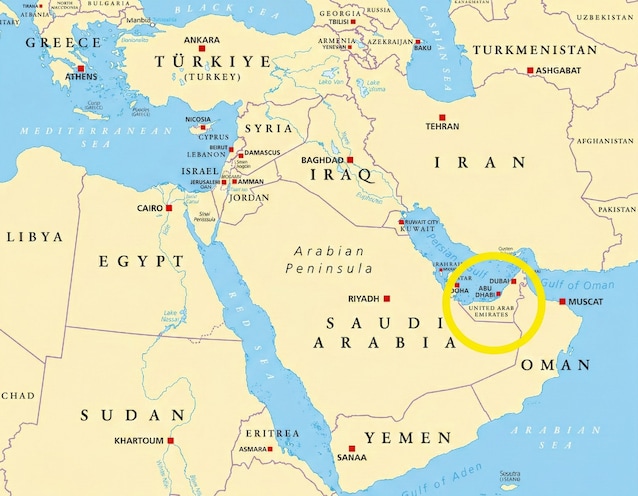
After theIran responded to the joint US-Israeli attack by hitting US military bases and diplomatic facilities elsewhere Gulf countriesThe United Arab Emirates they intercepted successfully 174 ballistic missiles launched by Iran – of which 161 were destroyed, with the defense systems shooting down 645 Iranian drones (out of a total of 689 launched) and 8 cruise missiles. But how the emirate missile shield works, activated last February 28th? It is one of the most advanced air defense systems in the world: it is no coincidence that the country was the first, after the United States, to deploy the sophisticated THAADacquired in 2015 in a multibillion-dollar deal.
Now, however, after Donald Trump declared that the war in Iran will continue “for at least another four or five weeks”, several analysts have raised concerns doubts about the potential durability of missile stockpiles, essential to implement the defensive wall. According to an indiscretion reported by Bloomberg – not confirmed by official sources – at these rates of war, the United Arab Emirates’ anti-missile system could sustain itself for only a week. It must be said, though, that it is unlikely that theIran be able to carry on missile attacks of this magnitude for more a long timeunless it chooses to exhaust all the armaments at its disposal. Meanwhile, hundreds of Italian citizens are still stranded in Dubai: the Farnesina is taking action to try to bring them home despite the closure of air traffic.
The operation of the United Arab Emirates anti-missile shield: THAAD and Patriot
The UAE anti-missile shield is defined as a “layered” system, as it combines the THAAD system (which acts at high altitude) with i Patriot PAC-3 systems (which operate at low altitude) effectively making the country one of the most advanced in terms of air defense.
But why, among all the Middle Eastern states close to Iran, is it the United Arab Emirates that has such an advanced missile shield? This is because in 2015 the country began an important military partnership with the United States, with the aim of improving security systems to guarantee regional stability and defend US military bases: the Emirates, in fact, host numerous strategic military installations for the United States (including the Al Dhafra air baseabout 30 km from Abu Dhabi) who, let us remember, use these bases in the Middle East as outposts to launch attacks on Iran.
The THAAD anti-missile system
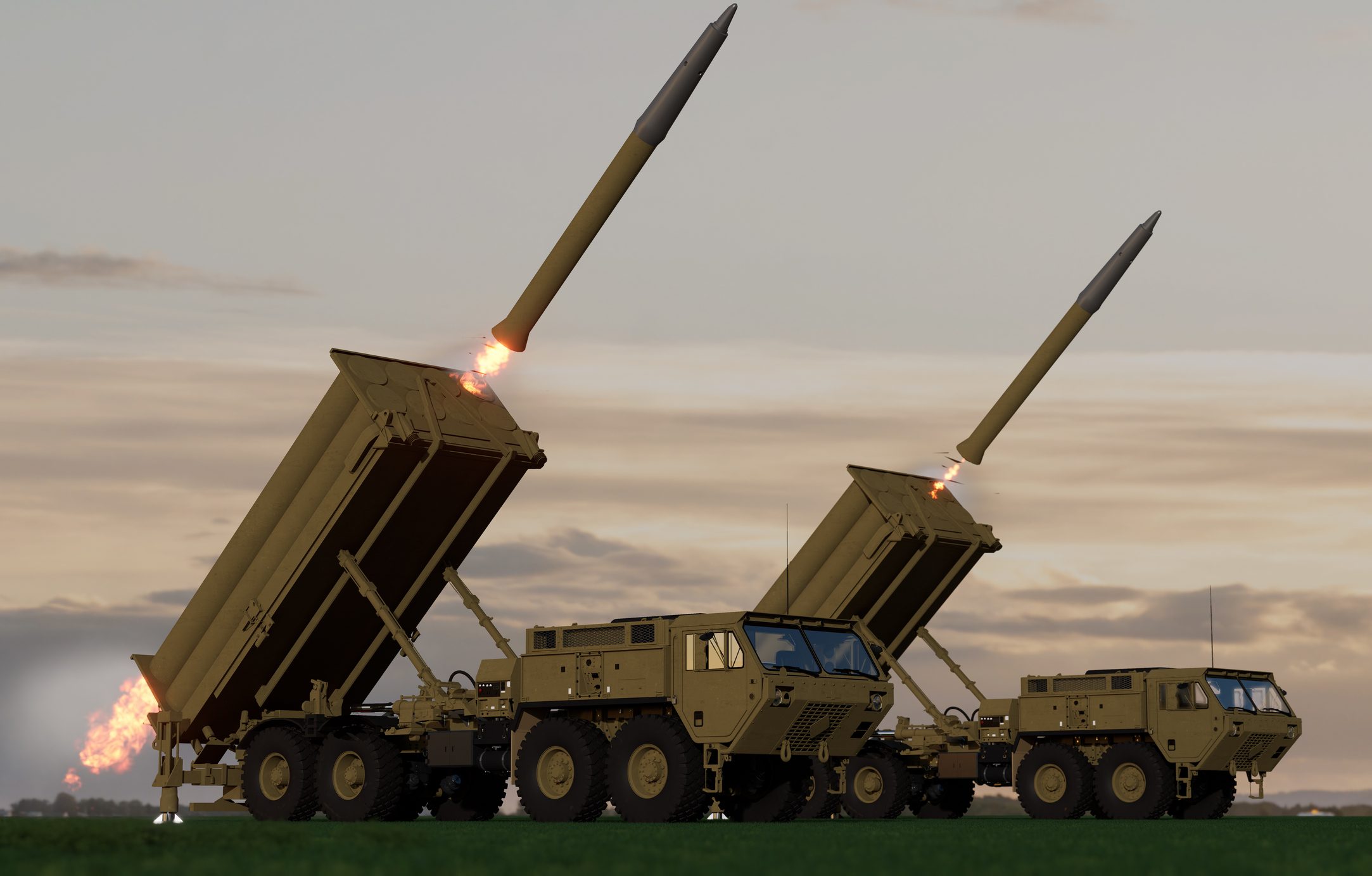
The THAAD system (Terminal High Altitude Area Defense) is designed for strike short, medium and intermediate range ballistic missiles before they impact on inhabited areas or sensitive targets. More specifically, the system intervenes during the final phase of the missile flight, colliding directly with the enemy weapon with the aim of “hitting to knock down” (hit-to-kill).
Manufactured by Lockheed Martin, THAAD is the only US system designed to intercept targets outside and inside the atmosphere. As mentioned, the first THAAD battery – complete with mobile launchers, missiles, AN/TPY2 radar (designed to track hypersonic missiles) and control system – was delivered to Abu Dhabi in October 2015: the United Arab Emirates was in fact the first country after the United States to deploy the THAAD.
The anti-missile system MIM-104 Patriot
In general, the Patriot system supports two families of interceptor missiles, the PAC-2 and the PAC-3. PAC-2s are capable of engaging ballistic missiles and are often equipped with fragmentation warheads, while PAC-3 they have smaller dimensions and are also based on technology “hit-to-kill“, which causes interceptor missiles to explode only in direct contact with the target. This last type of missile is the one used by the Emirati defenses: thanks to a more developed propulsion system and a reduced weight of 312 kg (about a third of the PAC-2), a single launcher can thus accommodate up to 16 PAC-3 missiles (compared to only 4 PAC-2s), thus guaranteeing significantly greater firepower to repel attacks.
Compared to other defense systems, the Patriot is therefore able to combine functions of surveillance, tracking and engagement in a single vehicle, thus reducing the logistical complexity of war operations.
Doubts about the supplies available for Dubai’s defensive wall
According to what was confirmed by the official press agency of the United Arab Emirates, since the beginning of the conflict the Emirati air defenses haveSuccessfully intercepted 174 ballistic missiles launched towards the country – of which 161 were destroyed, while 13 fell into the sea. They were also detected 689 Iranian drones, of which 645 were intercepted, while 44 landed in the national territory. Furthermore, they were detected 8 cruise missileswhose destruction however caused some collateral damage.
The doubt raised by several experts, however, concerns the stocks still available to keep the defensive wall active: clearly, the exact quantities of interceptor missiles available are clearly asecret information. However, according to rumors reported by Bloomberg – which cites sources informed of the facts – at these rates of war, Qatar risks running out of its arsenal of Patriot missiles within 4 days, while the United Arab Emirates’ stocks should be enough at least for another week.
The problem is that, even if they wanted to, the arms manufacturing companies would not be able to increase the production of these armaments in such a short time. This is why, in the last few hours, private consultations are reportedly being held between Doha, Abu Dhabi and Washington, with the aim of convincing the USA to opt for a diplomatic resolution of the conflict and reduce the duration of the war, which according to Trump “will continue for at least another four/five weeks”. As mentioned above, however, it must be said that it is unlikely that theIran be able to carry these forward massive missile attacks again for a long time: otherwise, it would risk exhausting all the armaments at its disposal.
