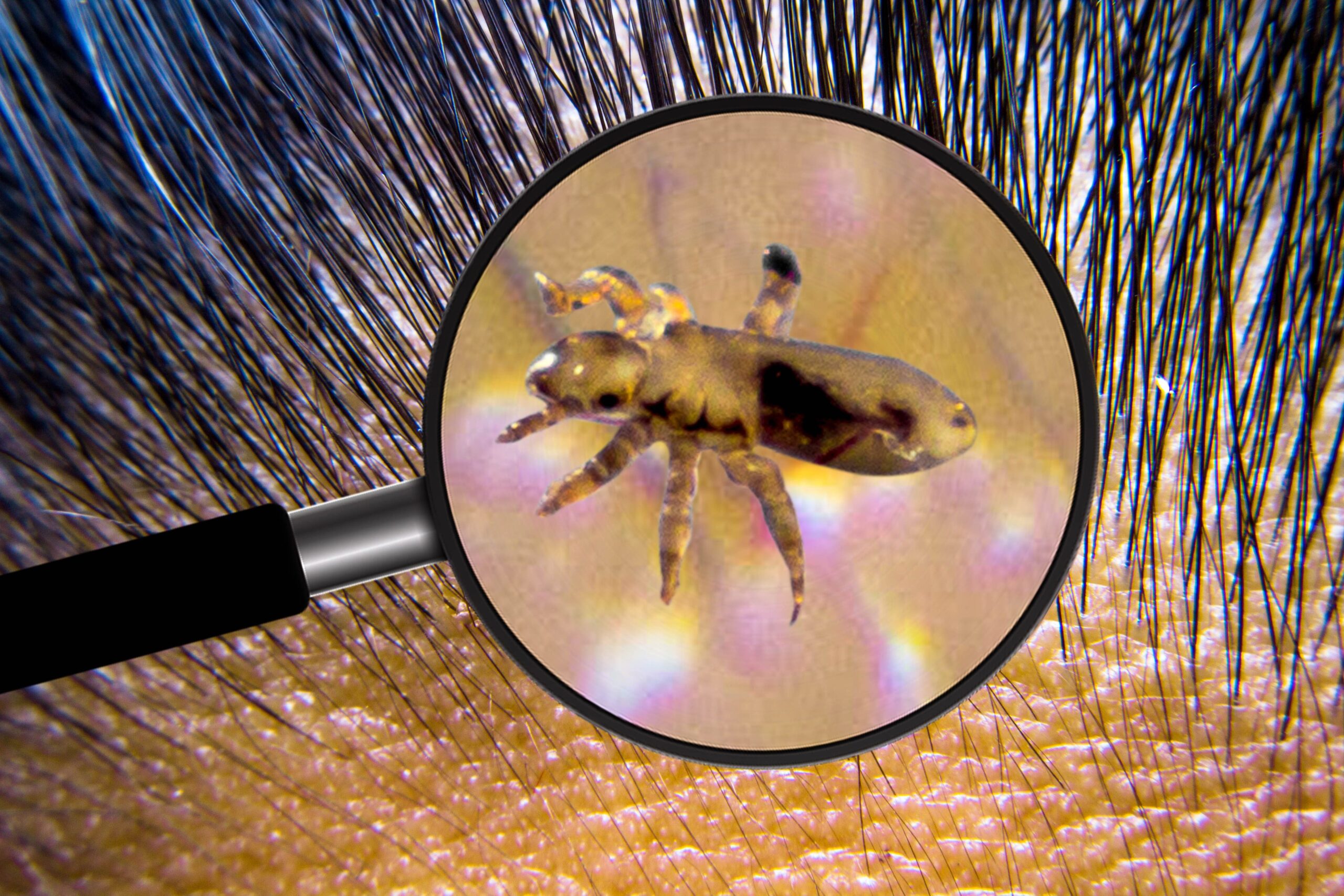
The beginning of the school year often brings with it a Increase in lice infestations (pediculosis), because children return to attend closed places with very close contacts: in this way the head lice (Pediculus humanus capitis) find favorable conditions for proliferate and spreadmoving from one child’s head to that of another. It is appropriate to say that it is a real “chief scratch card” for parents and teachers, because the most characteristic symptom is an intense itching. First, let’s dispel a myth: the lice infestation It does not depend on the hygienic conditions and social of those who are affected and can be considered a cosmopolitan pediatric problem. The transmission takes place only for direct contact: the parasite, in fact, is unable to jump or fly, but moves from one individual to the other only in the event of close closeness heads or objects just contaminated such as hats, cushions or towels. Furthermore, Contagion from other animals is not possible because the louse is species-specific. It mainly affects Children from 3 to 11 yearsis on average more frequent in girls than in boys and is less common in color people. The infestation must be treated with special pesticide products, but the best weapons are the prevention and collaboration of parents, teachers and health system: the reluctance of the parents in communicate promptly At the school that their child has been infected is often one of the causes of spreading the festival.
Who is and how the head lose
The lice are Hematophagi insectsthat is, they feed on blood, belonging to the anopluuri order that counts 490 species, all parasite. They are animals species-specific, So each species of louse is adapted to a well -determined guest. Indeed, for human lice exist Three species associated with different areas of the body: the head lice (Pediculus humanus capitis) which infest their hair and scalp, those of the pubis (Pthirus pubis) commonly known as plate for the form of the flattened body, which live anchored to the pubic hair and the lice of the body (Pediculus Humanus Corporis) who move and attack their eggs to the fibers of the clothes. The specialization is such that each species has adapted to laying the eggs on a hair with a certain diameter. Of the three species, the most fearful, but fortunately the least widespread, is that of the body that can be vector of epidemic diseases such as exanthematic cheering, recurring fever or trenches’ fever; On the contrary, the leader of the boss, does not determine worrying conditions.
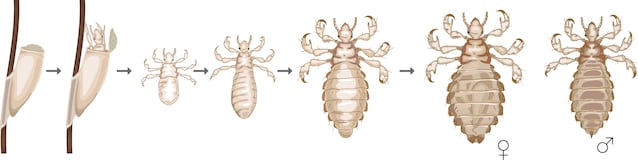
The head lice are of white-gray colorsmall in size (from 1 to 3 millimeters) and to develop they need human blood. Far from man, adults can only survive 1 – 2 days, while eggs can resist longer, up to 10 days. I am not able to fly or jumpbut only to move quickly on the hair and on the scalp.
To lay the eggs they are able to anchor the hair thanks to robust hooks placed on the legs. The female lays about 8-10 eggs every day, called lendini, up to a total of About 300 eggs per life cycle. The drinks are positioned in a specific point of the hair stem, more or less 1 cm from the scalp, in order to keep them well anchored to the hair and an optimal development temperature of 37 ° C. For this, by measuring the position of the Ledine with respect to the skin you can calculate approximately the moment of contagion compared to the hair lengthening time. After 7-10 days, the eggs hatch and the nymphs are born that begin to feed on the blood of the guest, punishing the scalp and injecting one irritating salivacause of intense itching, then becoming adult within a week.
Symptoms and first signs of a lice infestation
THE’ inspection of the scalp, Maybe with the help of a magnifying glass, it allows you to easily identify the drinks that apparently resemble dandruff particles, but they are well anchored on the single hair. They find themselves concentrated mainly at the level of the neck and close to the ears.
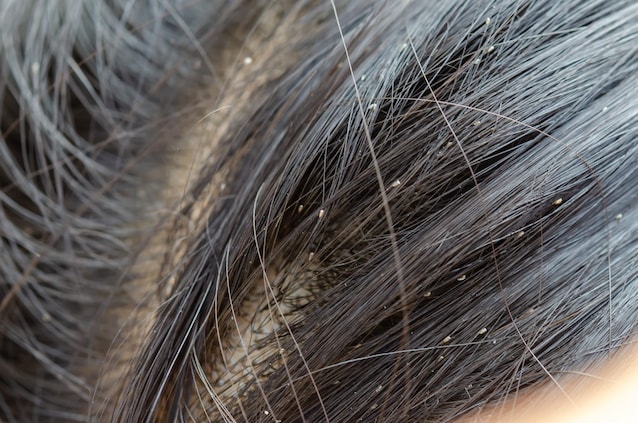
A further series of clues are then very useful for immediate diagnosis such as:
- Intense itching in the headespecially at the level of the neck and ears;
- blackish powder on sheets and cushions due to the feces of the lice.
As anticipated, the head lice are not dangerous in terms of transmission of diseases (such as those of the body), but can generate irritation and intense itching and can be the cause of dermatitis annoying, but absolutely curable.
How to transmit and how to prevent it
The transmission of lice takes place for direct contact With contaminated hair or objects: beds, cushions, hats, towels or combs. For this it is a very frequent phenomenon Within community and in particular in kindergartens and primary schools, where children play very close and often touch the hair or exchange hats and combs, favoring any contagion.
Prevention is the most powerful weapon against lice infestations: it is useful frequently check the chief of children, Recommend them not to exchange with other combs and clothing and above all, promptly notifying school or other community places (such as swimming pools or sports centers) to reduce diffusion.
On the other hand, preventive repellents are not useful, because repellents are not effective except in a decidedly bland way and It is not very useful to cut very short hair.
How to treat pediculosis
If pediculosis is confirmed, it is good to check all the members of the family and it is necessary to follow the Pediatrician advice and, in any case, as indicated also by the Istituto Superiore di Sanità, Specific insecticides products must be used. In the pharmacy there is a range of shampoo, lotions or sprays that must be applied carefully following the indications shown on the label. The most used active ingredients are the pyrethrum extract, the synthetic pyrethroids, the permethrin or the bad luck.
Here’s how to do the treatment and the advice of the Istituto Superiore di Sanità:
- carry out the treatment with specific antiparasitic products;
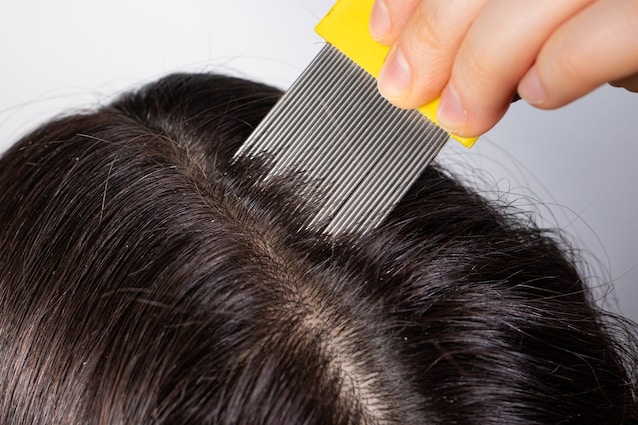
- use a thick teeth combs, specific for lice infestations and essential to eliminate eggs. This operation must be performed with patience and accurately;
- After 7-10 days from the first application, Repeat the treatment. Medicated shampoos are effective in eliminating adults, but not eggsfor this reason to eliminate also the new born lice. The passage with the combed teeth combs must also be repeated;
- wash and treat clothing and sheets a temperatures above 70 ° C
A washing with water and vinegar is instead useful for removing dead eggs and lice.
Pediculosis increasing: the obligations of the parents
Contrary to what is thought, the cases of pediculosis in our peninsula have increased in the last 30 years, Most children between 3 and 11 years old, with a higher frequency in girls! This is why it is therefore essential to follow the councils and directives of the health authorities to reduce their dissemination. A circular of the Ministry of Health, n ° 4 of 13 March 1998, provides indications of behavior in the event of pediculosis cases.
The parents of the infected children have the obligation to inform teachers in a reserved way and then start a treatment on a medical prescription. Students can return to school after carrying out the first treatment certified by the attending physician. To date, the certificate of the attending physician is not always requested, but parents can fill in a self -certificationas indicated by the school or regional school offices.
