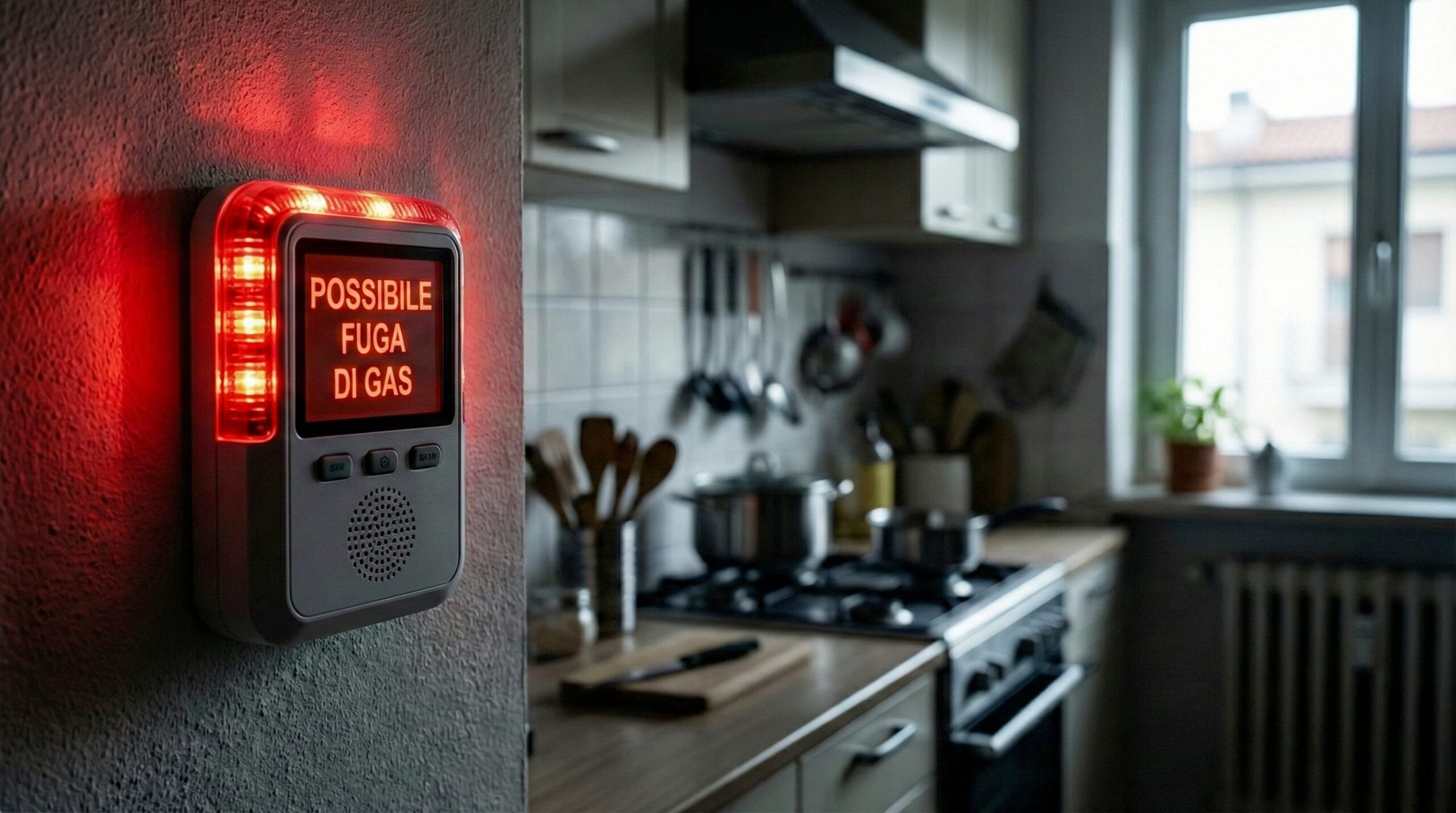
In Negrar, in the province of Verona, one building collapsed following aexplosionwhich probably occurred due to a escape of gas: The accident resulted in the death of one person, a 68-year-old man (owner of the house), while three people were injured. Unfortunately, emergencies of this type they are not that rare in our country: this is why the Fire Brigade and the Ministry of the Interior have drawn up a series of guidelines listing the behaviors to adopt, with the aim of promoting a greater safety culture.
So let’s see what needs to be done immediately in the event of a gas leak and what the consequences are actions to avoid.
What is a gas leak and how to notice it in your home
In Italy the use of gas in the home is widespread, from cooking to the production of hot water. In particular, the ones most used in Italian homes are the LPG (liquefied petroleum gases) and the methane: in the natural state, both gas I am odorless and colorless. For this reason, before being distributed, they are put in contact with odorizing chemical compounds (usually mercaptans) which give the characteristic “smell of gas”, so as to be able to easily recognize a possible leak, i.e. one accidental leakage of gaseous material.
To recognize a gas leak in the absence of the appropriate tools, the simplest method is precisely that of use the sense of smell: it must be said, however, that in some cases the smell of gas could be linked to the fact that the cylinder is running out or that, when the stove was turned on, a greater quantity of gas than usual came out.
To have proof of a possible gas leak, you can then also use another sense, hearing: if the leak comes from the pipes, in fact, it is possible to hear a slight noise like a hiss.
Gases, among other things, represent the most frequent cause of highly destructive fires and explosions because they are often used without the necessary precautions: the explosion, however, only occurs if the percentage of gas present in the air is that foreseen by the flammability range. For methane, for example, this value is between 5 and 15% – that is to say that there is no explosion if there is a lot of gas (above 15%) or little gas (less than 5%) – while for LPG there is approximately 2% to 10% of gas in the air.
What to do and what not to do in the event of a gas leak
If we have doubts about a gas leak in progress, there are a series of behaviors to adopt and actions that are not recommended to avoid explosions or serious damage: more specifically, according to the Fire Brigade guidelines, if you smell gas:
- Do not light flames or operate any object that could cause sparks: This means that no electrical switches should be turned on or doorbells, telephones or other electrical equipment used in rooms where there is a suspected gas leak.
- It is necessary open the windows immediately to ventilate the venue and leave the building immediately. This is because the concentration of gas could be higher than the flammability limit of the substances: therefore, there would be no immediate risk of explosion, but an environment saturated with these gases is in fact devoid of oxygen.
- It is necessary close the main gas tap near the meter or the cylinder tap, if present. In this case, the maneuver should be taught to all family members.
- It is necessary disconnect the main light switchbut only if this it is located outside or in any case in a room far from where the presence of the gas is felt.
- If, despite everything, the smell of gas persists, it is necessary call the Fire Brigadeby dialing 115 or the single emergency number, 112, but after being left the house.
