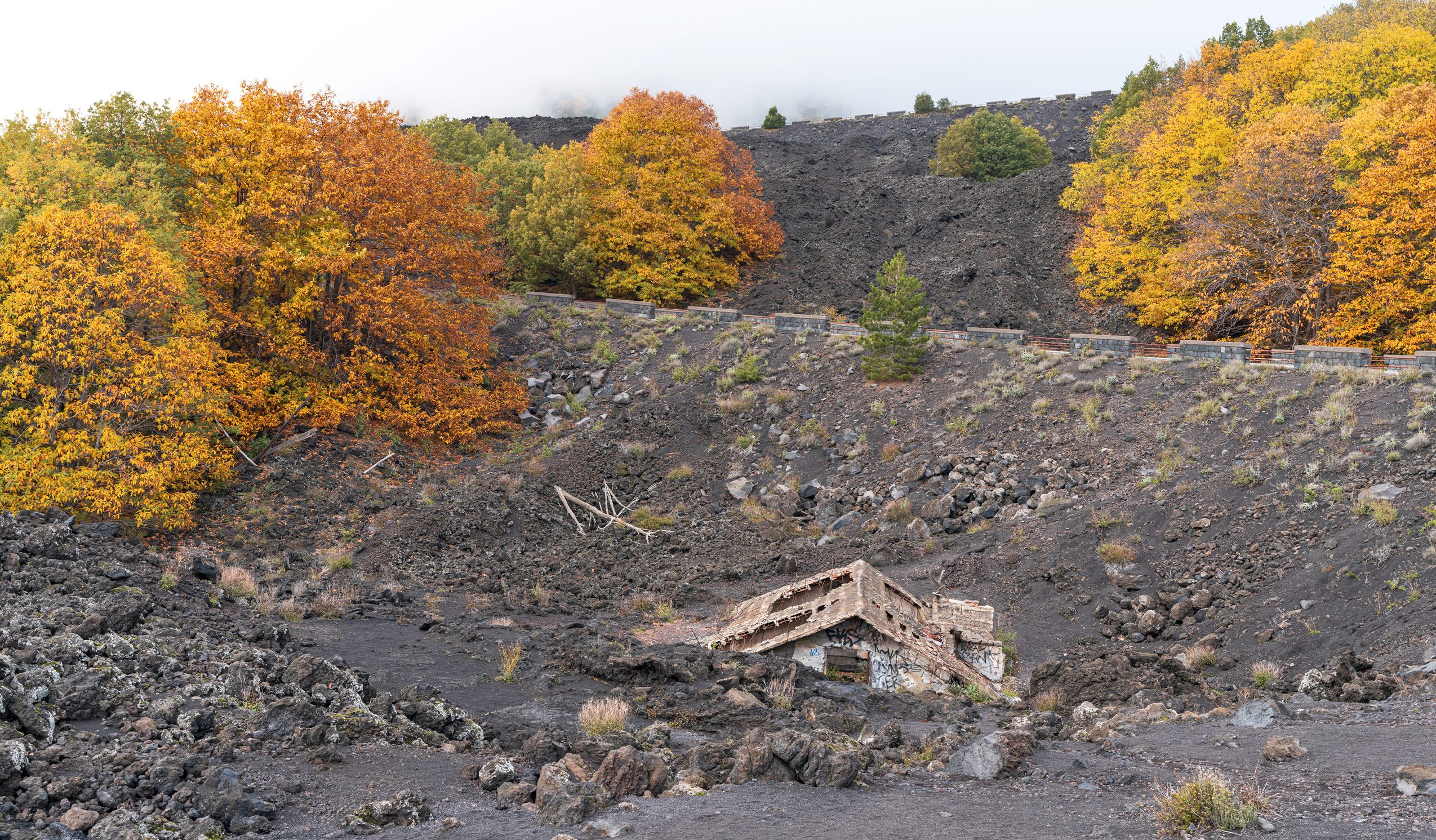
The Italian territory presents a natural predisposition to geological and hydrogeological disruptionsfragility which over the years has resulted in numerous landslides and catastrophic events. The Sarno landslide of 1998, as well as the more recent episodes that occurred in Niscemiare just some of the most emblematic cases that demonstrate how high the sensitivity to landslide phenomena is, therefore making it indispensable constant monitoring, prevention and risk management activity.
Over time, geotechnical engineering has developed methods of increasingly advanced analysis and technologies to improve the stability of the slopes and reduce the exposure of large areas to possible future instability. In this article, we describe its applications and engineering methods.
The state of activity of a landslide to determine the right intervention
Before intervening on an unstable slope it is necessary to understand its state of activity: a preliminary analysis that allows you to evaluate whether the movement is currently underway, whether it occurred recently or whether it has ceased for some time.
A landslide is defined “activate” When the movement is still underway at the time of observation. Instead we talk about a landslide “suspended” if the instability has shown shifts in the last seasonal cycle, but is temporarily stopped. When no recent movements are recorded, the landslide is classified as “inactive”.
In particular, within this last category, further subcategories can be distinguished which help to understand the future evolution of the phenomenon. In fact, we talk about:
- Quiescent landslidewhen, despite not being in motion, it can easily reactivate if the predisposing causes recur.
- Stabilized landslide, that is, the one that has instead reached a new balance, both thanks to a natural structure of the slope and as a result of anthropic works.
- Landslide wrecki.e. the result of environmental conditions that are now outdated, difficult to repeat, so its restart becomes highly unlikely.
How to intervene in an area at risk of landslide: from restoration to consolidation of the slope
Interventions aimed at mitigating landslide risk are traditionally divided into two broad categories: ‘active’ interventions And ‘passive’ interventions. The former have as their main objective the increase in the safety factor of the slope (FS), i.e. the ratio between the stabilizing forces and those that tend to make the ground slide: improving this condition means acting directly on the slope, modifying geometries and internal tensions to reduce the probability of new movements. Passive interventions, on the other hand, do not intervene directly on the mechanism that generates the landslide, but they are designed to intercept, contain or divert moving materialthus protecting the infrastructures and inhabitants located downstream.
The choice of the most effective strategy depends on numerous factors: the time necessary for the work to come into operation, its maintenance, costs and dimensions, but above all the type and speed of the landslide. In the slow movementsand therefore more predictable, are favoured active solutions. On the contrary, in phenomena characterized by high propagation speedit is often necessary to resort to passive systems or to a mediation between the two approaches.
But what do these interventions translate into, concretely?
Change in slope geometry
The morphological remodeling represents one of the most traditional methods for improving the stability of a slope. It may consist of reprofiling of the slopesmaking the slopes gentler and thus decreasing the forces that favor movement; in the’relief from the most unstable sectors of the slope through the removal of excess material; in the construction of terraces which interrupt the continuity of the slope and favor the disposal of surface water.
These are effective interventions especially in cases where landslides involve loose soil or limited portions of the slope, even if they can sometimes be complex to implement in the presence of infrastructures or large volumes of earth.
Support works
It is a category of interventions that are frequently used and which includes, for example, works such as bulkheads of bored piles, micropiles or diaphragms. These structures are capable of anchor in depth and counteract the lateral forces of sliding of the groundperforming a function similar to that of a retaining wall. The effectiveness of these works strongly depends on the knowledge of the terrain involved and the ability to manage the pressures of the water present, which is often decisive in instability processes.
Anchor tie rods
An important role is also played by the anchoring of the landslide body through the use of tie rods. These structural elements, which are steel ropes immersed in the ground, they come anchored in deep and stable layers. In this way the created system artificially connects the unstable mass to the body of soil in equilibrium. It is a particularly useful technique when intervening in urbanized areas or on deep landslides, and is often used in conjunction with bulkheads or walls, constituting an integrated support system.
Drainage systems
In many cases, however, the triggering cause of the movement is not mechanical but hydraulic. Intense and prolonged rainfall can modify pore pressures, reducing the shear resistance of soils. For this reason drainage interventions they play an essential role in stabilizing the slopes. THE surface drainagesuch as channels and trenches, limit the supply of water to the unstable layer, while those deep – drainage wells and sub-horizontal drains – allow the level of the water table inside the landslide mass to be lowered, thus reducing the pressure exerted by the water along the sliding surfaces.
Passive interventions
Finally, passive interventions represent a essential necessity in rapid movements or in contexts where direct action on the slope is not sufficient. Rockfall barriers, metal nets and containment systems protect infrastructures, intercepting blockages or leaks. Protected channels and containment valleys instead guide the moving material towards safe areas, reducing the risk for inhabited areas.
